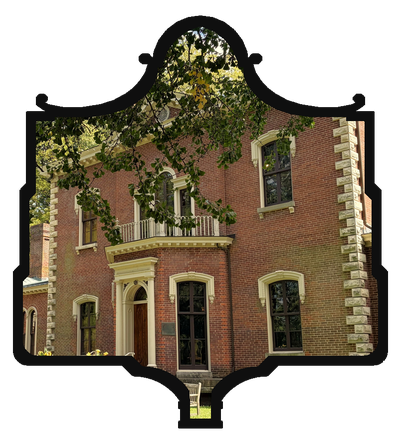
A companion article to Marker No. 1550: Lexington Cemetery.
This is the second of two companion articles built around Marker No. 1550. The first, Statesmen, Soldiers, and Lexington Fame, covered the politicians and generals whose names dominate the cemetery’s own tours. This one turns to the women who built parallel legacies here, in medicine, suffrage, law, and engineering, several of them genuine national “firsts,” and closes with the one woman in this roster whose grave marker still describes her only in relation to the family that enslaved her.
Mary Breckinridge, R.N., C.N.M. (1881–1965)
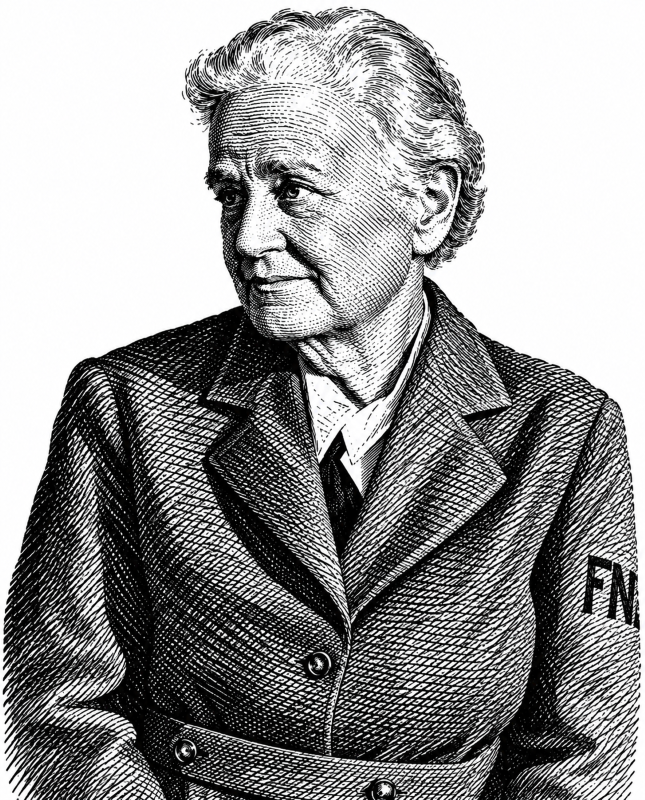
Breckinridge founded the Frontier Nursing Service in 1925, sending nurse-midwives on horseback into some of the most isolated hollows of Appalachian Kentucky, territory with no roads, no cars, and a population scattered across single-family cabins rather than clustered in towns. A trip that would take twenty minutes by car today could take hours along a washed-out creek trail, which is why Breckinridge built not one central hospital but six, later nine, separate outpost nursing stations, each positioned so a nurse-midwife could reach a birth on horseback within a reasonable ride. The FNS became a model studied nationally for how to bring maternal care to places medicine simply hadn’t reached, and its records show a maternal mortality rate far below the national average of its era.
That record has a complicated side too. In 2021, the Frontier Nursing Service’s own Mary Breckinridge Task Force publicly acknowledged that Breckinridge held racist views throughout her life. She refused to hire Black midwives, and would reportedly not share a table with one. Her writing endorsed eugenics and segregation, framed as a kind of brotherhood that stopped well short of equality. The organization she built to bring modern medicine to some of the poorest, most overlooked communities in the country was, by its founder’s own design, never built to serve everyone equally.
Breckinridge built her legacy on top of personal tragedy: she lost her first husband to illness, her second marriage ended after the deaths of her two young children, and biographers generally read her decades of frontier work as a life rebuilt around other people’s children after burying her own.
Laura Clay (1849–1941)
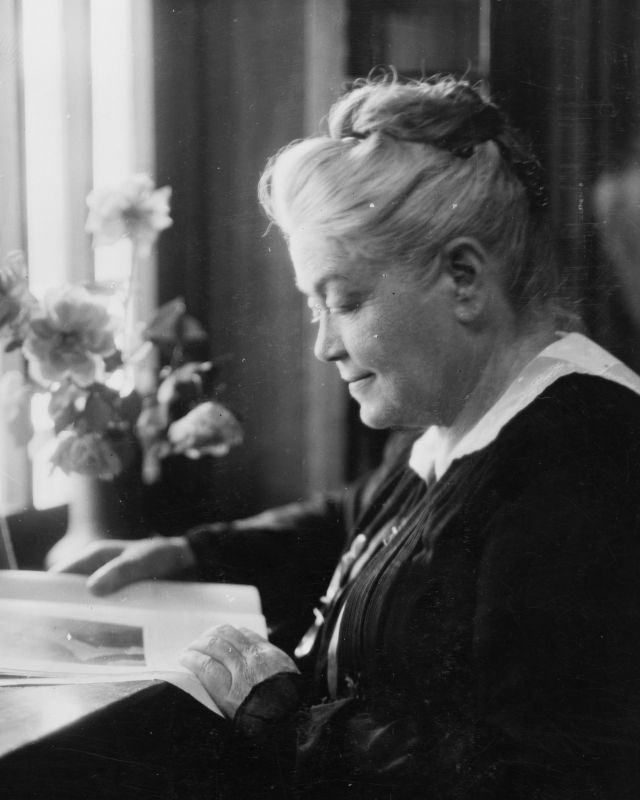
Clay founded the Kentucky Equal Rights Association in 1888 and spent decades as the state’s most visible suffragist, becoming, in 1920, the first woman ever placed in nomination for U.S. president at a major party’s national convention. That milestone sits uneasily next to the rest of her record: Clay was also a leading voice for winning suffrage state-by-state rather than through a federal amendment, a position rooted partly in an explicit wish to keep the question of Black voting rights out of the conversation entirely. She broke with the national movement and opposed ratification of the Nineteenth Amendment itself once it reached Kentucky’s legislature, on exactly those grounds.
Sophonisba Breckinridge, Ph.D., J.D. (1866–1948)
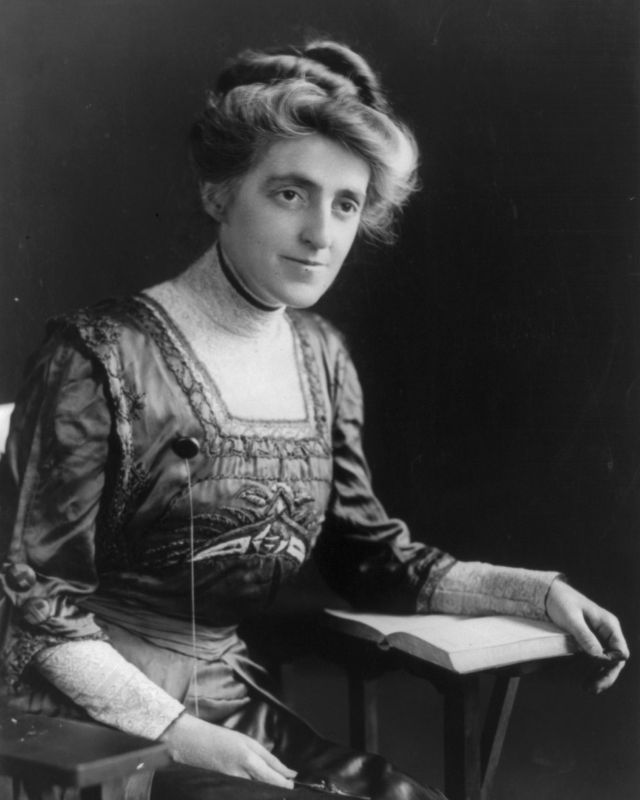
Breckinridge was admitted to the Kentucky Bar in 1895, the first woman to practice law in the state, though she’d gotten there the old-fashioned way, reading law in her father’s office rather than through a formal degree. It didn’t go well: few clients would hire a woman lawyer, and she left for Chicago not long after. There she earned a Ph.D. in political science and economics in 1901, and then, three years later, went back to law school and became the first woman to earn a J.D. from the University of Chicago, at the same university where she’d just finished her doctorate. That combination, a research degree and a professional law degree, both firsts, opened a career in social work education and reform largely closed to women of her generation. She helped build the academic discipline of social work into a serious field of university study, and her scholarship on immigration, labor, and household economics shaped early-twentieth-century policy debates well beyond Kentucky. She belonged to the NAACP and was, by most accounts, more racially progressive than many of her Kentucky suffragist peers, though her career was built almost entirely within institutions that remained segregated throughout her lifetime.
Katherine Helm (1857–1937)
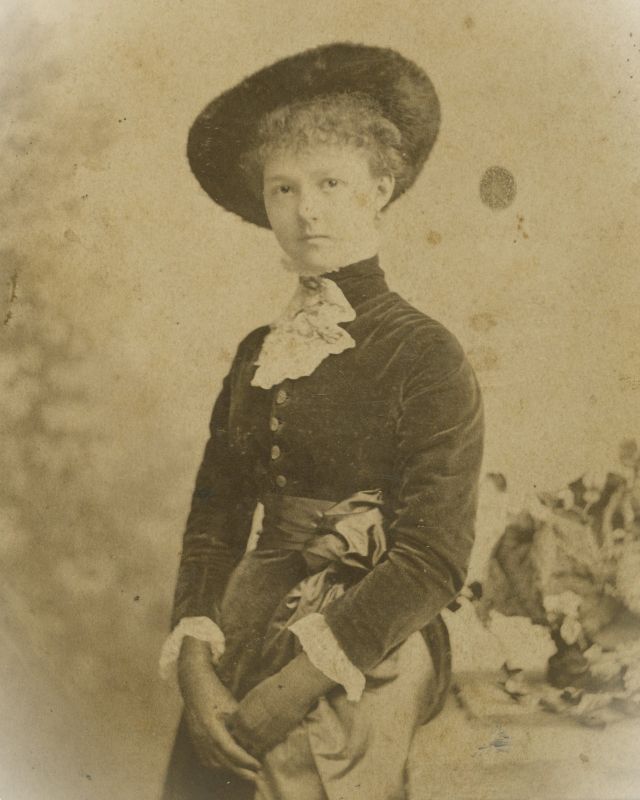
Helm painted the portrait of her half-aunt Mary Todd Lincoln that hangs today in the White House, a rare instance of one Lexington family connecting two markers in this project: Helm’s own family ties run through the same Todd household documented at Marker No. 2261. She trained as an artist in New York and Paris at a time when few American women pursued formal fine-arts education abroad, and she spent decades afterward working to correct what she saw as an unfairly harsh popular memory of her aunt, publishing a biography defending Mary Todd Lincoln’s reputation against the cruelty of the Lincoln era’s press.
Mary DeSha (1850–1911)
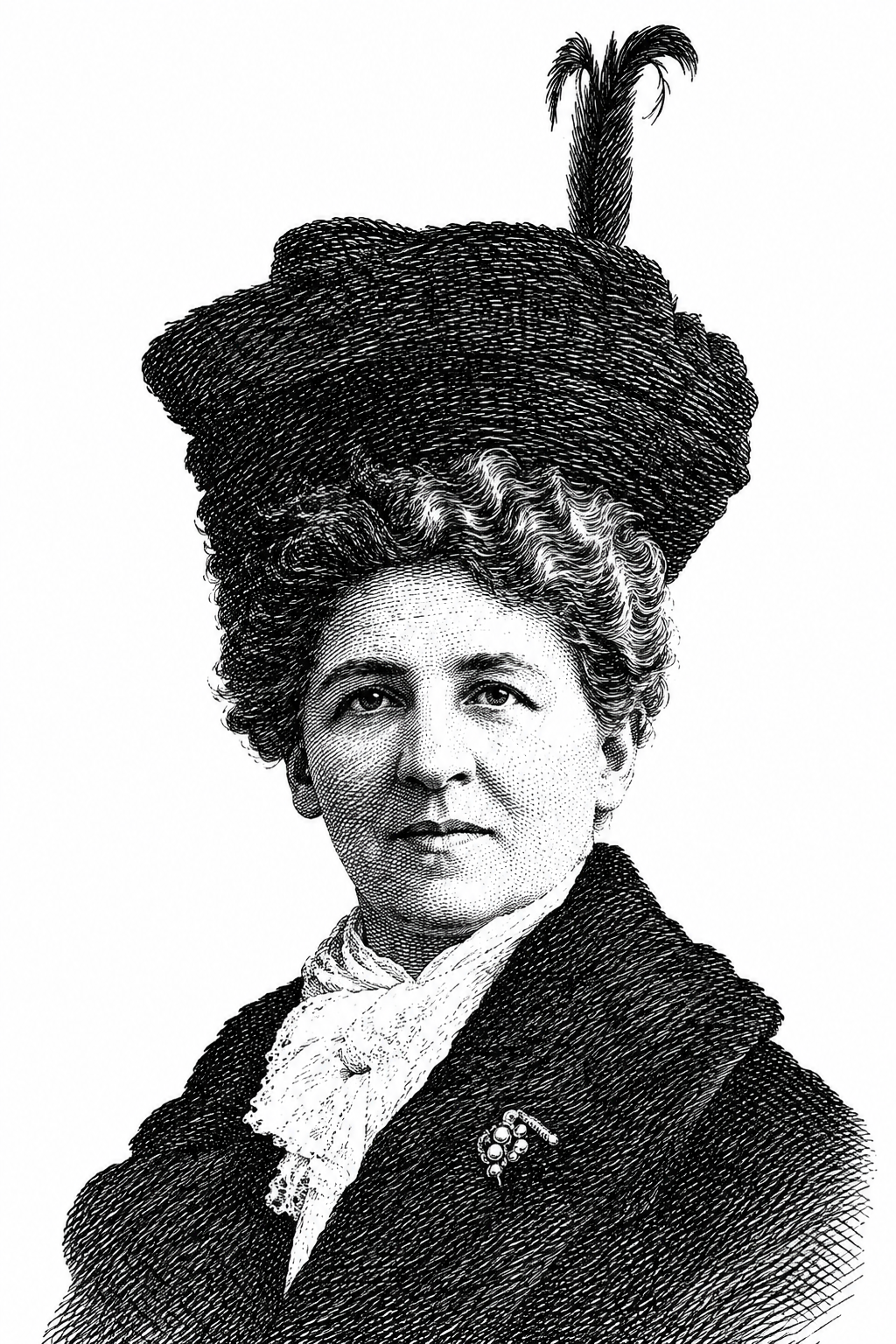
DeSha was one of four founding members of the Daughters of the American Revolution in 1890, helping build an organization that would go on to shape how generations of Americans commemorated their Revolutionary-era ancestors. The DAR’s own history is not free of contradiction: the organization barred Black performers from its Constitution Hall stage well into the twentieth century, most famously turning away contralto Marian Anderson in 1939, a policy DeSha did not live to see but one that came to define the institution’s legacy alongside its founders’ genealogical mission.
Lucille Parker Wright Markey (1896–1982)
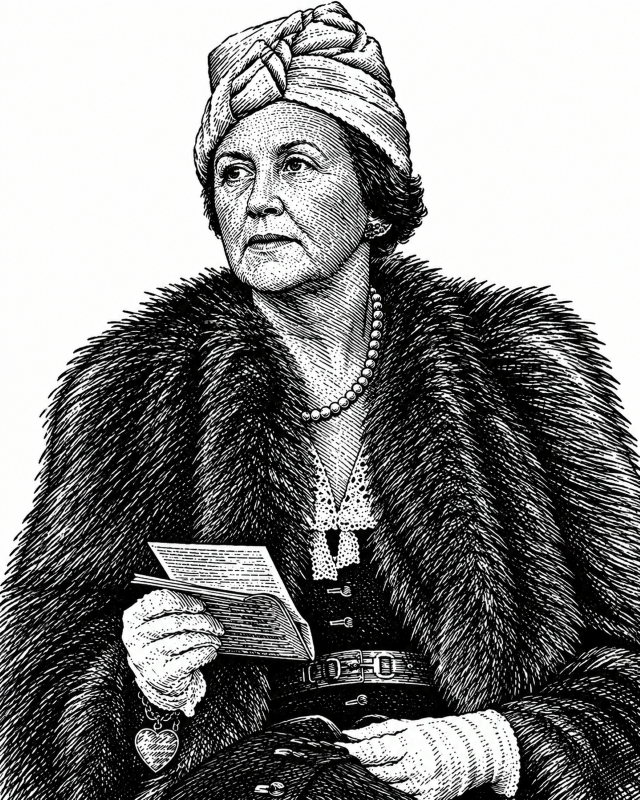
Markey ran Calumet Farm, turning it into one of the most successful Thoroughbred operations in American racing history, and gave millions of dollars to found a cancer research center at the University of Kentucky that still bears her name. Her wealth and her farm’s champions gave her a level of public visibility unusual for a woman in mid-century horse racing. But it was a very different sport by then than the one Aristides won in 1875. As the marker article on Aristides makes clear, the Black jockeys and trainers who built that sport had already been pushed out by the time Markey took over Calumet.
Mary Jane Warfield Clay (1815–1900)
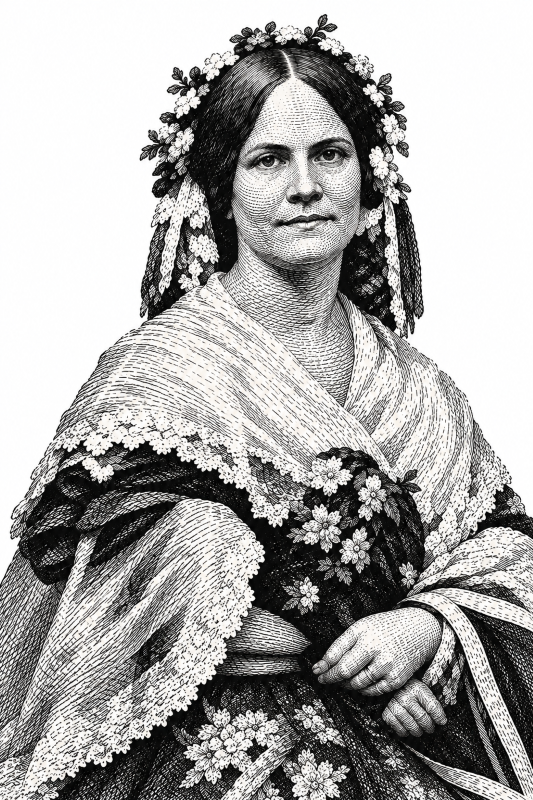
The Clay family estate near Richmond, Kentucky, in Madison County, about 25 miles southeast of Lexington, started as a modest seven-room house built by Cassius Clay’s father in 1799. While Cassius served as U.S. minister to Russia through the 1860s, Mary Jane oversaw a major expansion. She turned that small house into a 44-room, roughly 10,000-square-foot Italianate mansion, and gave it the name White Hall.
Managing that expansion was only part of what she handled alone. For years, she also ran the farm’s finances and the household while Cassius was abroad. When he returned to Kentucky in 1869, the marriage didn’t end right away. It took another nine years, and a string of infidelities, including a son from a relationship in Russia whom Cassius later adopted, before the marriage collapsed. Cassius filed for divorce in 1878, claiming abandonment. Mary Jane, after 45 years of marriage, walked away with none of the property or financial security her decades of work had built.
Margaret Ingels, B.S., M.E. (1892–1971)
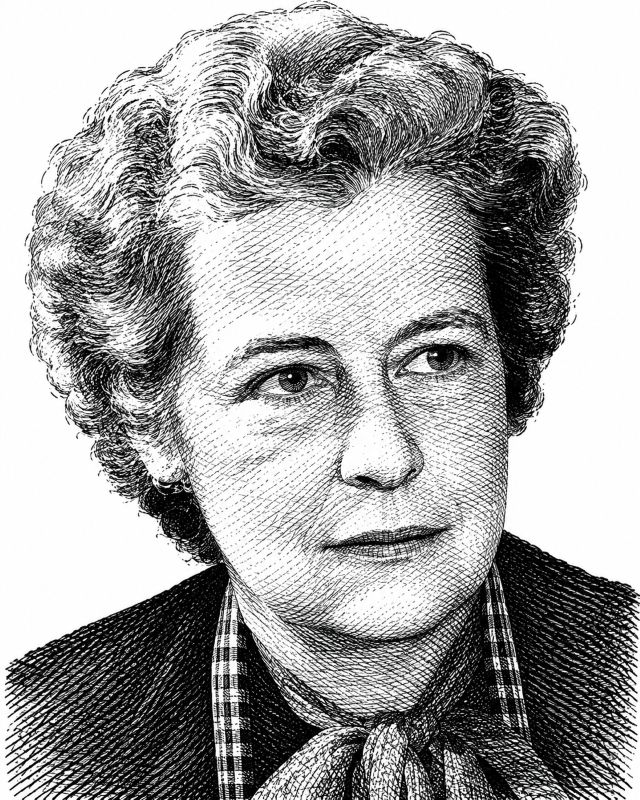
Ingels became the first woman to earn an engineering degree from the University of Kentucky, graduating in 1916 with a B.S. in mechanical engineering, into a profession that had essentially no place for her on paper. She went back four years later and earned something rarer still: a professional “Mechanical Engineer” degree, a second, more advanced credential many engineering schools of that era offered beyond the bachelor’s. That made her the first woman in the country to hold a graduate-level engineering credential of any kind. She built her career in the emerging field of air conditioning engineering and became one of the field’s early published researchers on human comfort and humidity control.
Linda Neville (1873–1961)
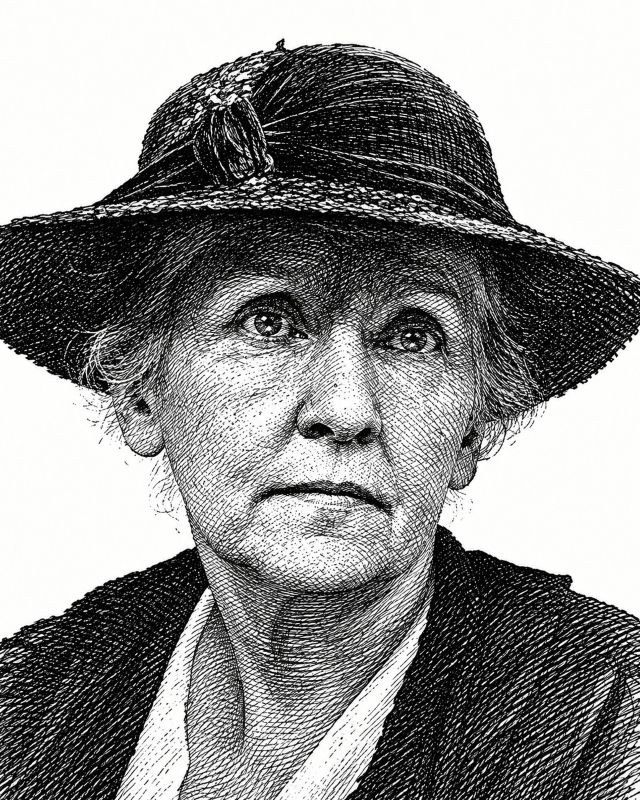
Neville was a Bryn Mawr graduate and lifelong Lexington reformer, not a doctor or nurse, but for more than fifty years she was the organizing force behind Kentucky’s fight against trachoma, a blinding bacterial eye infection that spread widely among poor and isolated Appalachian communities with little access to care. After witnessing the disease firsthand on a 1908 visit to the Hindman Settlement School, she began personally bringing patients back to Lexington for treatment, subsidizing their care out of her own pocket and a fund she created for the purpose, and she often took patients into her own home during recovery. She spent the following decades building the actual infrastructure of treatment: recruiting oculists and physicians to staff clinics across the mountains, securing federal funding through the U.S. Public Health Service, and lobbying the state legislature until trachoma prevention was written into both parties’ political platforms. By the time the last of her clinics closed in the 1950s, no longer needed, the disease she’d spent her adult life fighting had been effectively eradicated in Kentucky.
Bouviette James (“Aunt Betty”)
Bouviette was an enslaved Black woman who raised John Hunt Morgan and his siblings at the family’s Hopemont estate. Even the name history remembers her by wasn’t her own choice: “Aunt Betty” was what the Morgan children called her, a Southern custom of addressing enslaved and formerly enslaved Black domestic workers as “Aunt” or “Uncle,” a term that read as affectionate while denying them the adult titles, “Mr.,” “Mrs.,” that would have signaled equal personhood. Her own side of the story is harder to recover than the family’s version of her. No birth date survives, no photograph, no account in her own words.
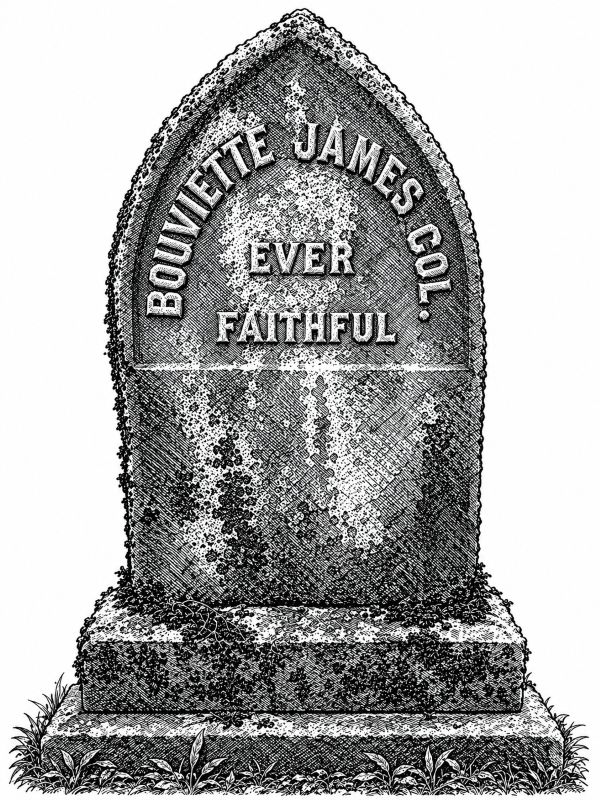
What survives instead is a headstone in the Morgan family plot reading simply “Ever Faithful,” language chosen by the family that enslaved her, repeated uncritically in cemetery literature to this day. Even in burial, the family’s hierarchy held: the Morgan plot is arranged in circles around the graves of John Wesley Hunt and his wife, and Bouviette’s is the only grave in the plot not placed within one of those circles. Her headstone is also the same small size given to Morgan children who died in infancy, despite her having lived to an advanced age.
Bouviette James’s entire surviving record is a name she didn’t choose and an epitaph someone else wrote, describing a faithfulness she never got to define in her own words, faithfulness from a woman who was never given the choice.
A Roster of Firsts, and One Silence
Nine of these ten women broke real ground: a first law license, a first engineering degree, a first nomination, a first national research organization, decades of medical and reform work that changed how Kentucky cared for its poorest and most isolated residents. Read against the companion piece on Clay, Breckinridge, Morgan, and the rest, this roster complicates the “great men” version of the cemetery considerably. But it doesn’t undo the cemetery’s larger pattern. Nine well-documented white women, most from prominent families, sit alongside one enslaved woman whose entire surviving record is four words carved by people who owned her.
Sources consulted: Kentucky Historical Society marker records; Wikipedia entries for Mary Breckinridge, Laura Clay, Sophonisba Breckinridge, Margaret Ingels, and Linda Neville; Frontier Nursing Service historical archives; National Women’s Hall of Fame; Kentucky Commission on Women; Find a Grave; the Kaintuckeean.



I’m eager to hear what you think