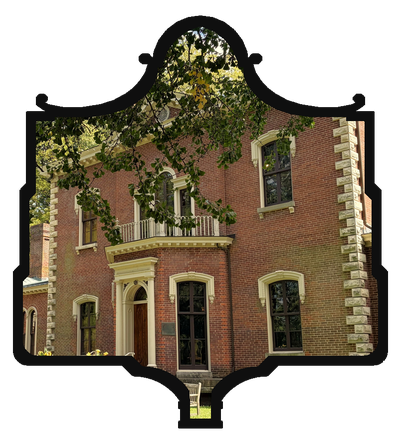
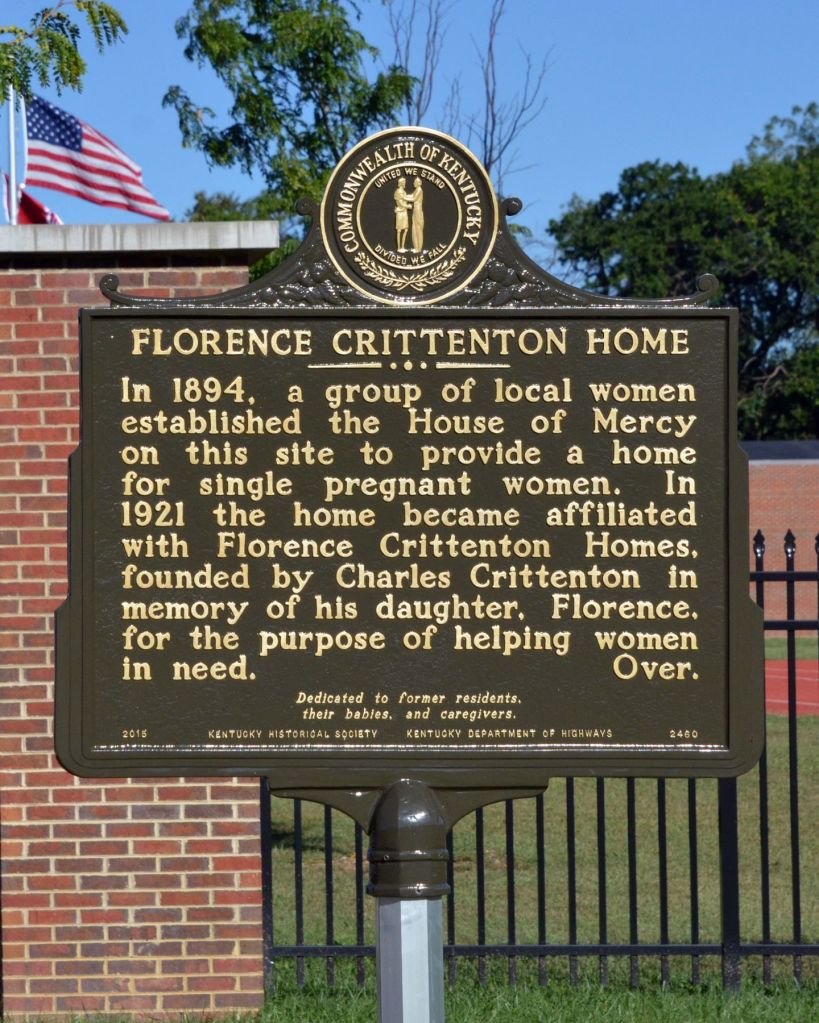
“In 1894, a group of local women established the House of Mercy on this site to provide a home for single pregnant women. In 1921 the home became affiliated with Florence Crittenton Homes, founded by Charles Crittenton in memory of his daughter, Florence, for the purpose of helping women in need.”
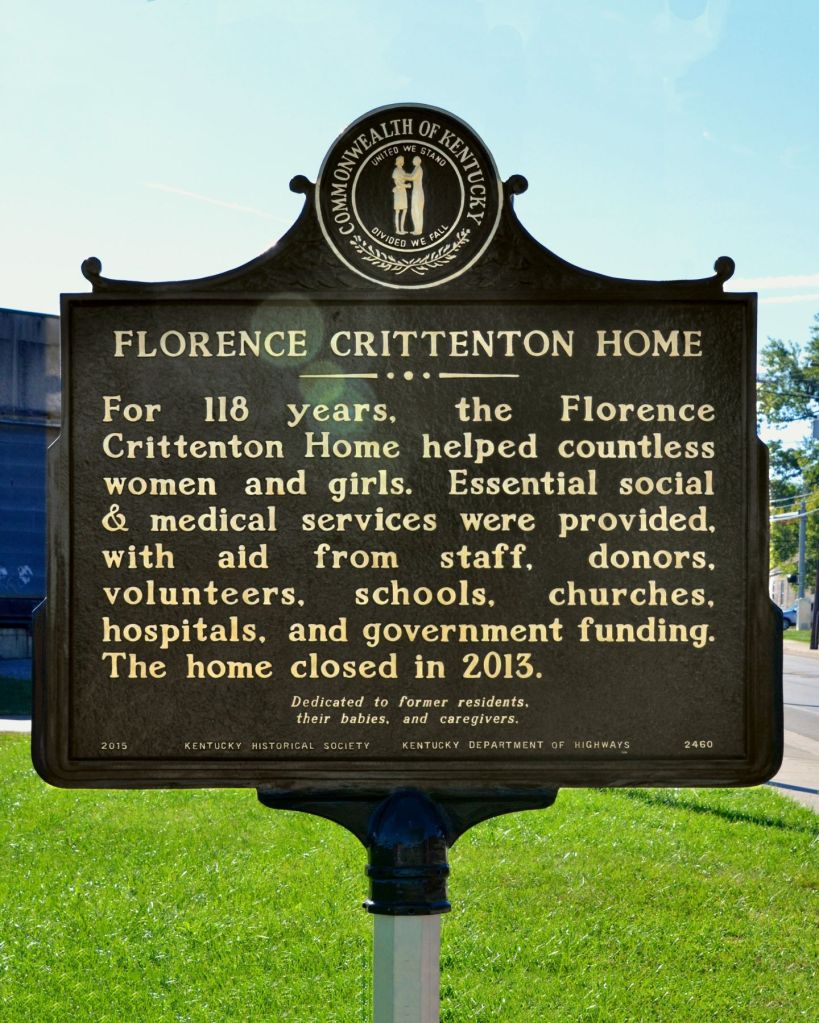
“For 118 years, the Florence Crittenton Home helped countless women and girls. Essential social & medical services were provided, with aid from staff, donors, volunteers, schools, churches, hospitals, and government funding. The home closed in 2013.”
Kentucky Historical Society, Marker No. 2460 — erected 2015
519 W. Fourth St., Lexington | 38° 03′ 26″ N, 84° 29′ 50″ W — Directions: MapQuest
At the bottom of both panels, in small italic letters, is a line most people walk past: “Dedicated to former residents, their babies, and caregivers.” It is the only place on the marker where the babies appear. The main text speaks of “help” and “services,” and of women and girls in need. It does not say what happened to the children born to the young women who lived here, or how they came to live here in the first place.
That is not unusual for a historical marker, and it is not a mark against the home. For most of its history, the work done at 519 West Fourth Street was something families did not discuss. But the story behind the marker is larger than its two panels. It includes a grieving father in New York, a founding mission the marker leaves out, and a quiet shift in what “help” meant.
A Daughter Named Florence
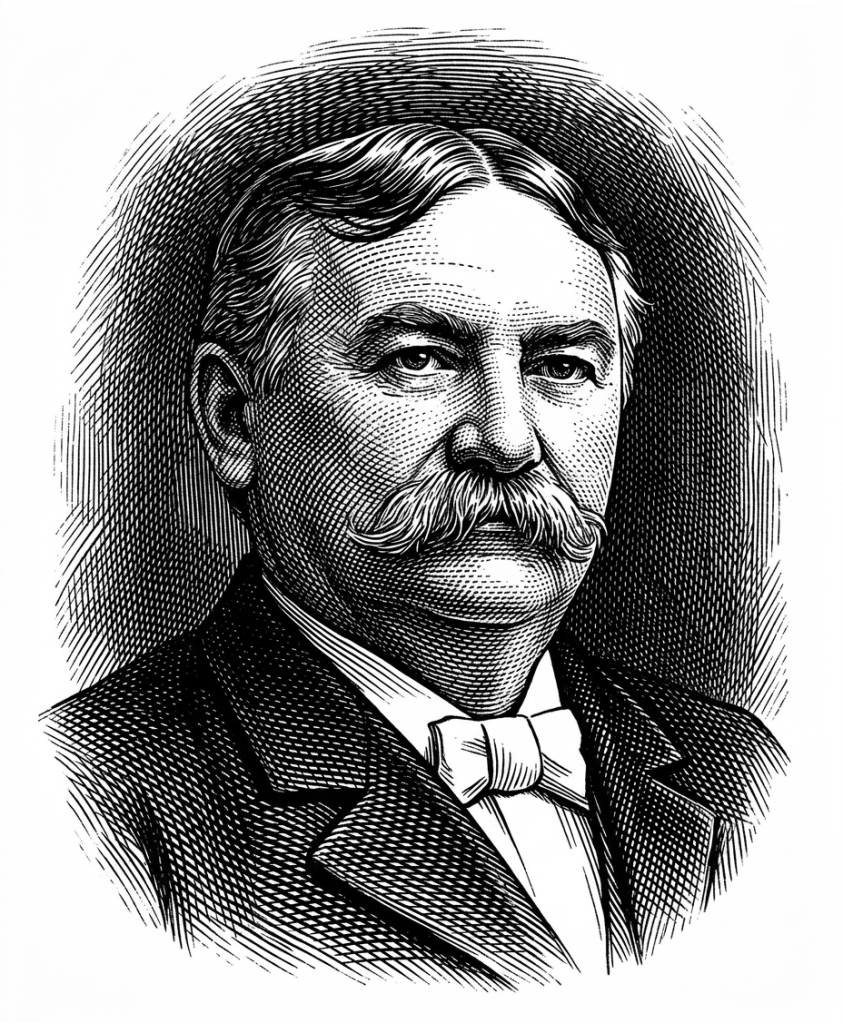
Charles Nelson Crittenton made his fortune in medicine. In 1861 he opened a wholesale drug business in New York City with about $60. By the time it incorporated in 1893, the company was valued at $800,000.
In March 1882 his four-year-old daughter, Florence, died of scarlet fever. Her death changed the direction of his life. Crittenton turned to religion and to what nineteenth-century reformers called rescue work, and nearly everything he built afterward carried his daughter’s name. In 1883 he opened the Florence Night Mission on Bleecker Street in Manhattan, a shelter for prostitutes and other women the era described as “fallen.”
For most of the rest of his life, Crittenton was on the road. He traveled the country as an evangelist, at one point touring with other preachers aboard a train he called the “Special News Extra,” and later living and working out of his own railroad “Gospel Car,” preaching especially to prostitutes and unwed mothers. In 1893, in Atlanta, he met Kate Waller Barrett, and the two built the mission into a national organization, chartered by Congress in 1898. More than 70 homes had opened by the time Crittenton died in San Francisco in November 1909.
Barrett told the story herself when she came to Lexington years later. “There have been many fantastic tales circulated as to what was the cause of the starting of the Florence Crittenton Homes,” she told the Lexington Herald in 1921, “but the real cause was this.” A four-year-old girl had died, and every home in the chain had grown out of the single one her father started “as a memorial to his baby daughter.”
Barrett, who led the organization after his death, had firm views about mothers and children. The Crittenton homes generally opposed separating a mother from her baby for adoption except in extreme cases. Motherhood, in Barrett’s view, was part of a woman’s reform, not an obstacle to it. “Our girls need the influence of child-life upon them,” she wrote.
The House of Mercy
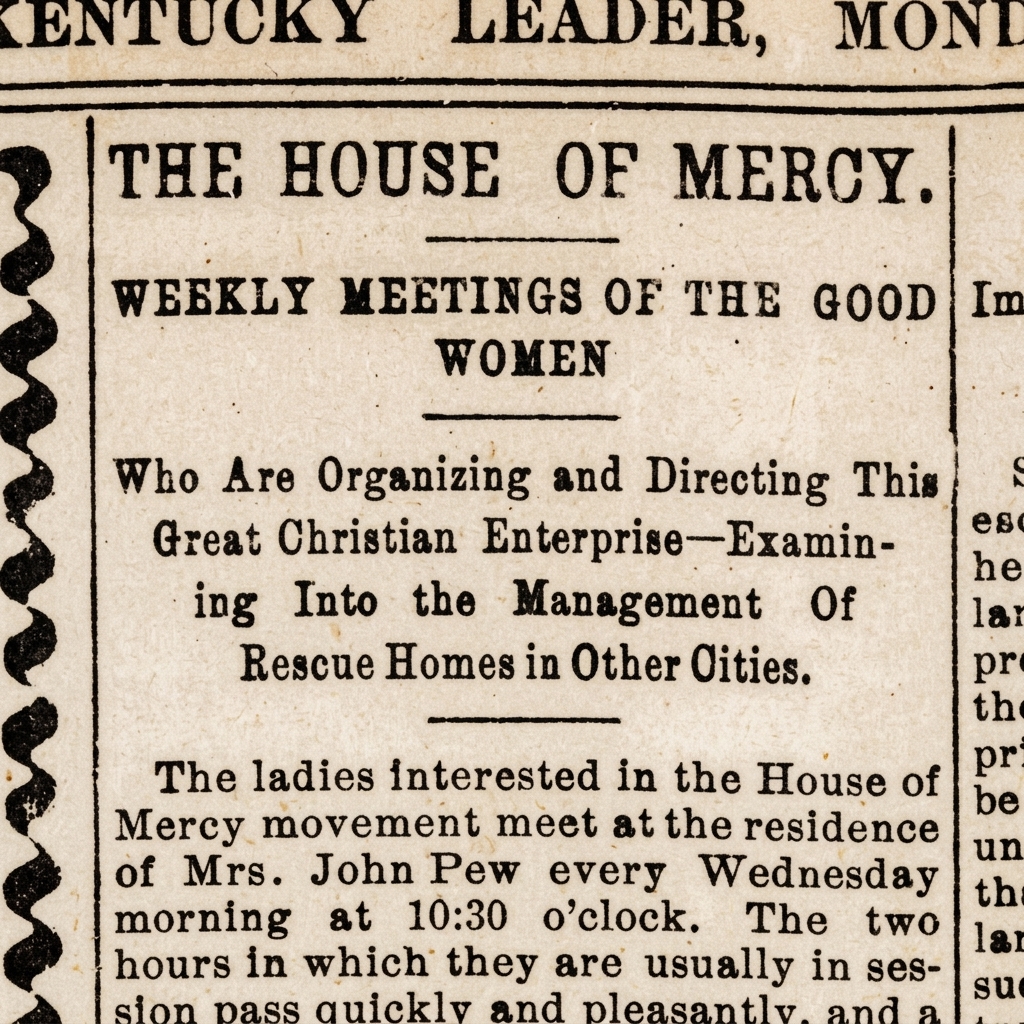
Lexington’s home began separately, and not as a maternity home. In the fall of 1894 a group of local women began meeting every Wednesday morning at the home of Mrs. John Pew to organize what they called a “rescue home.” The Kentucky Leader described their purpose in the language of the day: Lexington’s “outlying suburbs are reeking with sin and with misery, the fruit of sin,” while churches sent their dollars overseas and ignored “a great missionary field” at their own doors.
The women did their homework, visiting rescue homes in New York, among them a Florence Crittenton home, and in Louisville. Their plan was practical as well as religious. Residents would learn cooking, laundry, dressmaking, and embroidery, so that when they left they would “have a way of making a competency.” The doors would be open to any woman who knocked while there was a room and a bed. “Those who have children and those who have none will be equally welcome,” the paper reported. “No questions will be asked.”
In January 1895 the Leader announced that “Lexington’s House of Mercy for Fallen Women” would open the following week in “the old Totten place on Fourth street,” which had been rented and furnished. The eighteen-room house, the paper predicted, would be full almost from opening day. According to the 1980 National Register nomination, the city and the county each contributed $3,000 toward the effort, and a public subscription raised another $1,000.
Within weeks the board had to correct a misunderstanding. A newspaper report had said the House of Mercy would take in children from Megowan Street, the heart of Lexington’s red-light district. Not so, the board replied: the House of Mercy “is strictly for erring women who wish to reform.” The statement listed the seven women who ran the home: Annie W. Bain, Martha R. Stockwell, Mary Hamilton, Mollie Tilford Wood, Fanny A. Pew, Fanny B. Threlkeld, and Martha McChesney.
This is the first place the marker needs a closer look. It says the House of Mercy was founded “to provide a home for single pregnant women.” That describes what the home became, not what it was. In 1894 the founders set out to rescue women from prostitution and what they called lives of sin. Pregnant women were surely among those who came, but maternity care became the home’s focus only later.
Joining the Crittenton Chain
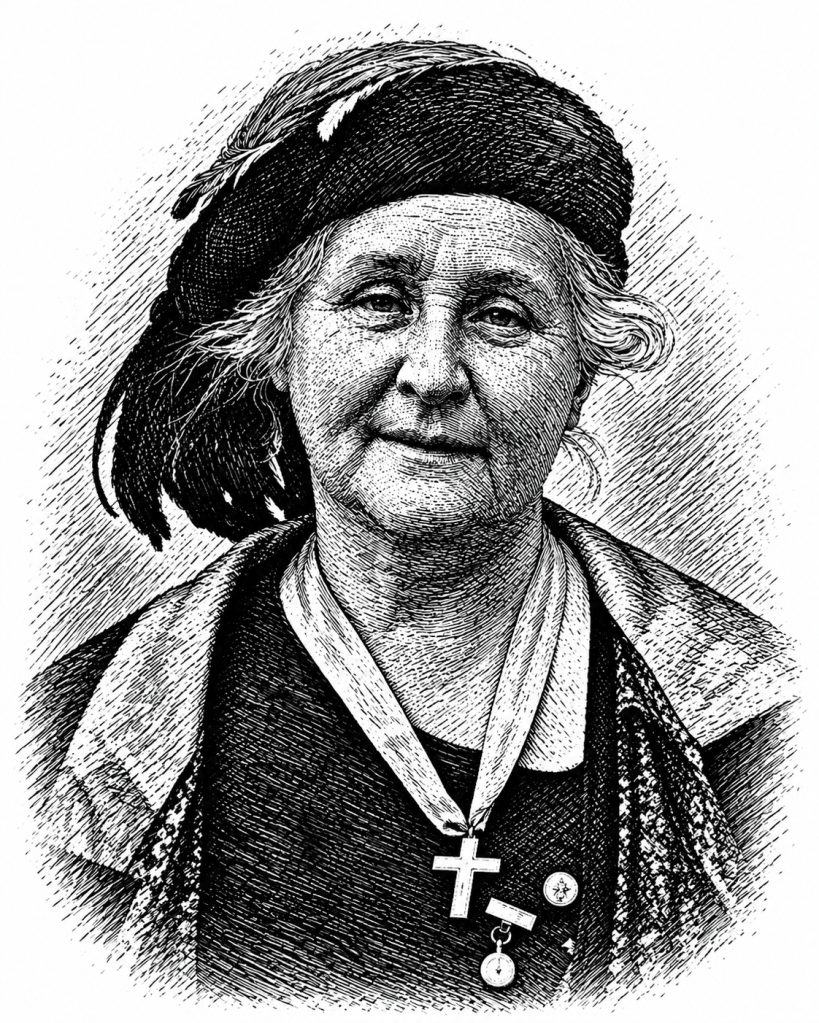
By 1921 the House of Mercy had operated for, in the Herald’s words, “practically 27 years of unvarying success in its particular field,” although the work had been carried on “without any ostentation and often in spite of adverse criticism.” That February, Kate Waller Barrett, by then president of the National Florence Crittenton Mission, came to Lexington at the invitation of the home’s officers. The founders had studied the Crittenton model in New York in 1894. Twenty-seven years later, their home joined it.
The home’s president, Miss Sue B. Scott, announced the change. The House of Mercy would take the Crittenton name and join a chain of 78 homes, keeping its property and its local board. Until then it had run a single department, its rescue work. Under the Crittenton plan it would add two more, one working with the Public Health Nursing Service and one with a detention home. And it would no longer be strictly local: “Girls from all parts of the state will be accepted,” the Herald reported, with the counties that sent them expected to pay for their stay.
Barrett explained why. In the Catlettsburg jail, she said, twenty girls were being held, “quarantined by the Public Health Service,” and something would have to be done for them after their release if they were to be kept from “slipping back into the same life they had been leading.” During and after World War I, federal and state authorities detained thousands of women suspected of carrying venereal disease, often in local jails, in an effort historians now call the American Plan. In 1921, part of the Lexington home’s new mission was to receive some of those women.
A House Older Than It Looks, and Younger Than Some Say
The building the House of Mercy moved into was already old by Lexington standards, and its first owner has a story of his own. In 1947, when the home held an open house, the Lexington Leader asked local historian C. Frank Dunn about it. Thomas Grant and Francis Downing, Dunn said, had been partners in a large store on West Short Street that sold drugs, groceries, and paint. Together they bought the Fourth Street tract from Mary C. Russell, daughter of Col. John Todd, who was killed at the Battle of Blue Licks in 1782. Grant later bought out his partner’s share and built a house for his son, George W. Grant. It was the first house on Fourth Street west of Limestone, at a time when that stretch was still outside the town limits.
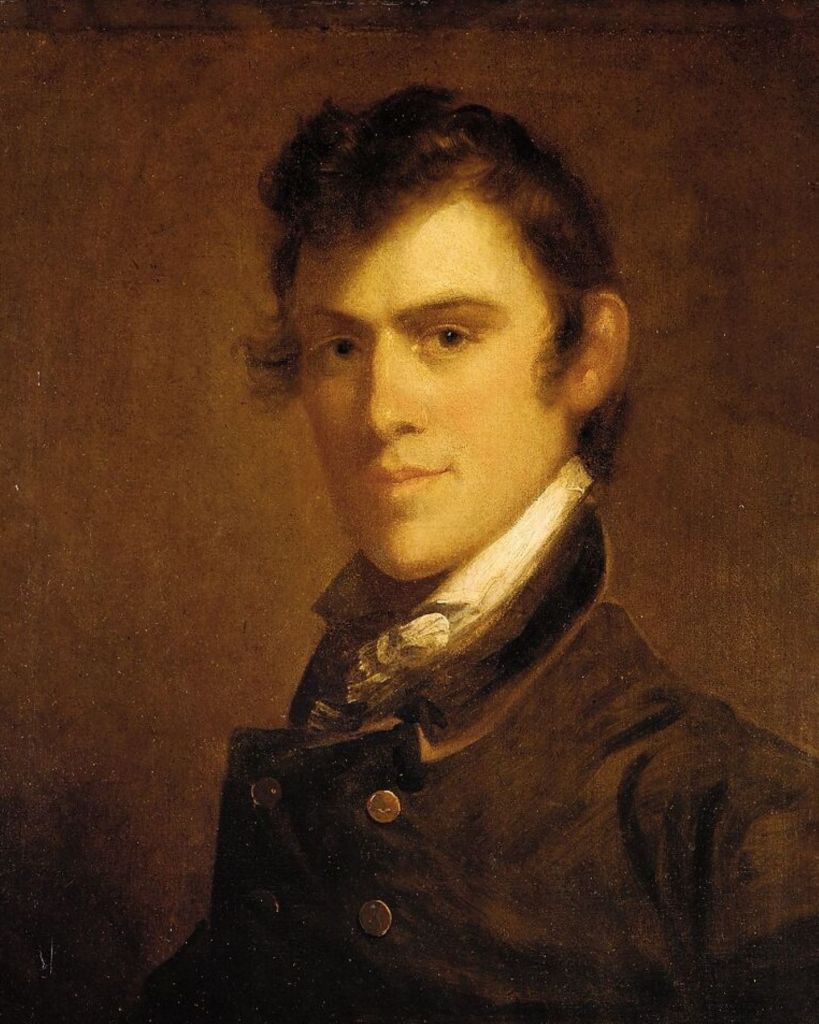
Dunn also connected Grant to an earlier act of charity. Grant had taken in a Lexington boy named John Grimes as an apprentice, and Grimes became almost a member of the family. He went on to study under the portrait painter Matthew Jouett and became a respected artist himself, working in Philadelphia, Nashville, and Louisville before he died of tuberculosis in 1837, at 38. The man who gave one homeless child a home, the paper observed, had “unwittingly” built a house that would one day become “a refuge for girls in need of help.”
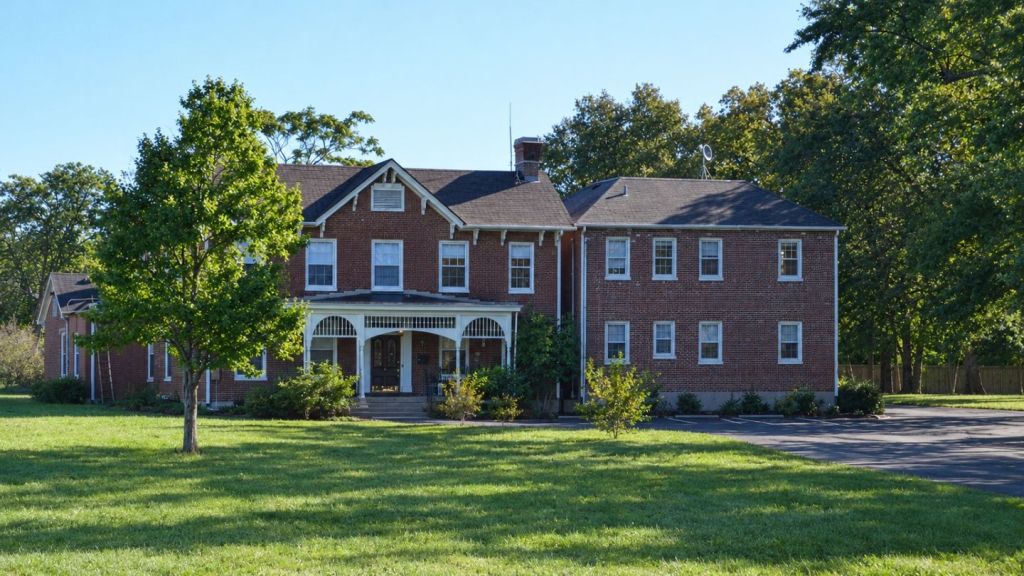
Dunn dated the house to 1823, and that date still circulates. The National Register nomination, written in 1980, is more cautious. Grant and Downing bought the land in 1823, it agrees, but the house itself, a two-story, five-bay brick building with a central hall, looks more like the work of the late 1840s or 1850s. George W. Grant likely died there in 1863.
Later owners added Italianate trim, and by 1890 the place was known as “the old Totten home,” after Alfred I. Totten and his sisters. The front porch dates to the mid-1890s, about the time the House of Mercy arrived, and a twentieth-century wing was added as the home grew. The property was listed on the National Register of Historic Places in 1980 as the George W. Grant House.
The setting suited the home’s purpose, because privacy was part of what it offered. Fourth Street west of Limestone was at the edge of town, and it never became a fashionable address. By 1980 the house stood between a tobacco warehouse and an industrial building, with a rail line at the corner of the lot, yet the nomination noted that it was “approached inconspicuously,” screened by mature trees and a circular drive. For women leaving the street in 1895, and for the pregnant girls of later decades whose families wanted no one to know, that discretion was part of the service.
To Keep a Baby, or Give It Up
What “help” meant changed over the twentieth century, and that change is the part of the story the marker leaves out.
Barrett’s policy of keeping mothers and babies together did not last. As states rewrote adoption laws and the community funds that paid for charities pushed homes toward professional social work, the old Crittenton approach came to look outdated. A national Crittenton conference in 1943 called for closer work with adoption agencies.
In the decades after World War II, maternity homes across the country became places where unmarried pregnant girls were sent to wait out their pregnancies away from home, give birth, and, very often, surrender their babies. Historians sometimes call the period from 1945 to 1973 the Baby Scoop Era. One widely cited estimate puts the number of infants surrendered by unmarried mothers in those years at about 1.5 million.
Lexington’s home followed the same path, and in 1959 it described its work plainly. A Lexington Herald feature that October called the home “more than a ‘shelter’ for unwed mothers.” It had room for nineteen girls and had helped sixty-four the year before. They came from Lexington, from across Kentucky, and from other states, paying on a sliding scale of $175 for Fayette County residents, $225 for other Kentuckians, and $275 for those from out of state, though no one was turned away for inability to pay. Married girls were not accepted. Two social workers from the state’s Division of Children’s Services visited each week, and the home made “arrangements with the girls who wish to place their babies for adoption, as most do.” The decision, the article said, was left “strictly to the mothers themselves.”
There is no reason to doubt that the home believed that. But the same article shows how the system was built: girls sent away from home for months, a state adoption agency on the premises every week, and an outcome that most residents arrived at. Former residents of maternity homes elsewhere have described how little room that left for another choice. The home reported holding its records back to the late 1890s, and an adoption reunion registry listed it as a contact for adoptees and birth mothers looking for one another. The small italic line on the marker, which names “their babies” separately from the residents, may be the closest any public text in Lexington comes to acknowledging that many of those mothers and children were separated.
From Maternity Home to Treatment Center
After 1973, as unmarried motherhood became more accepted, maternity homes nationwide closed or changed. By 1980 the Lexington home still served single pregnant women, but most of its money now came from federal sources. The “government funding” on the marker’s reverse was not a footnote. Public money had been part of the home since the city and county helped open it.
In its final decades the home became a residential treatment center for girls and young women who had been abused, neglected, or abandoned, and for pregnant and parenting teenagers with behavioral or mental health needs.
That dependence on public money is what ended it. In November 2013 the home announced it would close, saying it no longer had the money to operate and that the state was no longer referring girls to it.
Dedicated to Former Residents
The Kentucky Historical Society dedicated the marker on May 9, 2015, about eighteen months after the home closed. By then the property already had a new life. In 2014 Providence Montessori School, which had started in 1965 at St. Peter Claver Church a block away on Fourth Street, opened its middle school campus in the old house, with gardens, fruit trees, and space for students to raise chickens and keep bees on the two-and-a-half-acre grounds.
Montessori is not a single organization but a method of education, developed in the early twentieth century by the Italian physician Maria Montessori and used today by thousands of independent schools. Providence is one of them, a parent-owned school. Its middle school follows Montessori’s idea of the Erdkinder, German for “children of the earth.” In the 1930s she proposed that adolescents learn best on the land, doing real work such as farming and running a small business, as a step toward adult independence.
It is a fitting second use for a building that spent more than a century housing teenagers. But the marker’s dedication line is worth reading twice. Over 118 years, a great many women and girls lived here. Some of them kept their children. Many, especially in the middle decades of the century, likely did not, and some of those mothers and children may still be looking for one another. The marker does not tell their stories. It does, in its smallest type, make room for them.
Sources consulted: Kentucky Historical Society marker database, Marker No. 2460; Kentucky Leader (Lexington), November 5, 1894, January 16, 1895, and March 2, 1895; Lexington Herald, February 25, 1921, and October 6, 1959; Lexington Leader, October 25, 1947; National Register of Historic Places Inventory–Nomination Form, George W. Grant House / Lexington House of Mercy / Florence Crittenton Home of Lexington (1980); Kentucky Photo Archive (Lexington Herald-Leader), “Florence Crittenton Home, 1947”; Virginia Commonwealth University Social Welfare History Project, “Florence Crittenton Homes: A History” and “Crittenton, Charles Nelson”; Historical Marker Database (hmdb.org), entry 169840; WMKY, “Florence Crittenton Site to Receive Historical Marker” (2015); WTVQ, “Florence Crittendon Home in Lexington to Shut Down This Month” (2013); GuideStar, Florence Crittenton Home & Services Inc. profile; Lexington Family Magazine, “Providence Montessori Will Open New Middle School at Historic Site” (2014); Providence Montessori School, “Facilities”; Wikipedia, “Charles Nelson Crittenton” and “Erdkinder”; Florence Crittenton Home Reunion Registry.



I’m eager to hear what you think