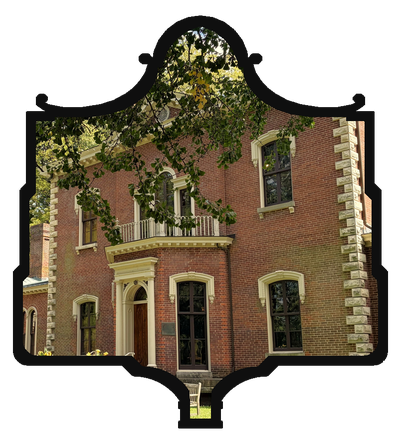
“THOMAS HUNT MORGAN”
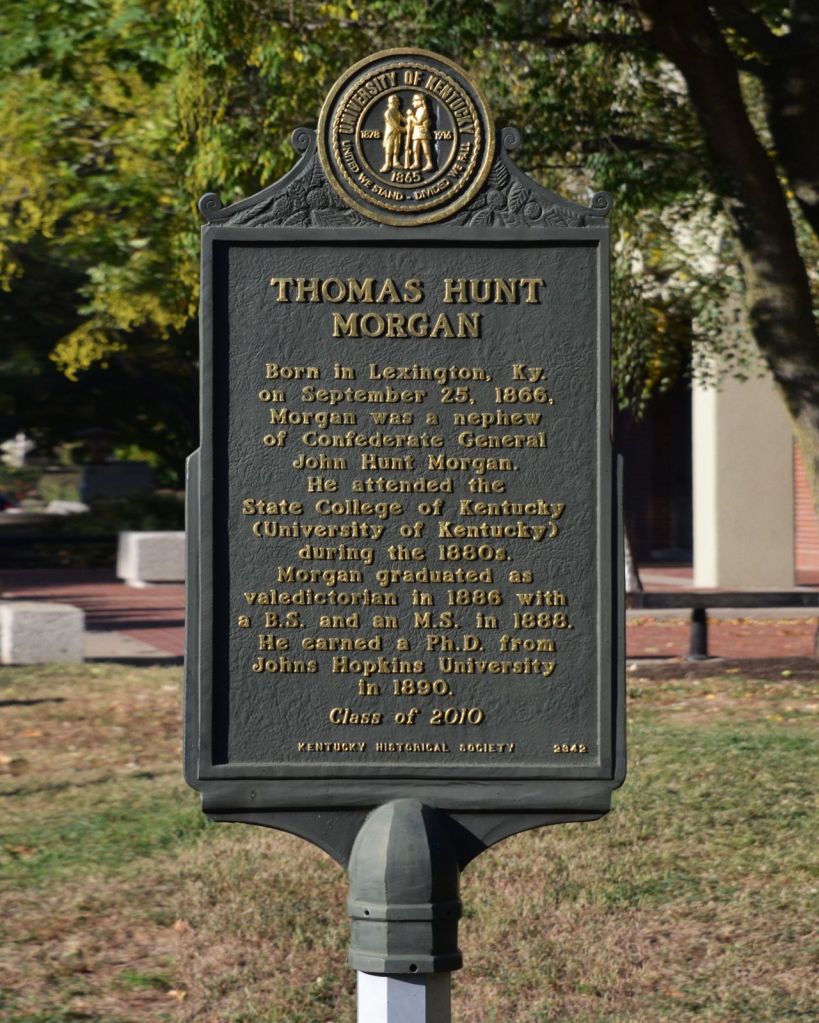
Born in Lexington, Ky. on September 25, 1866, Morgan was a nephew of Confederate General John Hunt Morgan. He attended the State College of Kentucky (University of Kentucky) during the 1880s. Morgan graduated as valedictorian in 1886 with a B.S. and an M.S. in 1888. He earned a Ph.D. from Johns Hopkins University in 1890. Class of 2010.
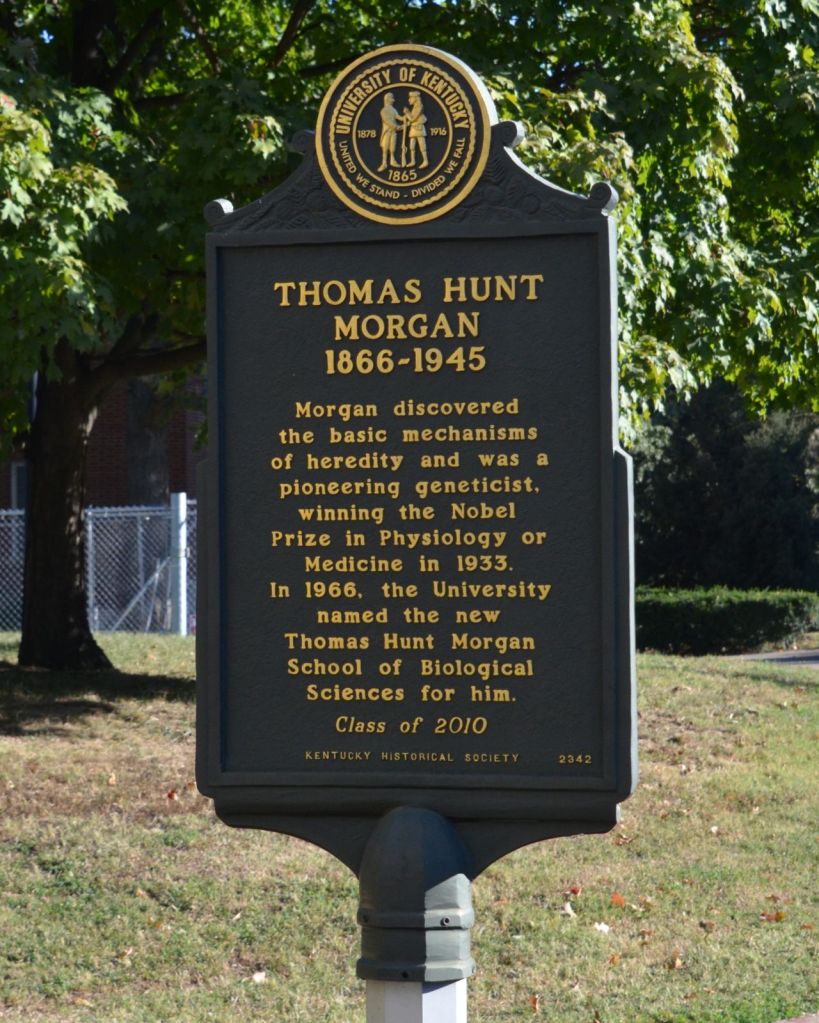
“THOMAS HUNT MORGAN, 1866–1945”
Morgan discovered the basic mechanisms of heredity and was a pioneering geneticist, winning the Nobel Prize in Physiology or Medicine in 1933. In 1966, the University named the new Thomas Hunt Morgan School of Biological Sciences for him. Class of 2010.
Kentucky Historical Society, Marker No. 2342 — erected 2011
Thomas Hunt Morgan Building, 195 Huguelet Dr., University of Kentucky, Lexington | 38° 02′ 02″ N, 84° 30′ 20″ W — Directions: MapQuest
Most of Lexington’s historical markers stand on roadsides. This one stands on a campus lawn, in front of a concrete and brick science building named for the man on the plaque. It carries the University of Kentucky seal instead of the Commonwealth’s, and it was paid for by the graduating Class of 2010, who chose Thomas Hunt Morgan as their gift to the school. It was dedicated in April 2011.
The marker tells a clean story of a local student who went on to win the Nobel Prize, and a university that honored him. Every fact on it is correct. What it leaves out is the decade in between, when Kentucky came within one vote of making the science Morgan practiced illegal to teach in its public schools, including at the university that later put his name on a building.
A Lexington Boy at State College
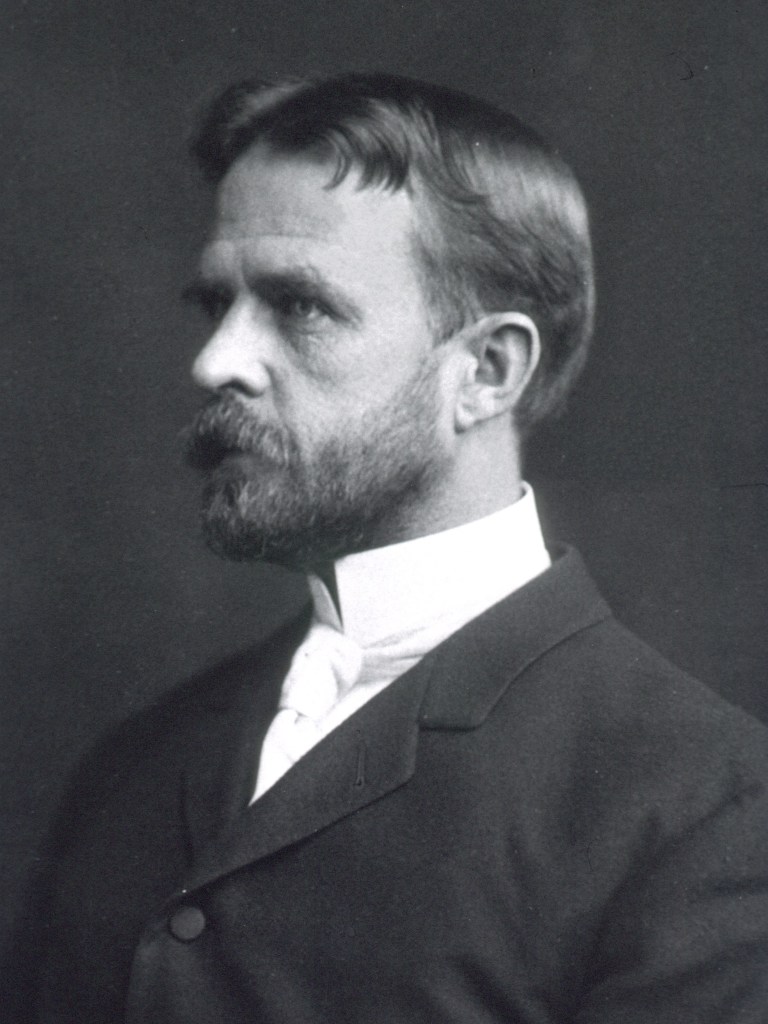
Morgan was born in 1866 into two prominent families. His mother, Ellen Key Howard, was a granddaughter of Francis Scott Key; his father, Charlton Hunt Morgan, was the brother of John Hunt Morgan, the Confederate cavalry raider whose statue stood on the old courthouse lawn until 2017. The family home was Hopemont, the Hunt-Morgan House on Gratz Park, which has its own marker, No. 2365. A second Thomas Hunt Morgan marker, No. 1714, stands nearby on North Broadway.
At sixteen he entered the State College of Kentucky, the school that became the University of Kentucky. He graduated first in his class in 1886 with a bachelor of science degree, spent several summers doing geological and biological fieldwork in the Kentucky mountains, and received a master’s degree from State College in 1888. By then he was already at Johns Hopkins University in Baltimore, one of the first American universities built around laboratory research. He finished his doctorate there in 1890 with a study of the embryos of sea spiders.
The marker’s front panel stops at that point. Morgan never lived in Kentucky again.
The Fly Room
After more than a decade teaching at Bryn Mawr College, Morgan moved to Columbia University in New York in 1904. Around 1908 he began breeding fruit flies, Drosophila melanogaster, in milk bottles in a cramped laboratory that became known as the Fly Room. Fruit flies were cheap, bred quickly, and had only four pairs of chromosomes.
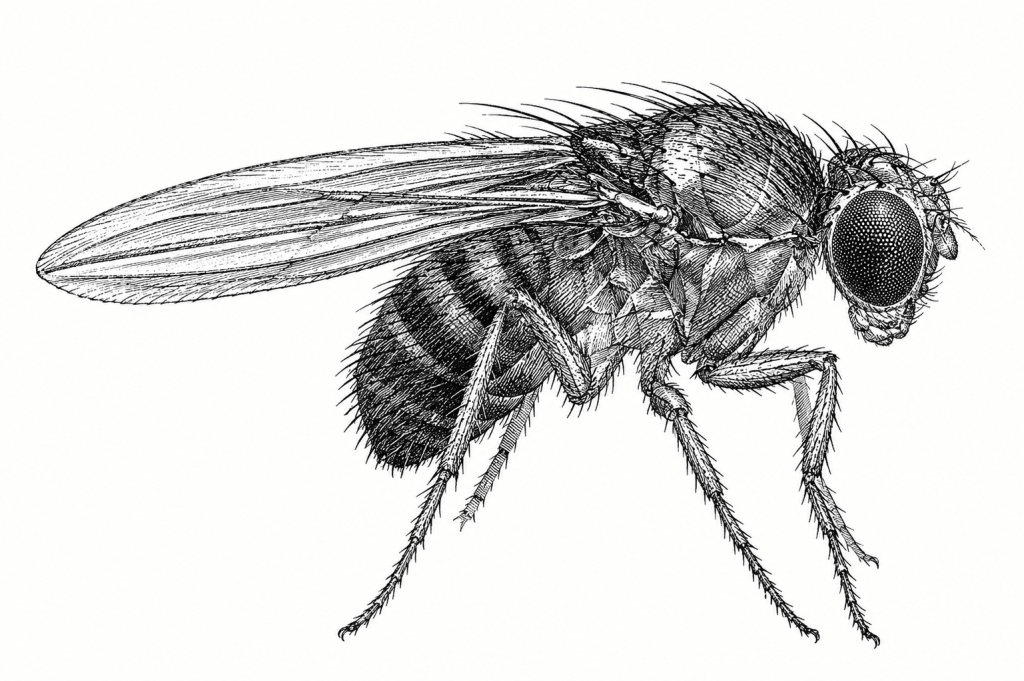
In 1910 Morgan found a male fly with white eyes instead of the usual red. When he bred it and tracked the trait through later generations, white eyes showed up almost entirely in males. The simplest explanation was that the gene for eye color rode on the same chromosome that determines sex. It was some of the first hard evidence that genes are physical things, located on chromosomes, rather than a convenient abstraction.
The marker credits Morgan with discovering “the basic mechanisms of heredity,” and that needs a little context. Gregor Mendel had worked out the basic rules of inheritance in pea plants in the 1860s. What Morgan’s lab showed was the physical machinery behind those rules. And it was a team effort. His students Alfred Sturtevant, Calvin Bridges, and Hermann Muller did much of the work; Sturtevant, still an undergraduate, drew the first map of genes along a chromosome. In 1915 the four men published The Mechanism of Mendelian Heredity together. When Morgan received the Nobel Prize in 1933, “for his discoveries concerning the role played by the chromosome in heredity,” he shared the prize money with the families of Sturtevant and Bridges.
There is one more wrinkle. Morgan did not start out as a champion of Darwin. In his 1903 book Evolution and Adaptation, he openly doubted that natural selection could account for new species. He never doubted that evolution happened; he doubted the explanation. The fly work changed his mind. Genetics showed how new variations arise and how they are passed down, which was exactly the piece Darwin’s theory had been missing. By the 1920s, the onetime skeptic was one of the scientists whose work made evolution harder to argue with.
Kentucky Takes Up Darwin
Back home, the University of Kentucky had already claimed him, awarding Morgan an honorary doctor of laws degree in 1916. Six years later, the state legislature nearly outlawed the subject he was famous for.
The campaign began in 1921 with a Baptist minister, J. W. Porter, who persuaded the Kentucky Baptist State Board of Missions to take up the cause and declared that “Darwinism would be run out of Kentucky if it took every cent the Baptist people of the Commonwealth had to do it.” On January 19, 1922, William Jennings Bryan, three times the Democratic nominee for president and the country’s best-known opponent of evolution, addressed a joint session of the Kentucky House and Senate in Frankfort. Four days later, Representative George W. Ellis of Barren County introduced House Bill 191.
The bill would have banned the teaching of “Darwinism, atheism, agnosticism or evolution as it pertains to the origin of man” in public schools and “other public institutions of learning.” A teacher who broke the law faced a fine of $50 to $5,000, up to a year in jail, or both. A school that allowed it could lose its charter. A companion measure in the Senate, sponsored by James R. Rash of Madisonville, was sent to the Rules Committee by a vote of 19 to 17, which effectively ended it. The House bill went to the floor.
Forty-Two to Forty-One
The university’s president, Frank L. McVey, took the unusual step of fighting the bill in public. He confirmed that the university taught evolution and said it would keep doing so. Testifying before a Senate committee in February, he argued that the law would make it impossible to find usable science textbooks, would push Kentucky students to schools in other states, and would violate the personal liberties the state constitution protected. He presented evolution as a theory of development and change, not an attack on religious faith.
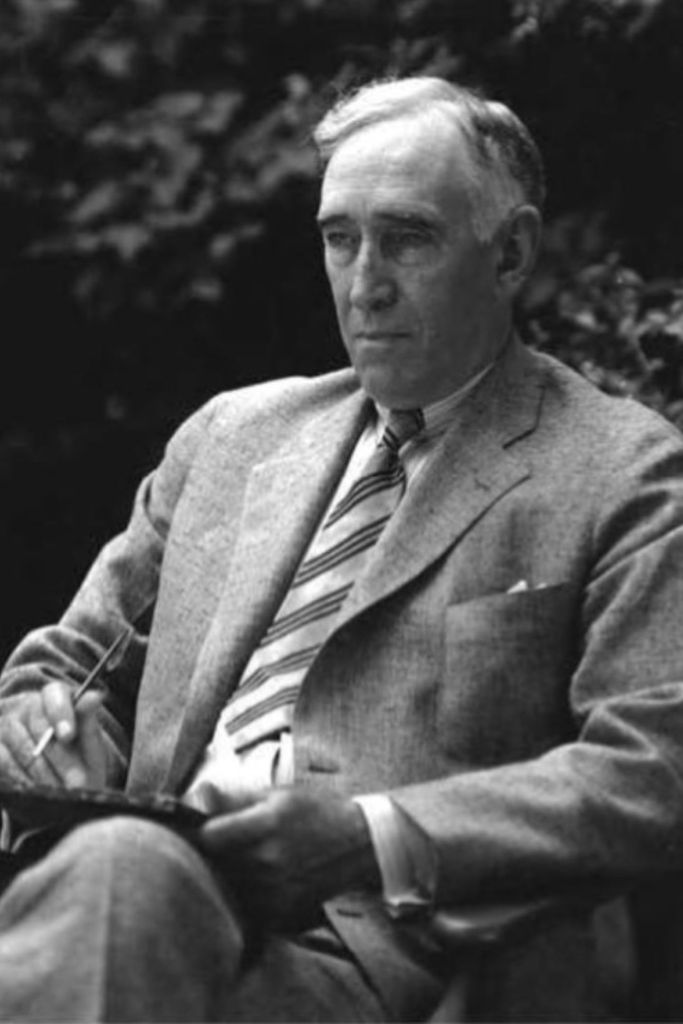
Not every religious leader was on the other side. Some Kentucky ministers spoke against the bill, and the president of the Southern Baptist Theological Seminary in Louisville, E. Y. Mullins, favored a narrower measure that would protect students’ religious beliefs rather than ban a scientific theory outright.
In March 1922 the House voted down House Bill 191, 42 to 41. Historians of the creationism movement count it as the first bill in American history aimed squarely at the teaching of evolution, and it failed by a single vote. Arthur M. Miller, the university’s geology professor and one of McVey’s allies, wrote up the fight for the national journal Science that spring.
A Student Named Scopes
One of the students on campus that spring was a law major from Paducah named John Thomas Scopes. Born in 1900, he had grown up partly in Illinois, and in 1919 he graduated from high school in Salem, Illinois, where the commencement speaker was William Jennings Bryan. A health problem led him to transfer from the University of Illinois to the University of Kentucky at the start of his second year of college. He took a minor in geology, studied under Arthur Miller, and graduated in 1924.
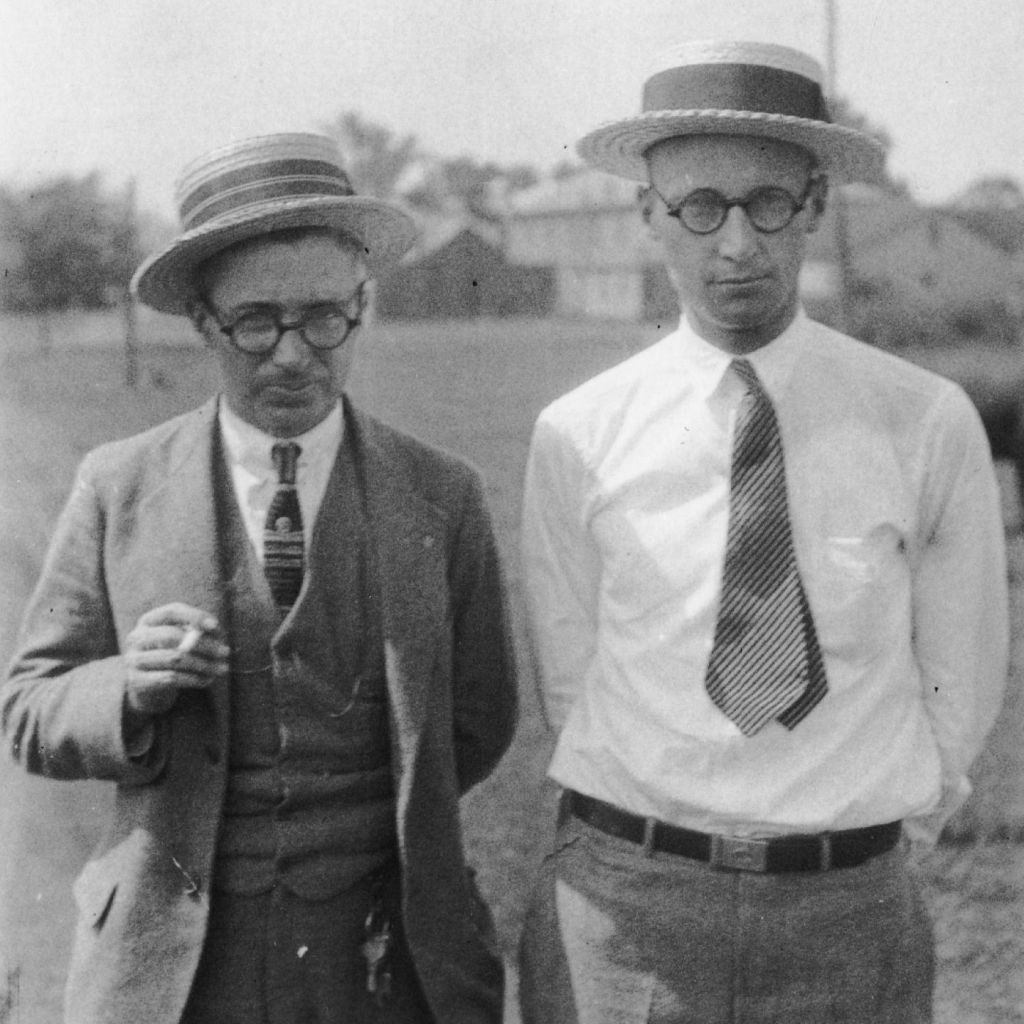
That fall Scopes took a job coaching football and teaching algebra and physics at Rhea County High School in Dayton, Tennessee. In March 1925, Tennessee passed the Butler Act, which did what Kentucky had narrowly refused to do: it made it a crime to teach that humans descended from a lower order of animals. When the American Civil Liberties Union offered to defend any teacher willing to test the law, a group of Dayton businessmen saw a chance to put their town on the map. Scopes, who had filled in for the regular biology teacher, agreed to be charged. He said later that he was not sure he had ever actually taught the evolution lesson.
The trial, in July 1925, became a national spectacle. Bryan joined the prosecution; Clarence Darrow led the defense. Scopes was found guilty and fined $100. Tennessee’s Supreme Court later threw out the verdict on a technicality. Bryan died in Dayton five days after the trial ended. Scopes left teaching, studied geology in graduate school at the University of Chicago, and spent the rest of his career as a petroleum geologist. He died in 1970.
Where Was Morgan?
Morgan, still at Columbia, does not appear in accounts of the Kentucky fight, and he played no part in the Scopes trial. His contribution that year came in print. In 1925, the year Dayton made headlines, Princeton University Press published his book Evolution and Genetics, which laid out the genetic case for evolution. It also contained an early critique of eugenics from one of the field’s leading figures: Morgan cautioned that mental and social traits are heavily shaped by environment, and that claims about inheriting them ran well ahead of the evidence.
So the timeline the marker compresses into two panels looks like this. Kentucky trained Morgan and honored him in 1916. In 1922 its legislature nearly made his field a crime to teach. In 1925 a graduate of the same university became the defendant in the most famous evolution trial in American history. Morgan moved to the California Institute of Technology in 1928, won the Nobel Prize in 1933, and died in Pasadena in 1945. The university inducted him into its Hall of Distinguished Alumni in 1965 and, in 1966, the centennial of his birth, gave his name to the new School of Biological Sciences it formed by merging the Departments of Botany, Microbiology, and Zoology.
None of that is a reason to discount the honor. The university took a stand when it counted, and McVey’s defense of evolution in 1922 was one of the reasons the bill failed. But the marker presents Morgan’s connection to Kentucky as a straight line from valedictorian to namesake, and the real story has a near miss in the middle of it.
An Argument That Never Quite Ended
In 2019, the university added a plaque inside newly renovated Miller Hall, named for the same Arthur Miller, honoring Miller, McVey, and Scopes as early defenders of teaching evolution. It came about through the efforts of two retired university scientists. Miller Hall also has its own state historical marker, No. 1953.
The question Kentucky voted on in 1922 did not go away. In 1976 the General Assembly passed a law allowing public school teachers to present “the theory of creation as presented in the Bible” alongside evolution. Fifty-four years after the House rejected a ban by one vote, the legislature opened the classroom door from the other side.
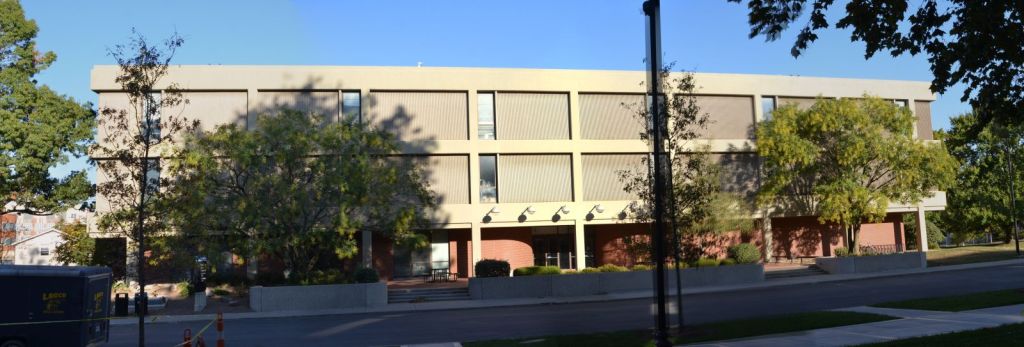
Standing on the lawn in front of the Thomas Hunt Morgan Building, students walk past a marker celebrating a geneticist from Lexington. Across campus, in Miller Hall, a second plaque remembers the year the state nearly decided that what he discovered could not be taught there.
Sources consulted: Kentucky Historical Society marker database, Marker No. 2342; UKNow, “Annual Marker Honors Bio Alum, Nobel Winner” (2011); University of Kentucky Department of Biology, “History” and “UK’s Impact on Evolution”; Lexington History Museum, “Morgan, Thomas Hunt”; National Academy of Sciences, Biographical Memoir of Thomas Hunt Morgan; The Nobel Prize, Physiology or Medicine 1933; Wikipedia, “Thomas Hunt Morgan,” “John T. Scopes,” and “John Hunt Morgan Memorial”; Jane Maienschein, “Thomas Hunt Morgan,” Encyclopedia of Evolution (2002); Thomas Hunt Morgan, Evolution and Adaptation (1903) and Evolution and Genetics (1925); Cold Spring Harbor Laboratory DNA Learning Center, “The Inheritance of Mental Traits”; Arthur M. Miller, account of the Kentucky evolution bill in Science (1922); “The Kentucky Campaign Against the Teaching of Evolution,” The Journal of Religion (May 1922); National Center for Science Education, “Martin’s Mysterious Myrmidons” and “One Hundred Years of Anti-Evolution Legislation Are More Than Enough”; Glenn Branch, Religion Dispatches (2022); John T. Scopes, “Reflections” (1965), via Famous Trials; Kentucky Kernel, “UK supported evolution before it was cool”; The Panda’s Thumb, “Kentucky (yes, Kentucky) erects plaque honoring early defenders of evolution” (2019); The Kaintuckeean, “The Thomas Hunt Morgan Biological Sciences Building.”



I’m eager to hear what you think