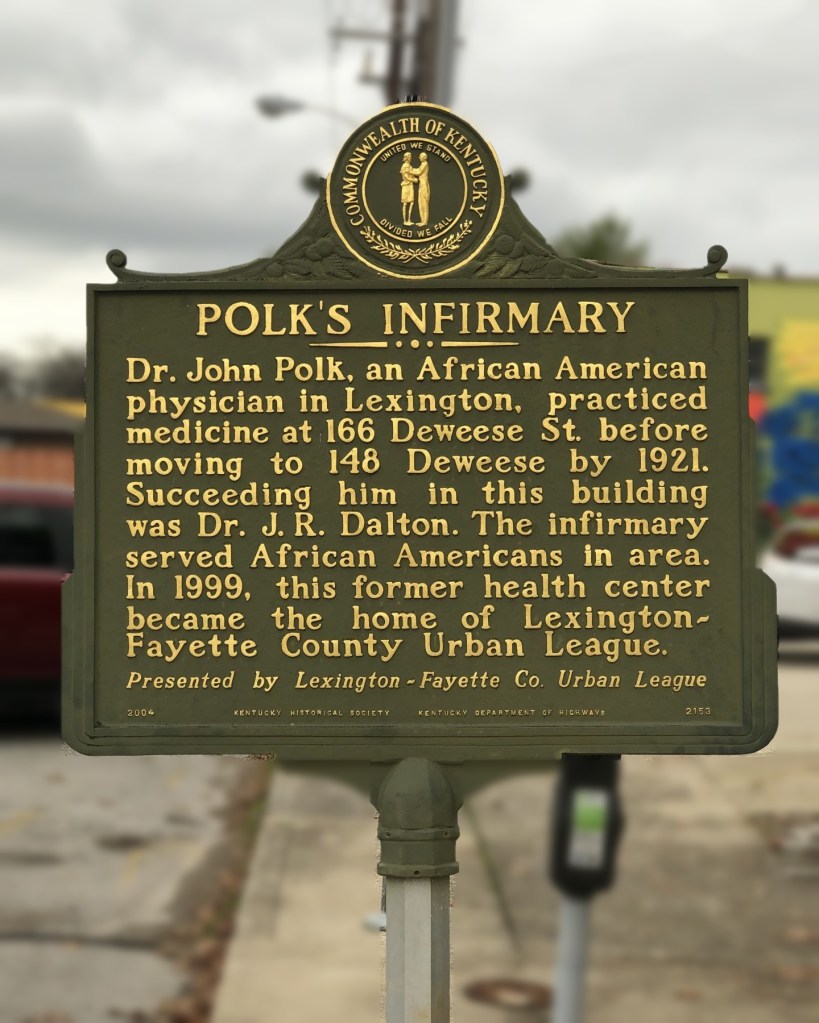
“Dr. John Polk, an African American physician in Lexington, practiced medicine at 166 Deweese St. before moving to 148 Deweese by 1921. Succeeding him in this building was Dr. J. R. Dalton. The infirmary served African Americans in area. In 1999, this former health center became the home of Lexington-Fayette County Urban League.”
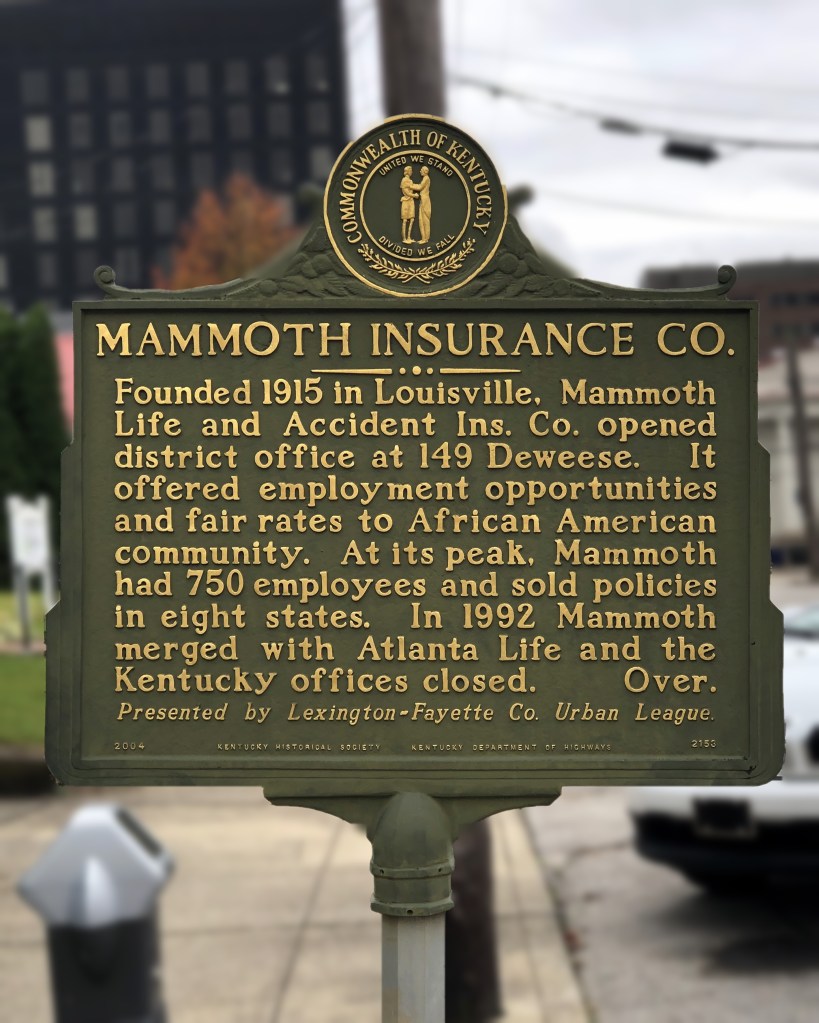
“Founded 1915 in Louisville, Mammoth Life and Accident Ins. Co. opened district office at 149 Deweese. It offered employment opportunities and fair rates to African American community. At its peak, Mammoth had 750 employees and sold policies in eight states. In 1992 Mammoth merged with Atlanta Life and the Kentucky offices closed.”
Kentucky Historical Society, Marker No. 2153 — dedicated September 12, 2004; presented by the Lexington-Fayette Co. Urban League
149 Deweese St., Lexington | 38° 02′ 40″ N, 84° 29′ 30″ W — Directions: MapQuest
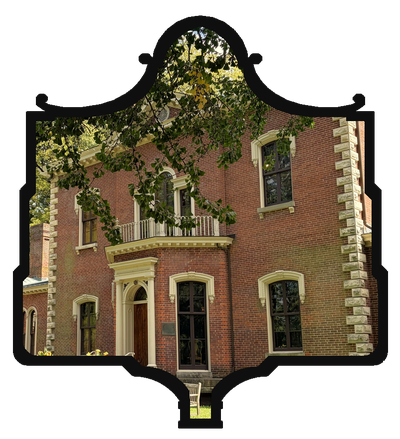
Marker No. 2153 stands on a short stretch of DeWeese Street, between a two-story brick building at 148 and a small one-story house at 149. Its two sides tell what look like two separate stories. One is about a doctor. The other is about an insurance company. Read together, they describe the same thing: a Black neighborhood building the institutions that white Lexington would not provide.
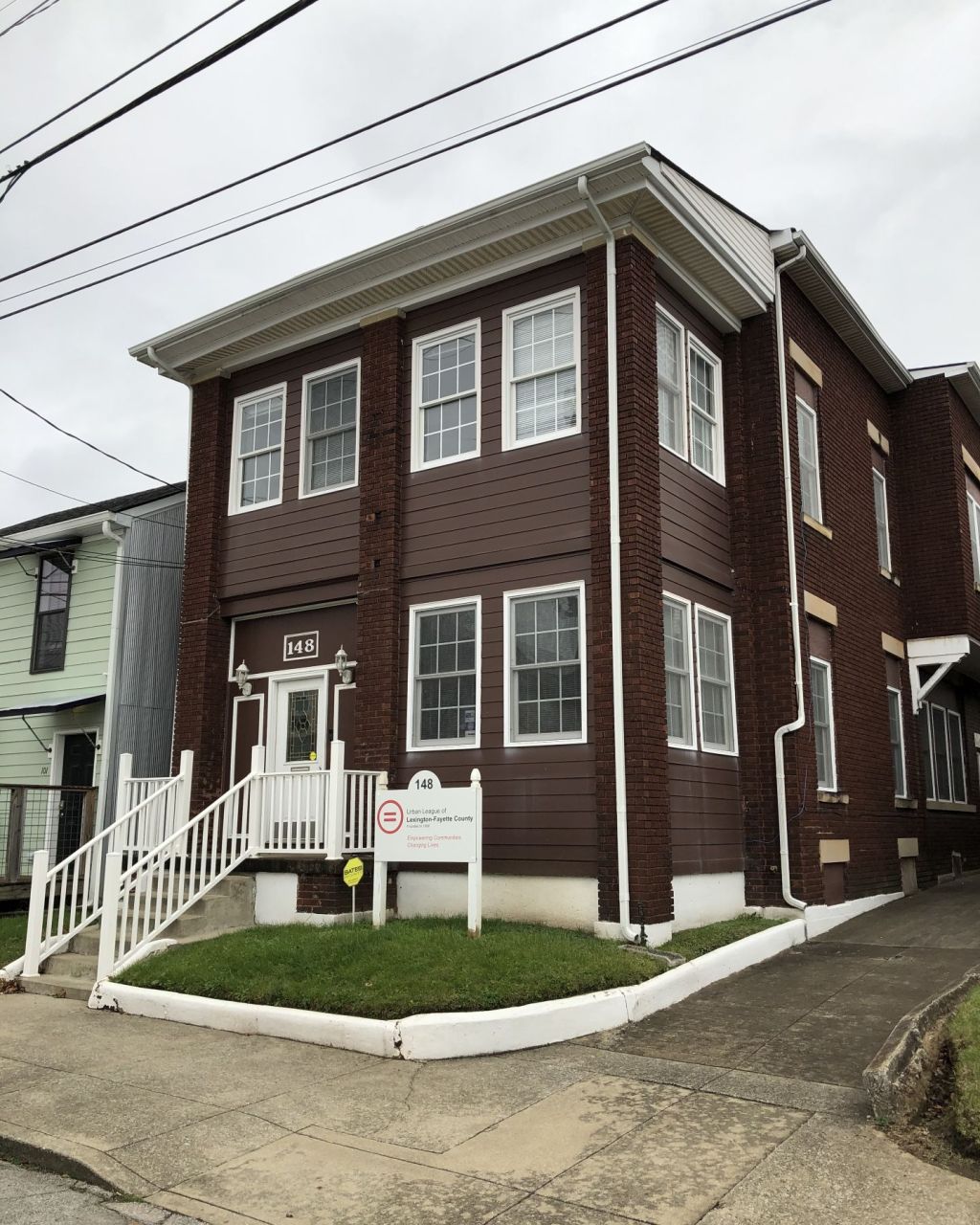
In the 1920s a Black family in Lexington who needed a hospital bed, or a life insurance policy, could not count on getting either from the city’s white-run institutions. On this block they could get both, from people who looked like them, on either side of the street. The brick building at 148 DeWeese was Polk’s Infirmary. Today it is the office of the Urban League of Lexington-Fayette County, a community service organization founded in 1968, in the words of its original charter, “to secure equal opportunity for negroes and other disadvantaged citizens,” through work in housing, education, and employment. Across the street was the local office of a Louisville company founded, in its own words, as “an insurance company of, by, and for Negros in Kentucky.”
A Preacher’s Son from Woodford County
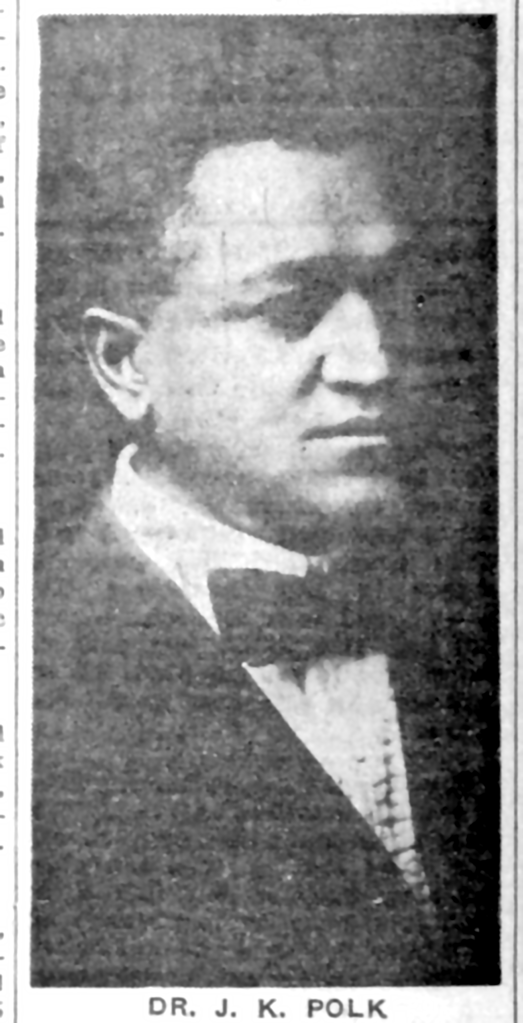
John Knox Polk was born in Woodford County in 1882. His father, James Knox Polk, had been born enslaved in 1845 at Bosque Bonita, a Woodford County horse farm that is now part of Lane’s End Farm near Versailles. His mother named him after the newly elected president. Bosque Bonita was well known in racing circles: Leamington, the sire of Aristides, winner of the first Kentucky Derby, stood at stud there. The farm’s owner, Abraham Buford, later a Confederate cavalry general, took him to war as a hostler, caring for the horses. After the war James Polk came home, married, and became a Baptist preacher. In 1872 he founded Pilgrim Baptist Church in Midway, Kentucky, and for 45 years he pastored a church in Mortonsville, Kentucky, that was later renamed Polk Memorial in his honor.
The son grew up in that household. The 1900 census shows the family on Lexington Street in Versailles, and John attended the town’s colored common school. He trained first in pharmacy and then in medicine. According to his obituary in the Lexington Herald, he completed a pharmaceutical course and went on to earn his degrees at Roger Williams University in Nashville, Tennessee and at Howard University in Washington, D.C. He came to Lexington to practice in 1914, and that year’s city directory lists “Polk, John K., 166 Deweese” under Physicians, on the same page as Dr. John E. Hunter and the city’s other Black doctors. The UK HealthCare marker says he graduated from Howard in 1918 and only then opened his practice, but the directories and his obituary both show him at work four years earlier. In September 1918, at 36, Polk registered for the World War I draft. He gave his occupation as physician and his office as 166 DeWeese, and he signed the card “J. K. Polk, M.D.” His father died that same January.
In 1920 Polk dedicated a new building a short way down the block at number 148, an office, hospital, and home together, which the Herald later valued at $20,000. He called it Polk’s Infirmary. The city directories still place him at 166 in 1919 and at 148 by 1921, which matches the state marker’s “by 1921.” A little more than half a century after his father came home from the Civil War, the son of a man born into slavery was running a small hospital of his own.
Why a Black Doctor Needed His Own Hospital
The infirmary existed because the alternatives were so limited. In the early twentieth century, Black physicians in Lexington, as in most of the South, could not join the staffs of the large hospitals. Black patients were admitted only on segregated terms. St. Joseph Hospital, run by the Sisters of Charity of Nazareth, kept Black patients in a separate building. Dr. John E. Hunter, who came to Lexington in 1889, became the first Black surgeon to operate at St. Joseph, an exception that depended on the support of the hospital’s longtime administrator, Sister Euphrasia Stafford.
For most Black doctors, the answer was to build their own. Small private infirmaries like Polk’s gave Black physicians a place to treat and house patients, and gave Black patients a place where they would be cared for without being sent to the back building of a whites-only hospital. A few blocks away, at 118 North Broadway, an office building housed several of the city’s Black physicians and a pharmacy in the same years. It has its own KHS marker, No. 1928, “African American Physicians.”
The Infirmary at 148 DeWeese
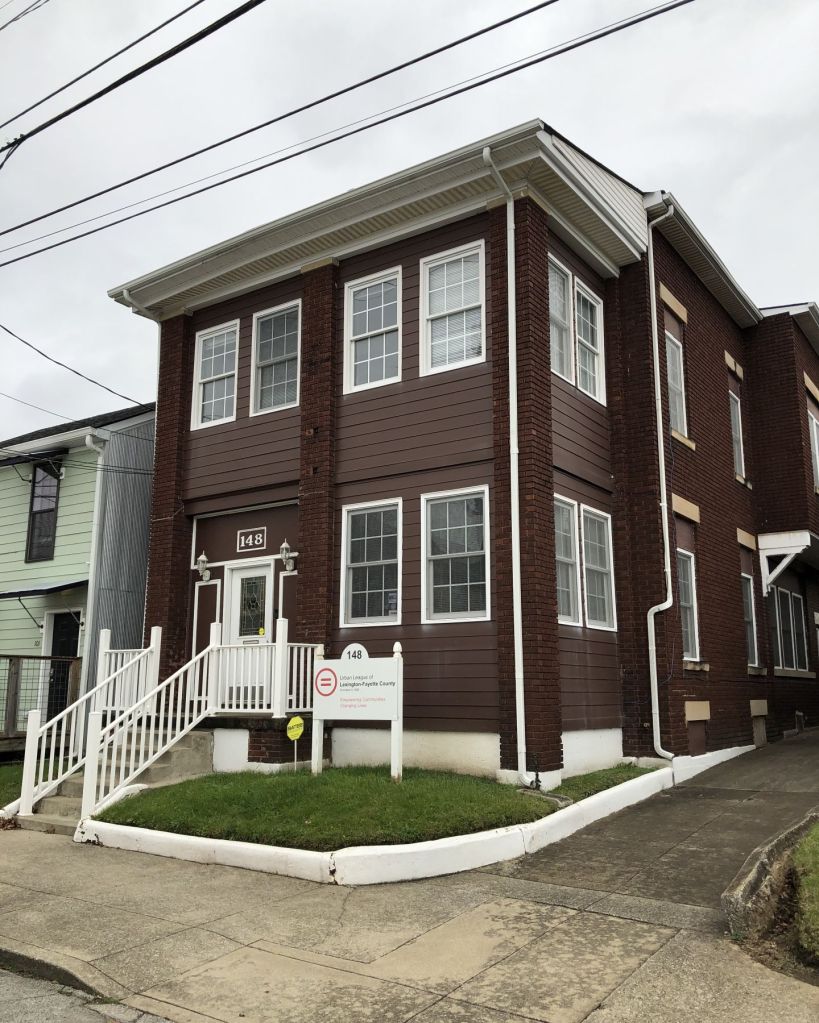
Polk’s Infirmary was more than a doctor’s office. The 1931 city directory lists it as a business at 148 DeWeese, and when census takers came through Lexington in 1930, they listed “Polk’s Infirmary” as an institution in its enumeration district, the category used for hospitals and other places where people lived under care. The Polk-Dalton Pharmacy operated in the same building. The UK HealthCare marker calls the infirmary “the center for Lexington’s African-American community,” a phrase that suggests it served as a gathering place as well as a place for care. Polk was also a leader among his colleagues: he belonged to the state and local medical societies and served as president in 1931 and 1932.
Older physicians later recalled that his health had shown signs of heart trouble since he was young. In the spring of 1935, after special treatment in Cleveland, Ohio, for his heart, he went to Lakeland, Florida, with his wife, Annie Chandler Polk, and his family, hoping the climate would help. He died there on March 11, 1936, at 53. His body came home to Lexington and lay in state at the Edward W. Jackson funeral home, which by then occupied “the Polk building, 148 Deweese street.” His funeral at First Baptist Church, where he was a member, was “largely attended,” the Herald’s “Colored Notes” column reported, and he was buried in Greenwood Cemetery. The Woodford Sun, the newspaper of the county where he grew up, ran the news under the headline “Dr. John Polk Dies.”
Dr. Dalton, from Georgetown to DeWeese Street
The front of the marker says simply, “Succeeding him in this building was Dr. J. R. Dalton.” Neither marker gives his first name, and the published accounts disagree about when he arrived. Census records, draft cards, and city directories fill in the story.
His name was J. Rufus Dalton, Joe Rufus on his draft card. He was born in Huntingdon, Tennessee, on June 1, 1894, according to his 1942 draft registration, though his death certificate gives 1896 and Illinois. By 1920 he was a practicing physician and surgeon in Georgetown, in neighboring Scott County, married to Anna Dell Dalton. He was still in Georgetown in 1930, in a house he owned on West Jefferson Street, and in 1940, when he told the census taker he had worked 72 hours the week before.
That record settles a question the sources disagree on. The Notable Kentucky African Americans Database says Dalton joined Polk in 1931, but in 1930 and 1940 he was living and practicing in Georgetown. The UK HealthCare marker’s version fits the records better. After Polk left for Florida, the building at 148 DeWeese housed a funeral home, and in 1940 Dalton reopened it as a medical practice. By 1943 the Lexington City Directory lists “J. Rufus Dalton, physician and surgeon,” at 148 DeWeese, and he is listed there through the early 1950s. The 1950 census shows him in Lexington with Anna and their sons, James and Rufus, still a doctor with his own practice.
In September 1953, the Louisville Defender reported that Dr. J. R. Dalton, “noted Lexington physician,” had died of a heart attack while on his way home to Cairo, Illinois. His death certificate places his death on September 10, in Nelson County, somewhere along the road west. Like Polk, he was buried from First Baptist Church in Lexington. Between them, the two doctors kept 148 DeWeese open as a medical office for nearly three decades, with a four-year gap after Polk’s death.
The Insurance Office Across the Street
The reverse of the marker turns to 149 DeWeese, the district office of the Mammoth Life and Accident Insurance Company.
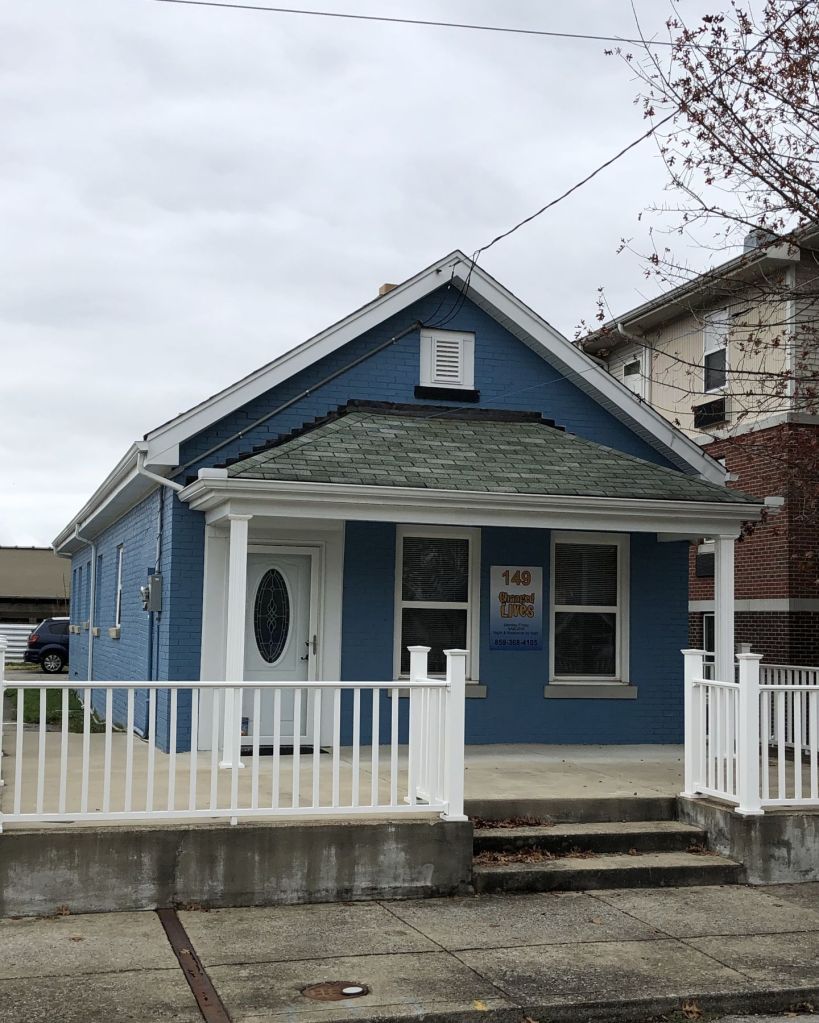
Mammoth was founded in Louisville in 1915. The Filson Historical Society, which holds the company’s records, names four founders: Henry E. Hall, William H. Wright, B. O. Wilkerson, and Rochelle I. Smith. Hall and Wright served as its first co-presidents. Companies like Mammoth grew up in what historians call the golden age of Black business, in the decades when segregation shut Black customers out of white-owned institutions or served them on worse terms. Many white insurers either refused Black customers or sold them smaller policies at higher rates. A Black-owned company could promise what the marker calls “fair rates.”
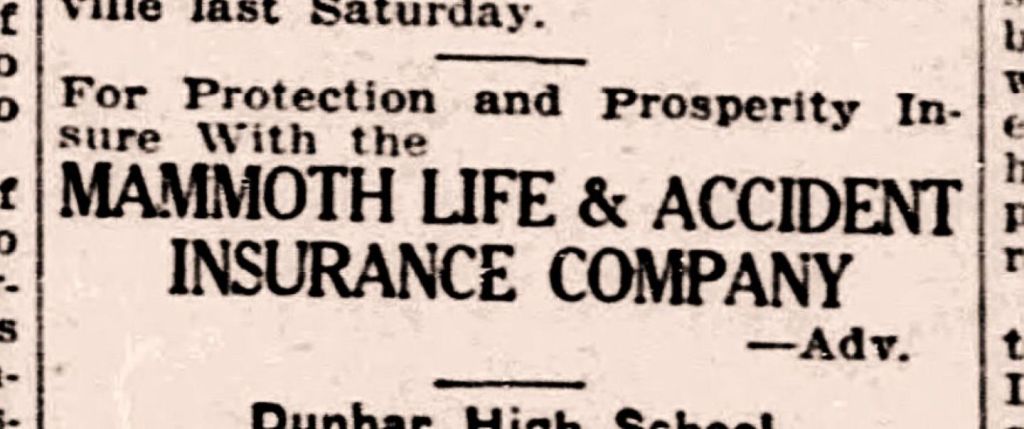
Mammoth spread quickly. After its first Louisville office in 1915, it added branch offices in Paducah, Lexington, Hopkinsville, and Bowling Green, and by 1928 it had district offices in seven other states: Michigan, Illinois, Indiana, Ohio, Missouri, Tennessee, and Wisconsin. That accounts for the marker’s “eight states.” It also gave office and sales jobs to Black men and women at a time when few other employers in Kentucky would. By the late 1920s, Mammoth was advertising to Black Lexington in the Lexington Herald‘s “Colored Notes” column: “For Protection and Prosperity Insure With the Mammoth Life & Accident Insurance Company.”
The end came slowly. As segregation eased, Black customers had more choices, and Black-owned insurers were bought up by larger firms. In 1992 Atlanta Life Insurance Company, a Black-owned firm based in Georgia, took control of Mammoth. The marker calls it a merger; the Filson describes Atlanta Life as having brought Mammoth under its control. By 1994 the old Louisville flagship office had closed, and with it the Kentucky offices.
“Do As You Please Street”
The doctor and the insurance office were not alone. By the late nineteenth century, DeWeese Street was the center of a mostly Black residential and business district in Lexington’s East End. Some residents called it the “do as you please street.” Segregation and discriminatory real estate practices had pushed Black families into closely built shotgun houses here, and the businesses followed the people: grocery and clothing stores, barbershops and beauty shops, funeral homes, nightclubs, and insurance offices. The Lyric Theatre opened nearby in December 1948 and anchored the district’s entertainment for decades.
Integration, beginning in the 1950s, changed the street. Businesses that had depended on segregated customers moved away or closed, and insurance companies like Mammoth were absorbed by larger firms. In 1964 Black residents and their allies defeated a federal urban renewal plan for the East End in a public referendum, after officials failed to show how displaced families would be rehoused. Later redevelopment still cleared much of the old street. In 2018 the KHS added a second marker, No. 2562, “Deweese (Dewees) St. Neighborhood,” at Third Street and Elm Tree Lane, to tell the story of the district as a whole.
A Clinic That Carries Their Names
The infirmary building did not disappear. In 1999 the Lexington-Fayette County Urban League made 148 DeWeese its home, and five years later the League presented this marker.
The story has one more chapter, told on a different kind of marker around the corner. In 1996 the University of Kentucky opened Kentucky Clinic North to provide primary care in what it called “a medically underserved area of downtown Lexington.” The clinic moved into a newly constructed building at Third Street and Elm Tree Lane in 2000. On April 21, 2008, UK HealthCare renamed it the Polk-Dalton Clinic, and put up its own blue marker explaining why. A university clinic now carries the names of two doctors who practiced when Lexington’s large hospitals were closed to them, a few hundred feet from where they worked.
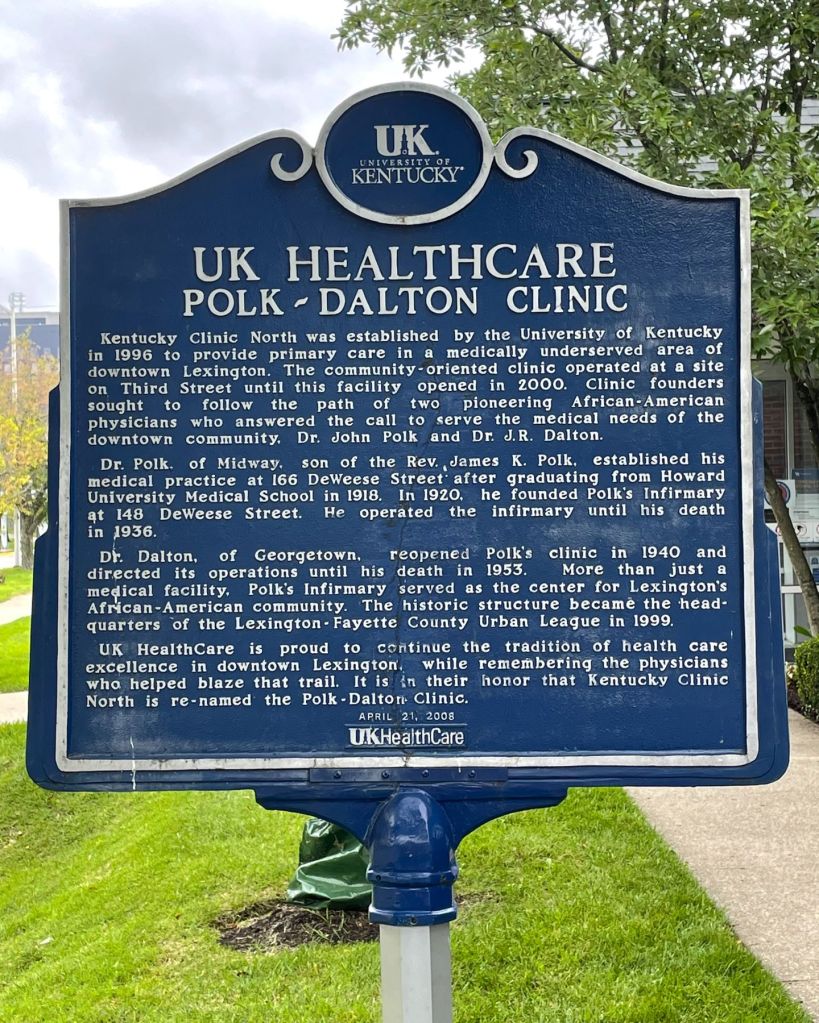
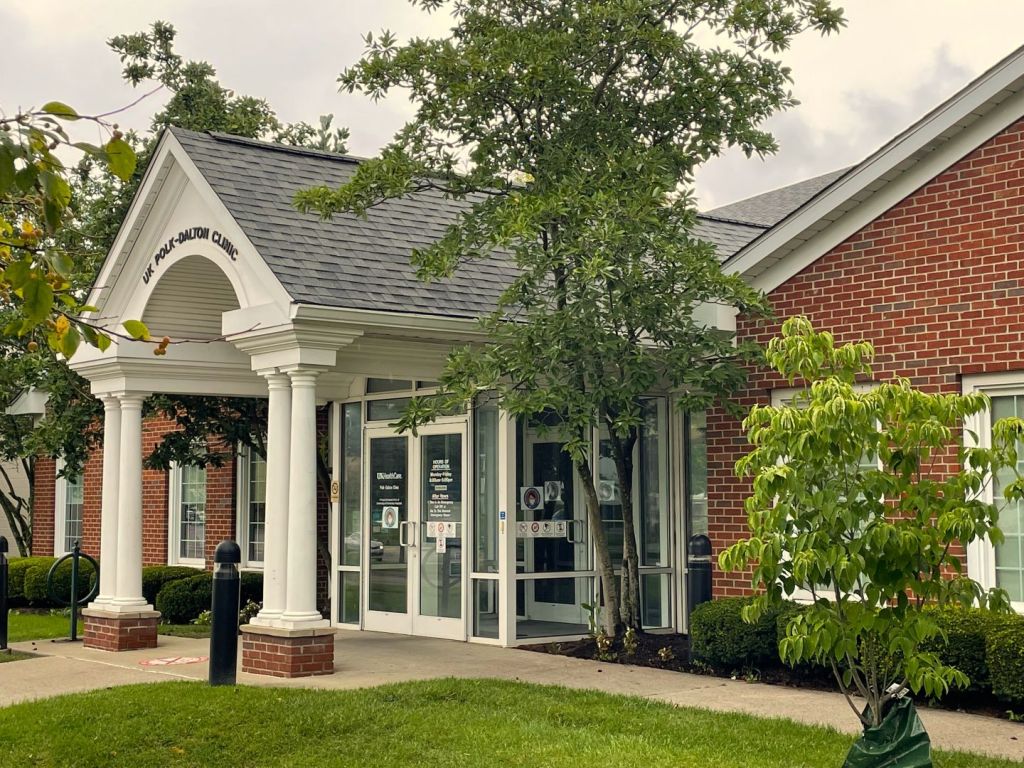
The UK HealthCare marker (2008) and the Polk-Dalton Clinic on Elm Tree Lane.
Reading Both Sides
Many two-sided markers carry one story from front to back. This one carries two that turn out to be one. On a single block of DeWeese Street, a doctor and an insurance company offered the two things segregation made hardest to get: a bed and a physician when someone was sick, and something to leave behind when someone died. Neither was charity. Both were businesses, built by Black Lexingtonians for Black Lexingtonians, at a time when the city’s white institutions either turned them away or served them on worse terms.
John Polk’s life spans that whole arc. His father was born the property of another man and spent the Civil War caring for that man’s horses. Within fifty years of the war’s end, the son was listed among Lexington’s physicians, and by 1921 he had a hospital of his own. Neither side of the marker mentions that, and neither says what became of the street around it. What remains are two buildings facing each other, a marker between them, and a university clinic around the corner that now carries Polk’s name. Standing between number 148 and number 149, a reader can still see what this community built for itself when no one else would.
Sources consulted: Kentucky Historical Society marker database, Marker No. 2153 (Polk’s Infirmary / Mammoth Insurance Co.), Marker No. 2562 (Deweese (Dewees) St. Neighborhood), and Marker No. 1928 (African American Physicians), with the ExploreKYHistory entry for No. 1928; UK HealthCare, Polk-Dalton Clinic marker (2008), and Historical Marker Database (hmdb.org) entries 169744, 169746, and 169747; Notable Kentucky African Americans Database, University of Kentucky: “Polk, John Knox,” “Polk, James Knox (former enslaved man),” and “St. Joseph Hospital (Lexington, KY),” with the sources they cite, including “Dr. John Polk Dies,” Woodford Sun (March 19, 1936), “Markers celebrate Deweese Street history,” Lexington Herald-Leader (September 13, 2004), “Clinic named for 2 black doctors,” Lexington Herald-Leader (March 5, 2008), and Who’s Who in Colored America (1927); 1930 U.S. Census, Fayette County enumeration district descriptions (us-census.org); Filson Historical Society, “Mammoth Life and Accident Insurance Company” online exhibit; Kentucky Health Information, “Kentucky’s African American Men and Women of Medicine” (2020); Blue Grass Trust for Historic Preservation, Tour the Historic Bluegrass, “Deweese Street”; Segregated Lexington project, “Urban Renewal: East End.”; Lexington city directories (R. L. Polk & Co.), 1914, 1919, 1921, 1931, and 1943–1954, via Ancestry.com; U.S. World War I Draft Registration Card, John Knox Polk (September 12, 1918); U.S. World War II Draft Registration Card, Joe Rufus Dalton (1942); U.S. Federal Census, 1920, 1930, 1940, and 1950 (J. Rufus Dalton); Kentucky death certificate, Rufus Dalton (September 10, 1953); “Dr. J. K. Polk,” Lexington Herald (March 19, 1936); “Colored Notes,” Lexington Herald (March 21, 1936); “Heart Attack Fatal to Dr. J. R. Dalton,” Louisville Defender (September 24, 1953); “Colored Notes,” Lexington Herald (October 28, 1928).




I’m eager to hear what you think