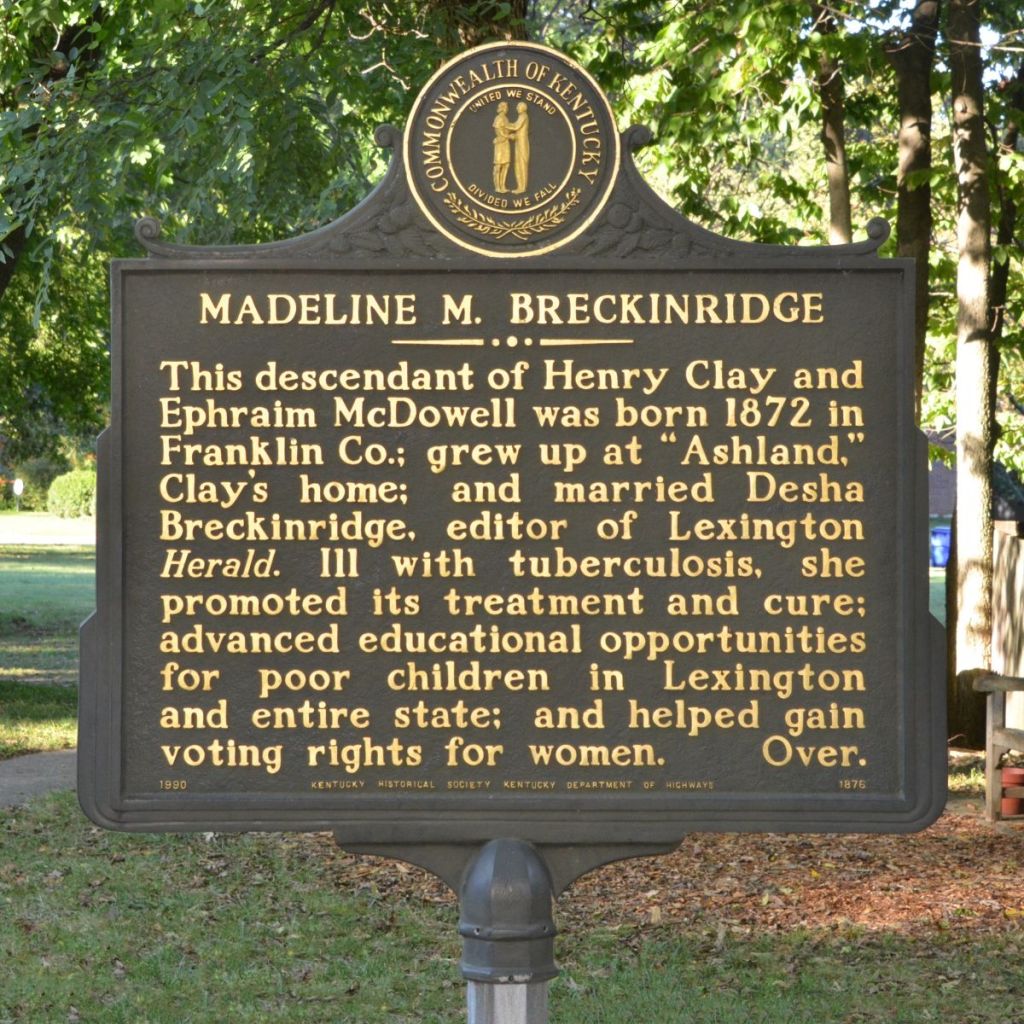
“MADELINE M. BRECKINRIDGE” This descendant of Henry Clay and Ephraim McDowell was born 1872 in Franklin Co.; grew up at “Ashland,” Clay’s home; and married Desha Breckinridge, editor of Lexington Herald. Ill with tuberculosis, she promoted its treatment and cure; advanced educational opportunities for poor children in Lexington and entire state; and helped gain voting rights for women. Over.
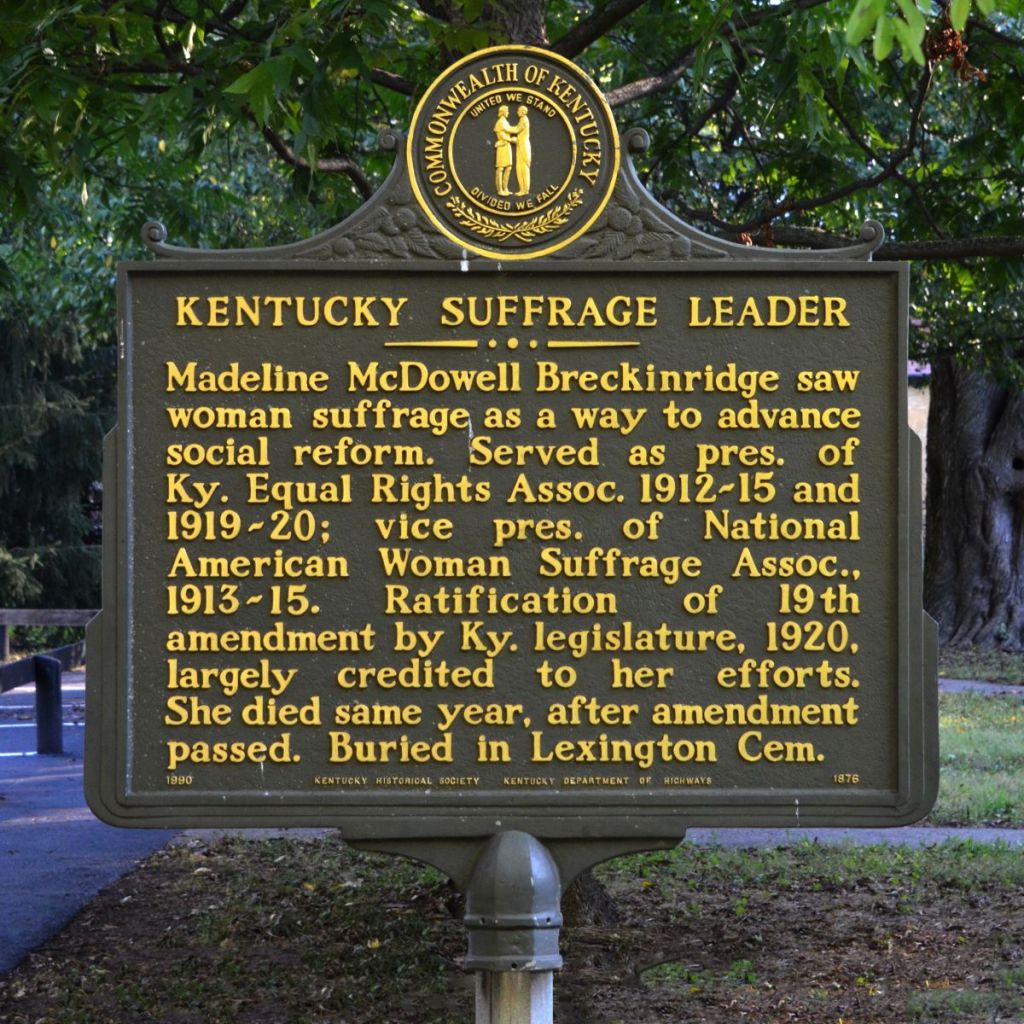
“KENTUCKY SUFFRAGE LEADER,” reverse Madeline McDowell Breckinridge saw woman suffrage as a way to advance social reform. Served as pres. of Ky. Equal Rights Assoc. 1912-15 and 1919-20; vice pres. of National American Woman Suffrage Assoc., 1913-15. Ratification of 19th amendment by Ky. legislature, 1920, largely credited to her efforts. She died same year, after amendment passed. Buried in Lexington Cem.
Kentucky Historical Society, Marker No. 1876 — erected 1990
120 Sycamore Road, Lexington, Kentucky | 38° 1′ 43″ N, 84° 28′ 50″ W — Directions: MapQuest
The marker’s last clause, “helped gain voting rights for women,” is technically true and quietly incomplete. Madeline McDowell Breckinridge did more than almost anyone to win Kentucky women the vote in 1920. But the movement she led was also, by design and by her own hand, a movement that did not mean to extend that promise equally to everyone. Both halves of that story belong here, not just the half that fits on cast iron (cast aluminum).
The Girl Ashland Raised
Madeline McDowell was born in Franklin County in 1872, the granddaughter of Henry Clay Jr. and, through him, the great-granddaughter of Henry Clay himself. In 1882, when she was ten, her parents bought Ashland, the estate her famous ancestor had built decades earlier, and Madge, as her family called her, spent the rest of her adolescence there. Her early schooling in Lexington was light on academics, a relative later joked that it amounted to an education in “King Arthur and rainbows,” but she got a more serious one afterward, first at Miss Porter’s School in Connecticut and then at State College in Lexington, the institution that would eventually become the University of Kentucky.
State College is also where her health turned. Tuberculosis settled into the bone of one leg, and part of it was amputated, leaving her with a wooden leg for the rest of her life. The once-athletic young woman became, by necessity, a more sedentary and studious one, reviewing books for the Lexington Herald and reading German philosophy with a local women’s discussion club. It would not be the last time tuberculosis reshaped her life, or the last time she turned an illness into a cause.
In 1898 she married Desha Breckinridge, who edited that same Lexington Herald and used its editorial page, alongside his wife, to campaign for the causes of the Progressive Era, child welfare, public health, and women’s rights among them. The marriage was not an easy one; Desha was persistently unfaithful, and biographers generally agree Madeline poured herself into civic work partly to outrun that disappointment. Whatever the mix of motives, the output over the next two decades was extraordinary.
Reform Before the Ballot
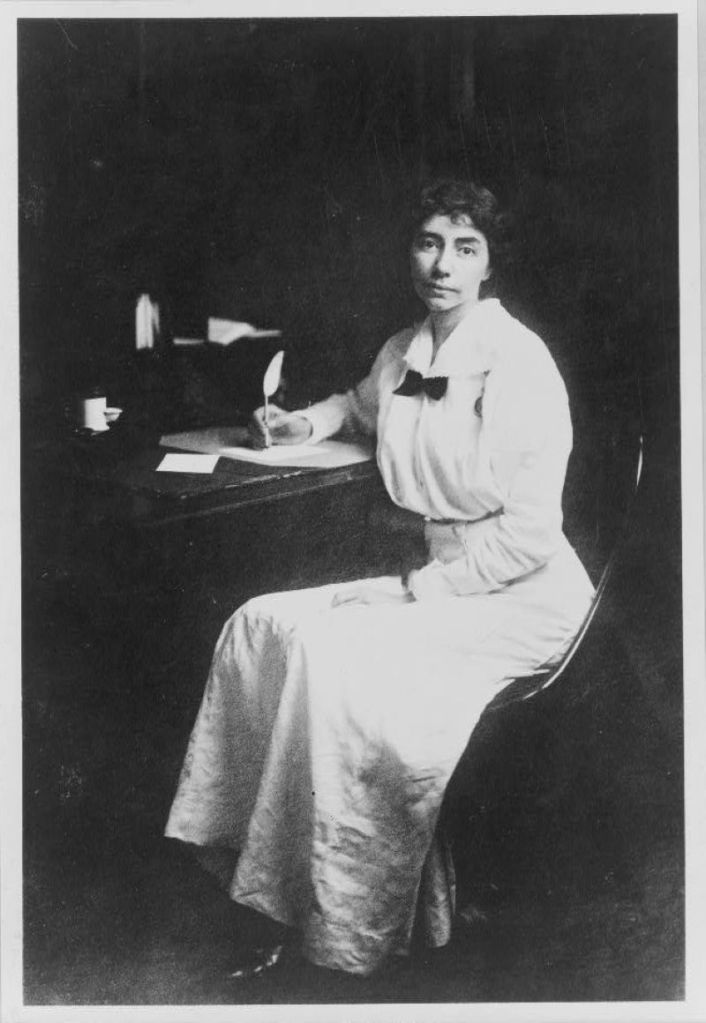
Breckinridge’s reform career actually predates her suffrage work by more than a decade, and it’s worth understanding on its own terms rather than as a warm-up act. In 1900 she helped found the Lexington Civic League and the relief organization Associated Charities, both aimed at the city’s poor. Through the Civic League she pushed for public kindergartens, city parks, and organized recreation for children who had none of it, and lobbied successfully for Kentucky’s first child labor laws, compulsory school attendance, and, by 1906, the state’s first juvenile court system.
Her most ambitious project was the Lincoln School, a settlement house modeled on Chicago’s Hull House, built with a $30,000 gift from Robert Todd Lincoln, Abraham and Mary Todd Lincoln’s only surviving child. (Mary Todd Lincoln’s own Lexington childhood is the subject of another marker in this project, #2261, an odd little thread connecting two very different women’s stories through one man’s checkbook.) The school opened in 1912 with day classes for children and night classes for adults, a swimming pool, a gymnasium, a laundry, a cannery, and a carpentry shop, serving Lexington’s poor and a wave of newly arrived Irish immigrants, many of whom couldn’t read. The school’s naming carried an irony its founders never seemed to reckon with — read more in the companion article: Built in Lincoln’s Name, Closed to Black Children.
A Public Health Crusade, Rooted in Her Own Body
Breckinridge’s fight against tuberculosis was never abstract to her. She began organizing free TB clinics in Lexington in 1905, working through the Civic League and Associated Charities, and in 1912 she founded the Kentucky Association for the Prevention and Treatment of Tuberculosis, helping establish the Blue Grass Sanitarium along the way. She served on the state’s TB commission until 1916. It’s not hard to see the throughline: a woman who had already lost part of a leg to the disease, and would eventually lose more to its lingering effects, spent a decade building the public health infrastructure Kentucky didn’t yet have for people who had far fewer resources than she did.
A Movement Divided by the Color Line
This is the part that the marker’s four sentences have no room for, and it’s the part that most changes how the story reads.
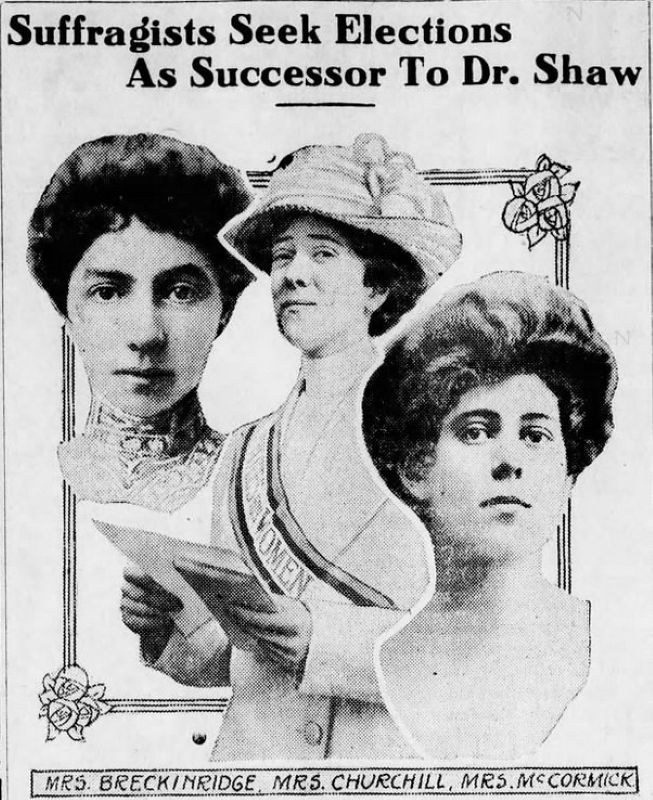
By the mid-1910s Breckinridge led the Kentucky Equal Rights Association, with chapters in 119 of Kentucky’s 120 counties, and served a term as a national vice president of the National American Woman Suffrage Association. But NAWSA itself was fracturing along a fault line that ran straight through Kentucky: whether suffrage should come through a federal constitutional amendment, or state-by-state, one legislature at a time. Breckinridge’s own cousin, Laura Clay, founder of the Kentucky Equal Rights Association and, before Breckinridge, the state’s leading suffragist, was one of the loudest voices for the state-by-state approach, and the reasoning wasn’t subtle. Clay and a bloc of Southern suffrage leaders worried openly that a federal amendment enforced under the Fourteenth and Fifteenth Amendments would eventually open the ballot box to Black voters too, and they wanted no part of that outcome. Clay went on to oppose ratification of the Nineteenth Amendment outright, on those grounds, even after Kentucky’s legislature had already passed it.
Breckinridge took the more pragmatic, nationally aligned position, she believed the states’-rights argument was a wedge meant to splinter and stall the entire movement, but “more pragmatic” is not the same as “more just.” Historian Melba Porter Hay’s biography of Breckinridge is direct about the tradeoff: Breckinridge belonged to the NAACP, yet the free playground and kindergarten she personally established in Lexington’s West End in 1901 excluded Black children. In her own suffrage arguments, she sometimes leaned on the same racial logic her rivals used more openly, arguing that giving white women the vote would help secure “Anglo-Saxon supremacy” simply by outnumbering Black voters at the polls. She was, by most accounts, more racially moderate than Laura Clay’s faction, willing to work within a national movement that Clay had walked away from, but she built her victories inside the boundaries of Jim Crow rather than against them.
None of this erases what she accomplished. It does mean the marker’s tidy “voting rights for women” needs an asterisk that history hasn’t always bothered to add: voting rights for which women, won partly through arguments that assumed the answer wasn’t all of them.
She could still be sharp in defense of the cause itself. Pressed by Governor James B. McCreary on whether Kentucky women were fit to vote, she is remembered for firing back that Kentucky women weren’t idiots, “even though they are closely related to Kentucky men.”
Ratification, and a Sudden End
Breckinridge’s tactical skill showed most clearly in January 1919, when she steered Kentucky’s ratification resolution through the General Assembly on the very first day it was introduced, making Kentucky the 24th state to ratify the Nineteenth Amendment, a genuinely fast, well-managed legislative win by any standard. She spent much of 1920 campaigning nationally for the Democratic Party and was able to cast a ballot herself that November, in the first presidential election open to American women. She then began converting the Kentucky Equal Rights Association into a chapter of the new League of Women Voters and took up a public campaign for the League of Nations.
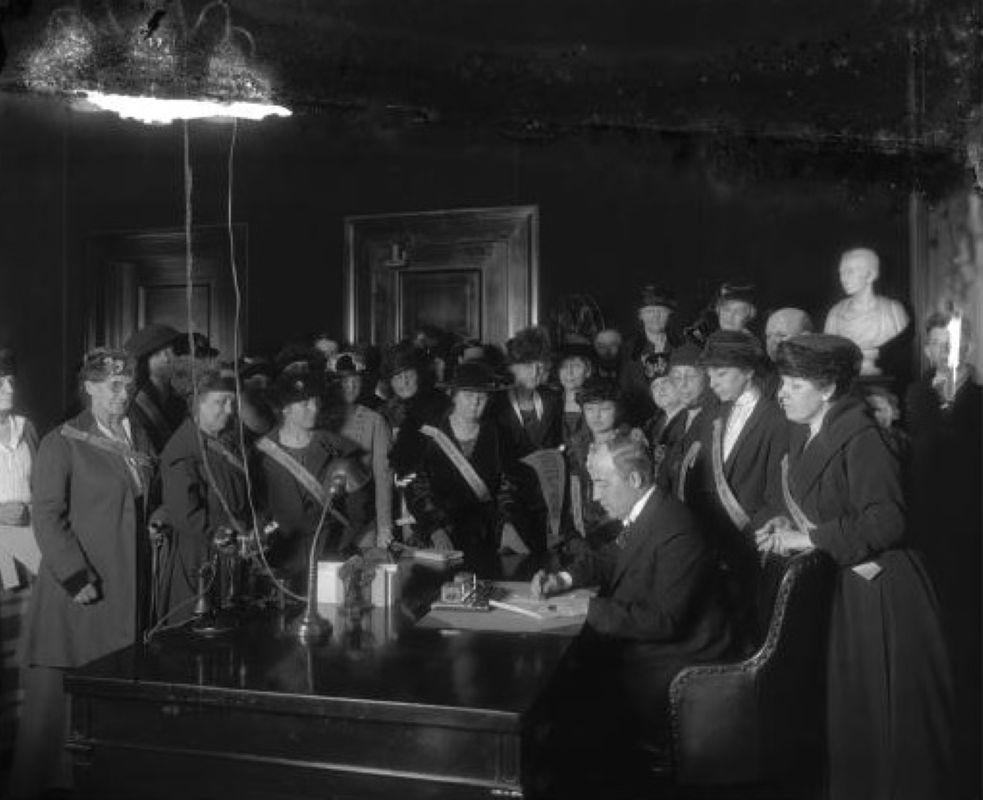
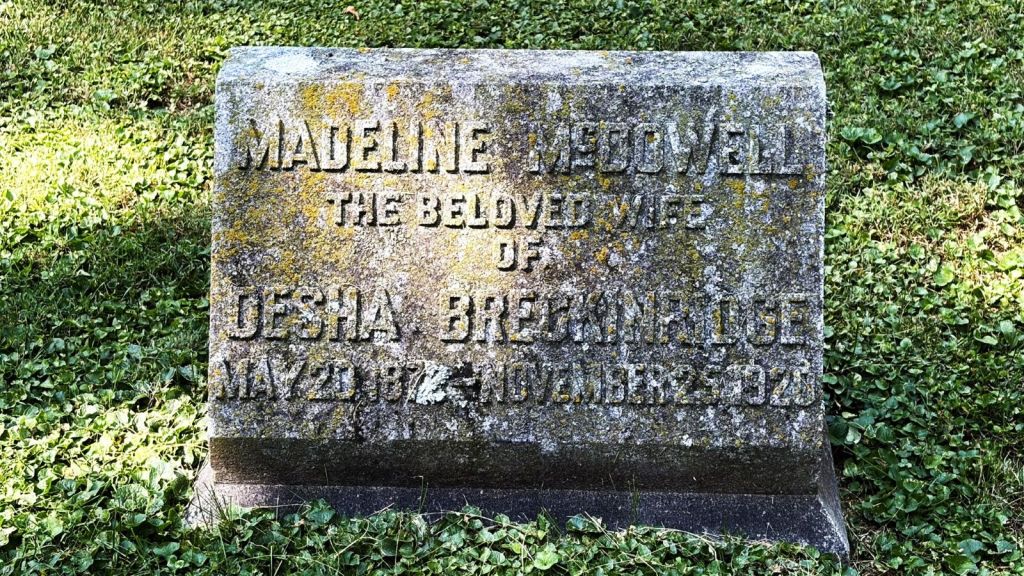
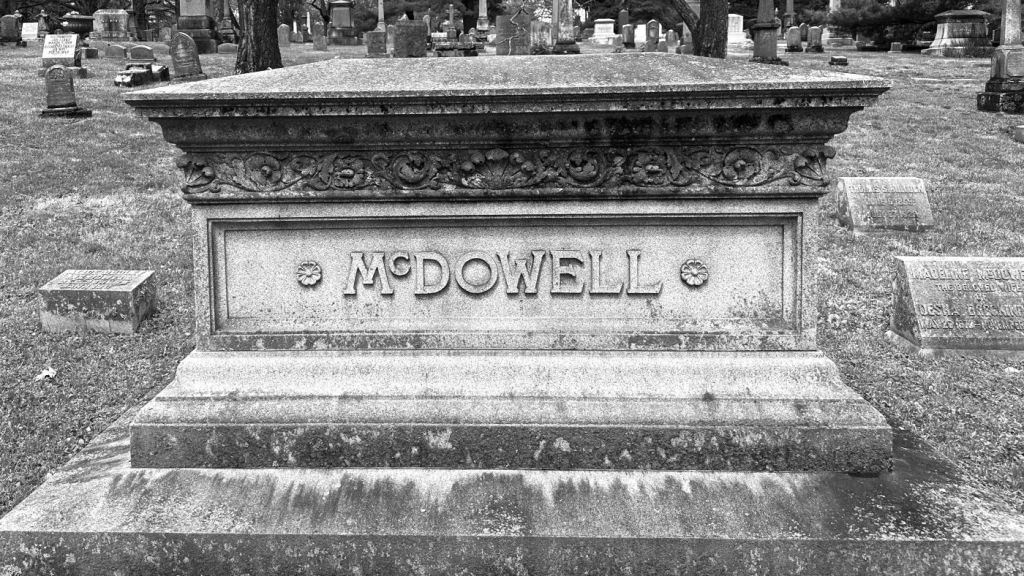
She didn’t get to enjoy the win for long. Already worn down by decades of poor health, Breckinridge suffered a stroke and died on Thanksgiving Day, 1920, at 48, reportedly while in the middle of arranging holiday donations for Lexington’s poor. Newspapers at the time called her Kentucky’s “most distinguished woman citizen.” Her funeral was held at Ashland, the estate where she’d grown up, and she’s buried at Lexington Cemetery. Her portrait now hangs permanently in the state capitol as part of the Kentucky Women Remembered exhibit, to which she was added in 1996, and historians Lowell Harrison and James Klotter have gone as far as to call her the most influential woman in Kentucky’s history.
What’s There Today
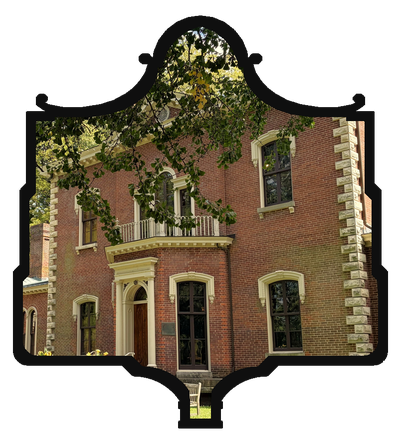
The marker stands on the Ashland grounds itself, just steps from Marker #1, the estate’s own historical marker, one of a small cluster of plaques scattered across the property, with a couple more (the Ashland Garden marker and the A&M College at Ashland marker). It’s a fitting spot: three generations after Henry Clay first bought this land, his great-granddaughter used the standing his name still carried in Lexington to build a reform career that, whatever its blind spots, genuinely changed who got to vote in Kentucky.
Sources consulted: Kentucky Historical Society / ExploreKYHistory; Wikipedia (Madeline McDowell Breckinridge, Laura Clay); H-Net/H-Kentucky (Kentucky Woman Suffrage Project); Historical Marker Database (hmdb.org); Melba Porter Hay, “Madeline McDowell Breckinridge and the Battle for a New South” (University Press of Kentucky); Lowell H. Harrison and James C. Klotter, “A New History of Kentucky”; University of Kentucky College of Arts & Sciences (UKNow).



I’m eager to hear what you think