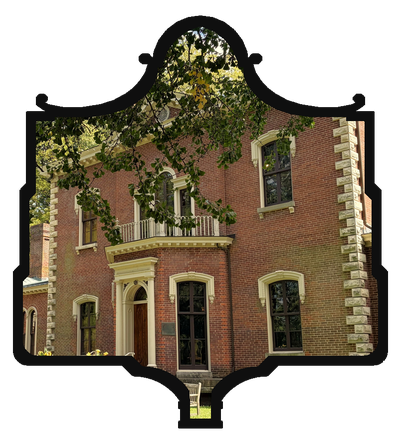
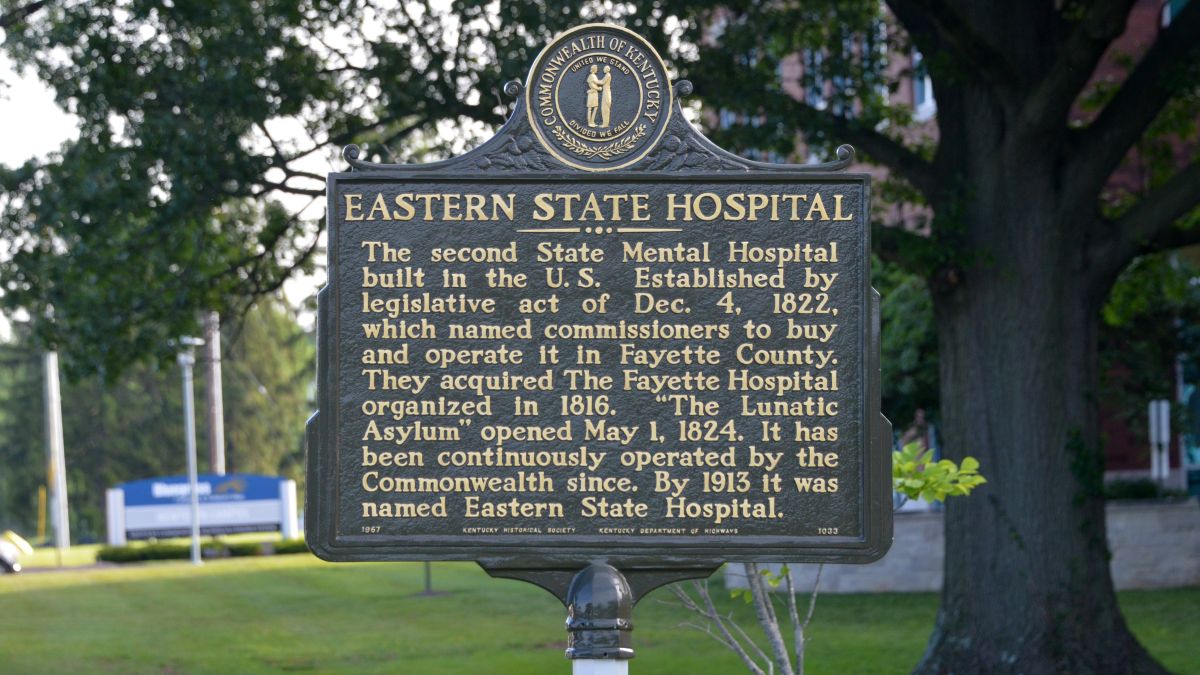
“EASTERN STATE HOSPITAL”
The second State Mental Hospital built in the U.S. Established by legislative act of Dec. 4, 1822, which named commissioners to buy and operate it in Fayette County. They acquired The Fayette Hospital organized in 1816. “The Lunatic Asylum” opened May 1, 1824. It has been continuously operated by the Commonwealth since. By 1913, it was named Eastern State Hospital.Kentucky Historical Society, Marker No. 1033
500 Newtown Pike (KY 922), Lexington, Kentucky | 38° 3′ 39″ N, 84° 30′ 2″ W — Directions: MapQuest
Most markers in this project point to something built and finished on schedule. This one points to a building that stood empty for five years before it ever housed anyone at all — and to an institution whose 200-year history includes moral-treatment reformers, a superintendent who resigned rather than compromise patient care, and, in its early records, a first patient identified only by a first name.

A Failed Start, and a Speech to an Empty Building
The story actually begins in 1816, when a group of Lexington citizens set out to build a hospital for the city’s poor, disabled, and mentally ill. Construction started on what they called Fayette Hospital, and in 1817 the building was formally dedicated with an oration by Henry Clay delivering a speech about a building that, remarkably, would not open for another seven years. The project ran out of money before it was ever finished or occupied, and it sat vacant through the financial Panic of 1819, a half-built hospital with nothing but Clay’s dedication speech to its name.
The Commonwealth finally stepped in. On December 4, 1822, the Kentucky General Assembly passed the Act to Establish a Lunatic Asylum, purchasing the unfinished Fayette Hospital building along with ten acres of land. It took until May 1, 1824, to actually open the doors, the second state-supported mental hospital built in the United States, following only Williamsburg, Virginia’s, which had opened nearly sixty years earlier, in 1766.
The First Patient
Hospital records identify the very first patient admitted, on opening day, as a Black woman named Charity, from Woodford County. Almost nothing else about her survives in the historical record, not her age, not the nature of her illness, not what became of her. It’s a small, striking detail to sit with: the founding moment of one of the country’s oldest continuously operating psychiatric hospitals is anchored to a woman about whom history kept almost no other information at all, a pattern uncomfortably common in records of this era for anyone who wasn’t wealthy, white, or both.
The early institution’s approach to care, in truth, was closer to custodial holding than treatment. There was no dedicated medical staff at first; serious medical problems were handled by physicians from the community or by faculty and students from Transylvania University’s medical school a few miles away. A staff physician’s 1828 dissertation was candid about the mission as he saw it: custodial care and “the protection of society,” with most non-violent cases expected to be kept at home by their families, sent to the asylum only once they could no longer be managed there.
Moral Treatment, and Its Limits
That began to change in 1844, when the hospital hired its first full-time medical superintendent, Dr. John Rowan Allen, and entered what historians of psychiatry call the “moral treatment” era, a genuine, if imperfect, reform movement built on the idea that structure, routine, and humane conditions could help patients recover, rather than simply containing them indefinitely. Dorothea Dix, the era’s leading national advocate for the mentally ill, visited the asylum at least twice over about a decade, pushing for more humane conditions, and more buildings followed as a result.
Reform was not evenly applied, though. After the Civil War, the hospital appropriated money to expand a building roughly 200 yards from the main hospital specifically to house Black patients, separate from, and consistently worse than, the main facility. By the close of the nineteenth century, the hospital’s own superintendent was on record warning that living conditions for Black patients were unfit, poorly ventilated, and structurally dilapidated. Despite that acknowledgment, a proper standalone building for Black patients wasn’t constructed until the middle of the twentieth century, meaning the substandard conditions a superintendent himself called out went unresolved for roughly fifty more years.
A Superintendent’s Protest
Overcrowding was a near-constant problem more broadly, too. By 1860 the hospital had stopped admitting patients from outside Kentucky just to keep pace with demand inside the state. A capacity expansion aimed for 520 beds, but by 1870 the hospital was full again, and that year, Superintendent Dr. John W. Whitney refused to admit an additional 150 patients the state wanted to send, arguing the hospital simply could not care for them properly. When the state pushed back, he resigned in 1872 rather than compromise. It’s a small act of professional integrity easy to miss in a two-century institutional history, but worth pulling out: a doctor who quit a position of real authority specifically because he wouldn’t preside over conditions he considered unsafe for his patients.
Cholera, Fire, and a Name That Kept Changing
Like much of Lexington, the hospital didn’t escape the cholera epidemics that swept the city repeatedly across the nineteenth century, the same 1833 outbreak that slowed construction at Old Morrison and, decades later, killed Mary Todd Lincoln’s father, also struck the asylum’s crowded wards with what period accounts call “fatal effect,” and cholera returned to the hospital more than once after that. The institution also suffered several serious fires over the decades, at least one of which killed patients who couldn’t be evacuated in time.
Through all of this, the hospital kept changing its name almost as often as it changed superintendents: Lunatic Asylum of Kentucky, then Eastern Kentucky Lunatic Asylum in 1876, before finally settling on Eastern State Hospital by around 1912 or 1913, and the one that’s stuck ever since.
What’s There Today
Eastern State Hospital is still a functioning psychiatric hospital, just not at this address anymore. In September 2013, after nearly two centuries on this Newtown Pike campus, the hospital moved into a new, purpose-built facility on Bull Lea Road at the University of Kentucky’s Coldstream Research Campus, closing out one of the longest continuous institutional histories in American psychiatric care at this specific site.
What’s left behind tells two very different stories side by side. The grand 1906 administration building, with its white columned portico, has been given genuine new life as part of Bluegrass Community and Technical College.
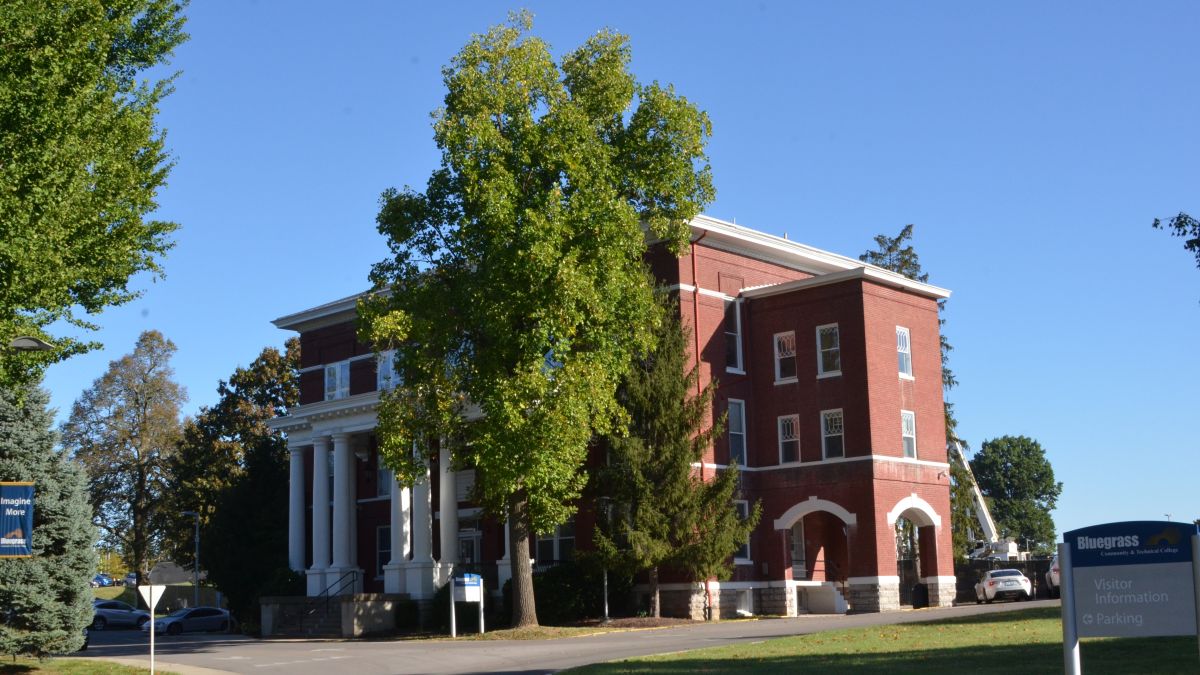
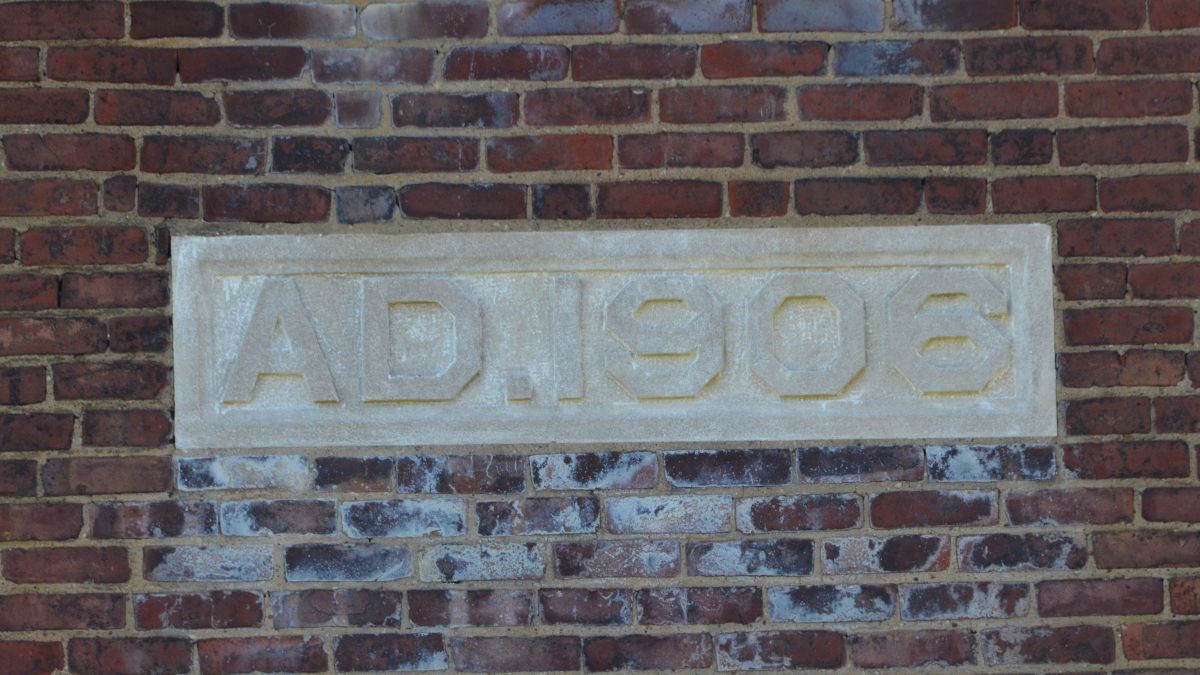
Its cornerstone still reads “A.D. 1906” above brick that’s clearly been maintained with care.
Walk a bit further across the same grounds, though, and you’ll find other original hospital buildings standing empty, windows broken, roofs sagging, quietly deteriorating in a way the marker’s timeline doesn’t hint at.
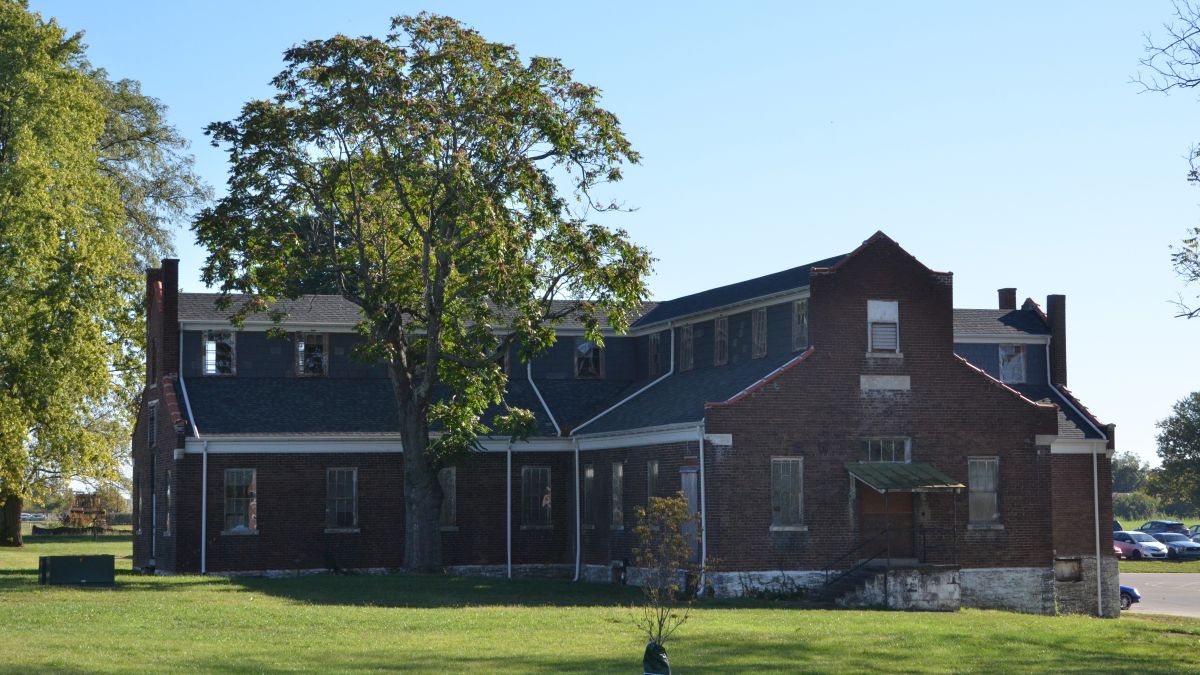
There’s a third layer to this site that neither the marker nor a walk past the standing buildings reveals: beneath parts of the grounds lie unmarked graves, buried here across nearly two centuries by a hospital that had neither the money nor, often, the family connections to do otherwise for the poor and indigent people in its care. The cemetery was folded into hospital grounds and its markers removed decades ago, and it faded from institutional memory until construction crews struck human remains in 2005, prompting a formal archaeological excavation that recovered roughly two-thirds of the burials before the property changed hands in 2011. Read the full story of the cemetery’s rediscovery, and what it reveals about who the hospital buried and how, in the companion article: The Eastern State Hospital Cemetery: What the Grounds Kept Quiet.
It’s a strange split inheritance for a 200-year-old institution: part of it repurposed into a college hall full of students, part of it left to the weather, both still standing on the same ten acres the Commonwealth bought in 1823.
Sources consulted: Kentucky Historical Society / ExploreKYHistory; American Journal of Psychiatry (“The Old and the New Eastern State Hospital in Lexington, Kentucky”); Wikipedia (Eastern State Hospital, Kentucky); Kentucky Historic Institutions (kyhi.org); Kentucky Archaeological Survey (archaeology.ky.gov); University of Louisville Kornhauser Health Sciences Library archives; kygenweb.net historical account.



I’m eager to hear what you think