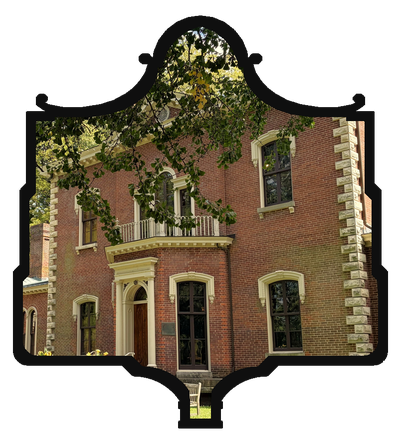
“ARISTIDES”
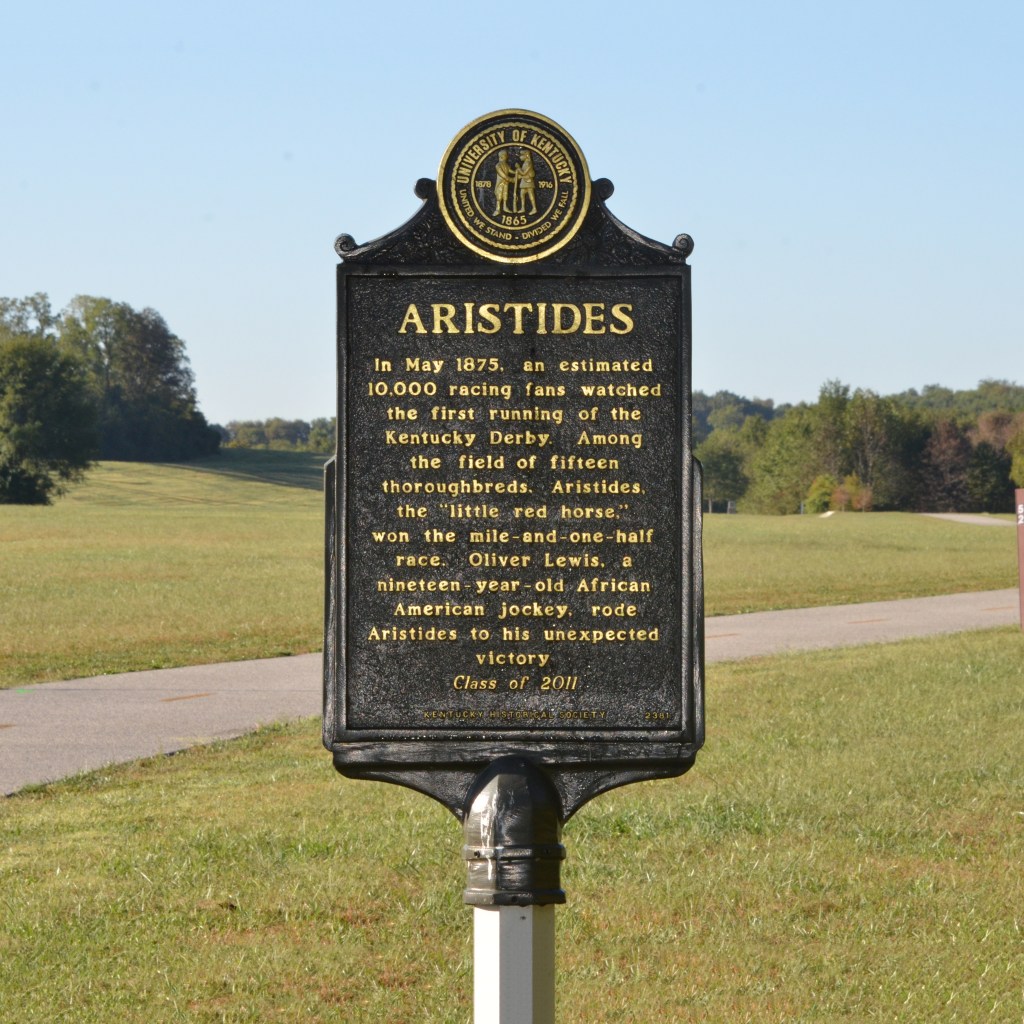
In May 1875, an estimated 10,000 racing fans watched the first running of the Kentucky Derby. Among the field of fifteen thoroughbreds, Aristides, the “little red horse,” won the mile-and-one-half race. Oliver Lewis, a nineteen-year-old African American jockey, rode Aristides to his unexpected victory.Class of 2011, University of Kentucky, Kentucky Historical Society, Marker No. 2381
McGrathiana Parkway, Coldstream Research Park, Lexington, Kentucky | 38° 5′ 52″ N, 84° 29′ 55″ W — Directions: MapQuest
The marker calls the race “unexpected,” and that word is doing more work than it might look like. Aristides wasn’t supposed to win the first Kentucky Derby. He was supposed to lose it on purpose, tire out the field, and hand the victory to his own stablemate. What actually happened that day in Louisville is a better story than the plaque has room for, and depends entirely on two men most Derby retrospectives leave out: a jockey and a trainer, both Black, both largely forgotten by the sport they helped invent.
The Little Red Horse
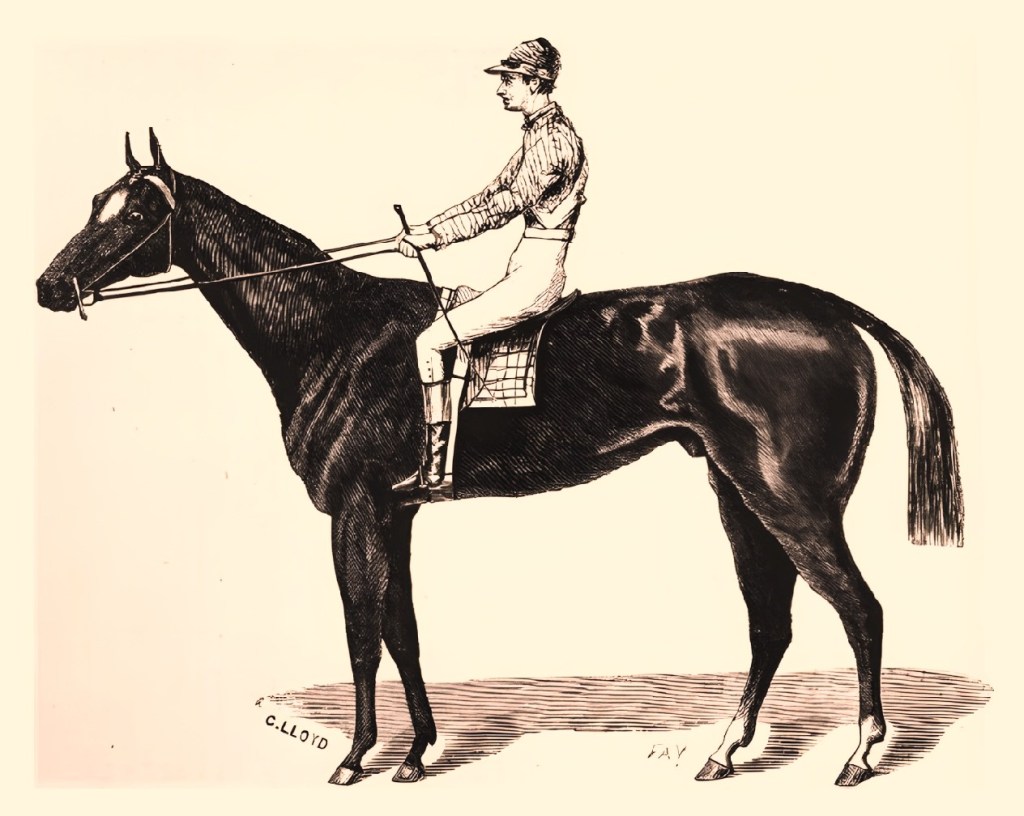
Aristides was foaled in 1872 at McGrathiana, the 416-acre estate H. Price McGrath built a few miles north of Lexington after making a fortune running gambling houses in New Orleans and New York. McGrath came home to Kentucky in 1867 to reinvent himself as landed gentry, and breeding and racing top-flight Thoroughbreds became the rest of his life’s work. Aristides, named for a friend of McGrath’s, the horseman Aristides Welch — was a chestnut colt with a white star and white hind stockings, sired by the imported English stallion Leamington out of the mare Sarong.
For most of his early career, he was the least of McGrath’s concerns. His stablemate Chesapeake was the acknowledged star of the operation, a Saratoga stakes winner already being talked about as the horse to watch in 1875. Aristides, by contrast, picked up the diminishing nickname “the little red horse,” small, unglamorous, obviously the undercard. A visiting reporter found something more promising in him than his stable ranking suggested, describing a “lengthy, wiry, even-balanced horse, deep through the heart,” but nobody at McGrathiana was planning Derby day around Aristides.
The Rabbit That Wouldn’t Stop
The plan for May 17, 1875, was straightforward, and it did not involve Aristides winning anything. McGrath entered both colts in the inaugural running of the new Louisville Jockey Club’s showcase race, not yet called Churchill Downs, and run that first year at a mile and a half rather than the mile and a quarter it would later settle into. Aristides was assigned the job of “rabbit”: set a hard early pace, burn out the rest of the field, and let Chesapeake close from behind for the win. It’s a legitimate, commonly used racing tactic. It also meant Aristides was never supposed to be the story.
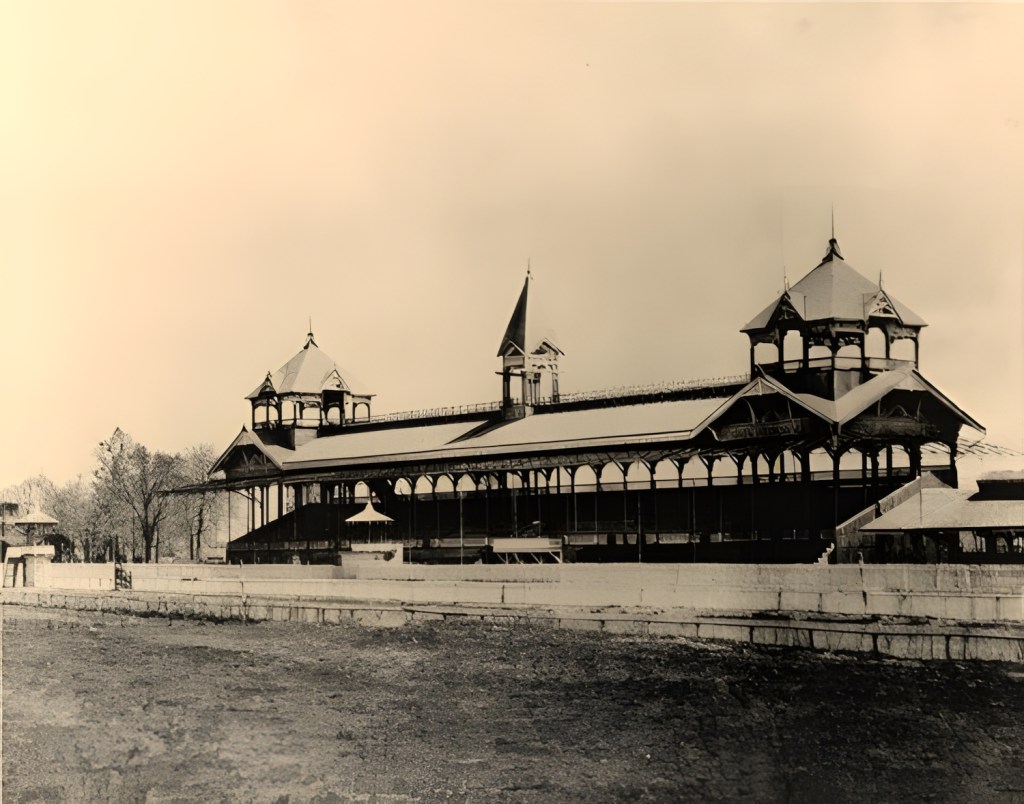
Chesapeake simply never showed up to collect on the plan. As the field turned into the stretch, he was fading toward the back of the pack, while Aristides, still running hard, still doing his assigned job of tiring everyone else out, found himself in a real fight for the lead with a horse named Volcano. There was no signal to pull up and wait for a stablemate who wasn’t coming. Aristides and his jockey kept going, and crossed the line two lengths clear of the field, setting an American record for the distance at 2:37¾ that stood for years. Chesapeake, the horse the whole plan had been built around, finished eighth.
Ansel Williamson, Trainer
“ARISTIDES,” reverse
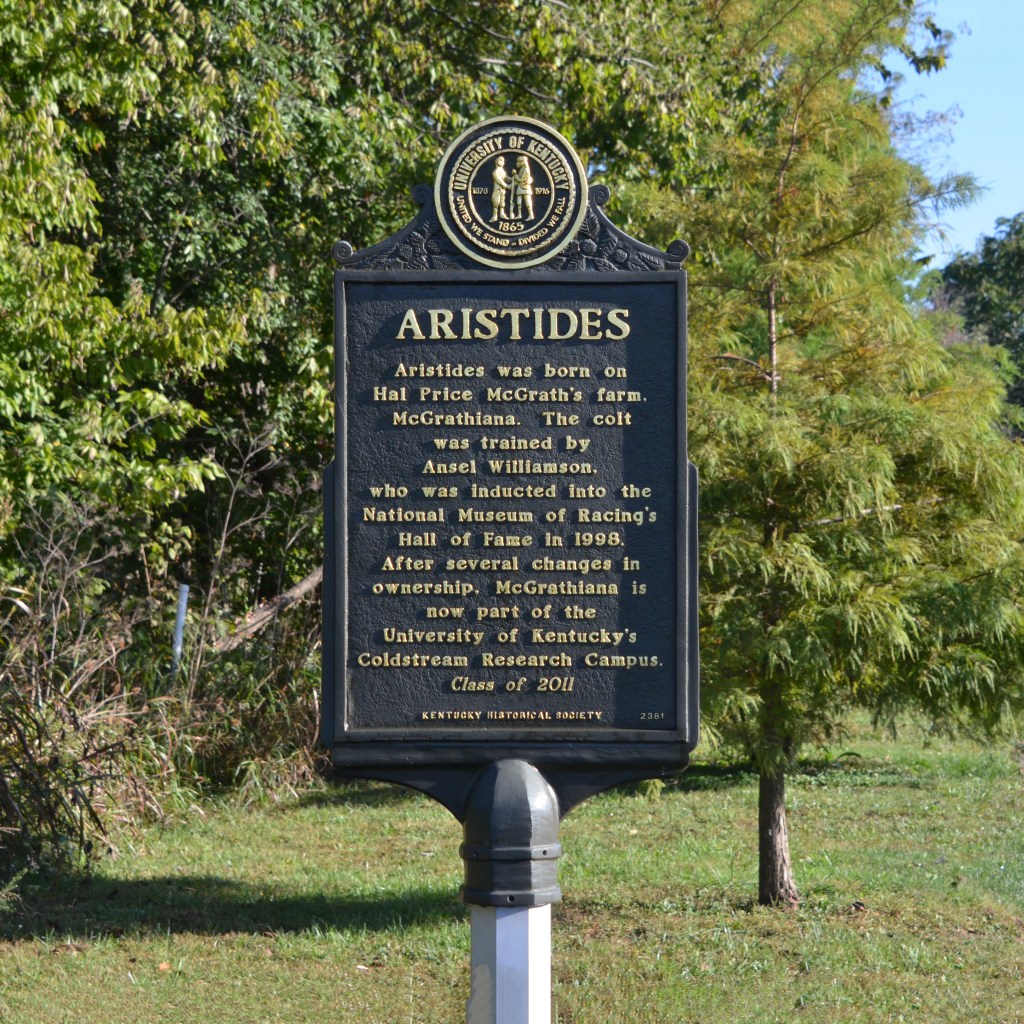
Aristides was born on Hal Price McGrath’s farm, McGrathiana. The colt was trained by Ansel Williamson, who was inducted into the National Museum of Racing’s Hall of Fame in 1998. After several changes in ownership, McGrathiana is now part of the University of Kentucky’s Coldstream Research Campus.Kentucky Historical Society, Marker No. 2381, reverse side
The man who trained Aristides to run that hard, and who put the decision in the hands of a teenager rather than pull him up mid-race, was Ansel Williamson, born into slavery in Virginia around 1806, decades before he’d ever see a Kentucky racetrack. By the time he came to work for McGrath after the Civil War, Williamson was already one of the most respected trainers in the country, having conditioned champions going back to the 1850s. He would go on to train winners of the Belmont Stakes and Travers Stakes as well, and in 1998 became one of the first Black horsemen inducted into the National Museum of Racing and Hall of Fame, more than a century after his death.
Thirteen of Fifteen
Williamson picked Oliver Lewis, a nineteen-year-old jockey who also worked at McGrathiana, to ride Aristides, and in doing so, picked one of thirteen Black jockeys out of the fifteen riders in that first Derby field. That’s not a footnote to the story of the early Kentucky Derby; for its first several decades, it more or less was the story. Black jockeys and trainers won more than half of the first twenty-eight runnings of the race. Isaac Murphy, the era’s most celebrated rider, would go on to win it three times. The sport’s marquee event was, in its formative years, substantially built and won by Black horsemen only a decade or two removed from slavery.
That didn’t last. By the early 1900s, as horse racing grew more commercialized and more profitable, Black jockeys and trainers were systematically squeezed out, denied licenses, refused mounts, edged out of a sport they had helped define, through the same kind of discriminatory exclusion reshaping American life more broadly in the Jim Crow era. It would be most of a century before Black jockeys returned to the sport in any real numbers. The gap between “thirteen of fifteen” in 1875 and the near-total absence that followed isn’t a detail the marker mentions, but it’s essential to understanding what this specific race actually represents.
What Became of Oliver Lewis
Lewis never rode in another Kentucky Derby. He stayed on with Aristides through the rest of that season, a second-place finish in the Belmont Stakes, three more wins at Churchill Downs, and then, for reasons no surviving record explains, stepped away from riding for good. When McGrath died in 1881 and the McGrathiana stable was broken up and sold off a few years later, Lewis lost the employer who’d built his career around him. He worked for a time as a day laborer, then found steadier footing supplying handicapping tables and racing forms to bookmakers, and eventually became a bookmaker himself, legal work in Kentucky at the time. He married Lucy Wright in 1881 and raised six children with her. Sometime after 1900 the family moved to Cincinnati, where Lewis spent his later years laying city street asphalt, a very long way from a Derby-winning saddle.
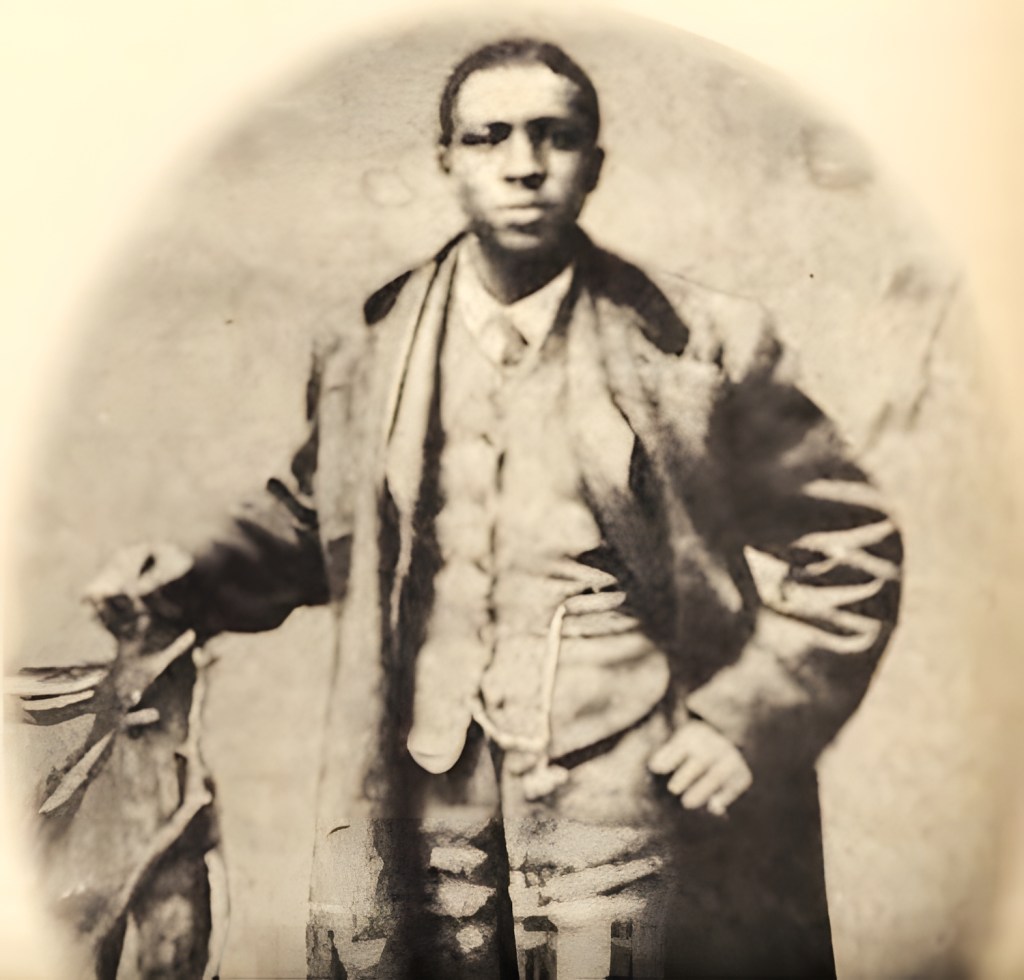
He died in January 1924 and was brought home to Lexington for burial at African Cemetery No. 2, itself with Kentucky Historical Marker 2110, resting place for several of the era’s other great Black jockeys, including Isaac Murphy. For most of the century that followed, Lewis’s own grave went largely unvisited and his name largely unremembered outside racing-history circles, even as the race he won became a fixture of American culture. That started to change only recently: this past June, 150 years after his ride, Lewis’s family unveiled a statue of him at Churchill Downs, the first winning jockey in Derby history to be honored there, and one of the last of that first great generation of Black horsemen to finally get one.
McGrathiana, Then and Now
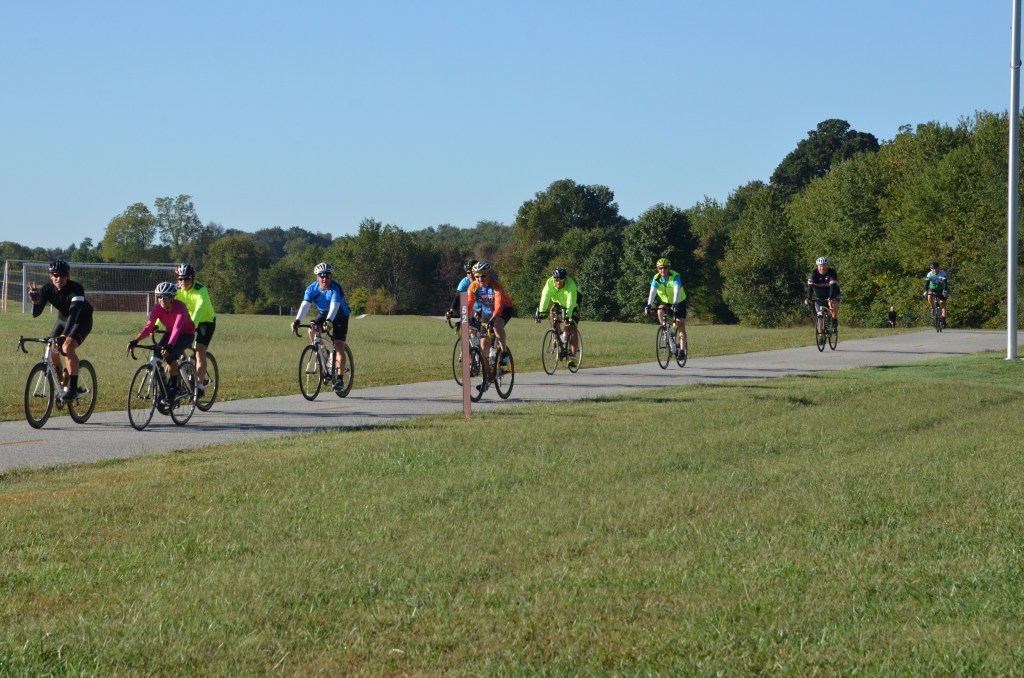
The farm where Aristides was born doesn’t look much like a farm anymore. After passing through several owners in the decades following McGrath’s death, McGrathiana eventually became part of the University of Kentucky’s Coldstream Research Campus — agricultural research fields and university offices where a Derby-winning stable once stood. The marker itself sits along the Legacy Trail, Lexington’s paved multi-use trail, which cuts straight through the old farm grounds on its way between downtown and the Kentucky Horse Park. It’s not a dramatic spot to visit; there’s no house, no barn, nothing left standing from Aristides’s day. What’s there instead is exactly what you’d expect on a stretch of shared-use trail on a clear morning: runners, dog walkers, and cyclists moving through what used to be one of the most important horse farms in America, most of them probably unaware of what they’re riding over.
The city has, in a smaller way, made sure Lewis’s name stays attached to this ground. In 2010, Lexington ran a public naming contest for the newly built Newtown Pike Extension, and “Oliver Lewis Way” won with 60 percent of the vote. The road has since been extended twice, most recently connecting Versailles Road to Broadway in 2017. It’s a quieter kind of recognition than a statue at Churchill Downs, but it means Lewis’s name is on a street sign a short drive from where he and Aristides actually trained together.
Sources consulted: Kentucky Historical Society / ExploreKYHistory; National Museum of Racing and Hall of Fame (racingmuseum.org); Kentucky Derby official news (kentuckyderby.com); Kentucky Commission on Human Rights; Kentucky Horse Park; WDRB News; Encyclopedia.com. Historical images of Aristides and Oliver Lewis via Wikimedia Commons (public domain).



I’m eager to hear what you think