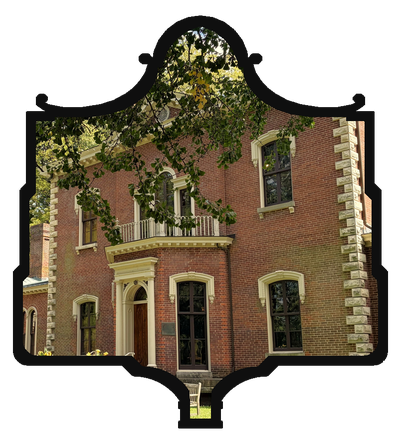
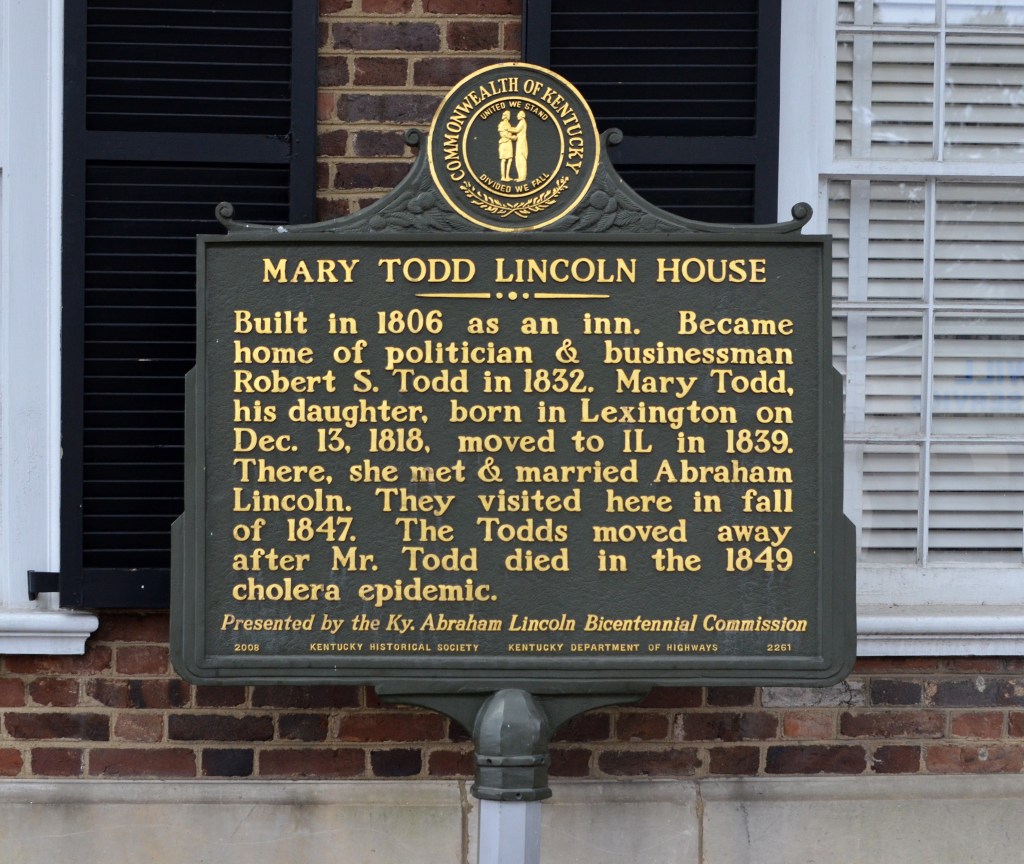
“MARY TODD LINCOLN HOUSE”
Built in 1806 as an inn. Became home of politician & businessman Robert S. Todd in 1832. Mary Todd, his daughter, born in Lexington on Dec. 13, 1818, moved to IL in 1839. There, she met & married Abraham Lincoln. They visited here in fall of 1847. The Todds moved away after Mr. Todd died in the 1849 cholera epidemic.Presented by the Ky. Abraham Lincoln Bicentennial Commission, Kentucky Historical Society, Marker No. 2261
578 W. Main Street, Lexington, Kentucky | 38° 3′ 4″ N, 84° 30′ 9″ W — Directions: MapQuest
Of all the markers in this book so far, this one might be the trickiest to read at face value. It’s not that anything on the plaque is false, exactly, it’s that its four sentences compress a complicated life into a shape that flattens most of the complication out. Mary Todd Lincoln grew up here, yes. She met and married Abraham Lincoln, yes. But “there, she met & married” makes it sound like one afternoon, when it was actually the better part of three years, and the woman who left this house at twenty was not quite the same woman the country would later know, love, and cruelly mock.
Not Born Here, But Raised Here
First, a small correction the marker itself doesn’t quite make but that visitors often assume: Mary Todd was not born in this house. She was born December 13, 1818, at a different Todd family home on West Short Street, itself marked separately as Marker #12. The Main Street house didn’t become the Todd residence until 1832, when Mary was thirteen. The distinction matters less for the facts than for the feeling of the place: this wasn’t the house of her infancy, but the house of her adolescence, the one she’d have pictured when she thought of home for the rest of her life.
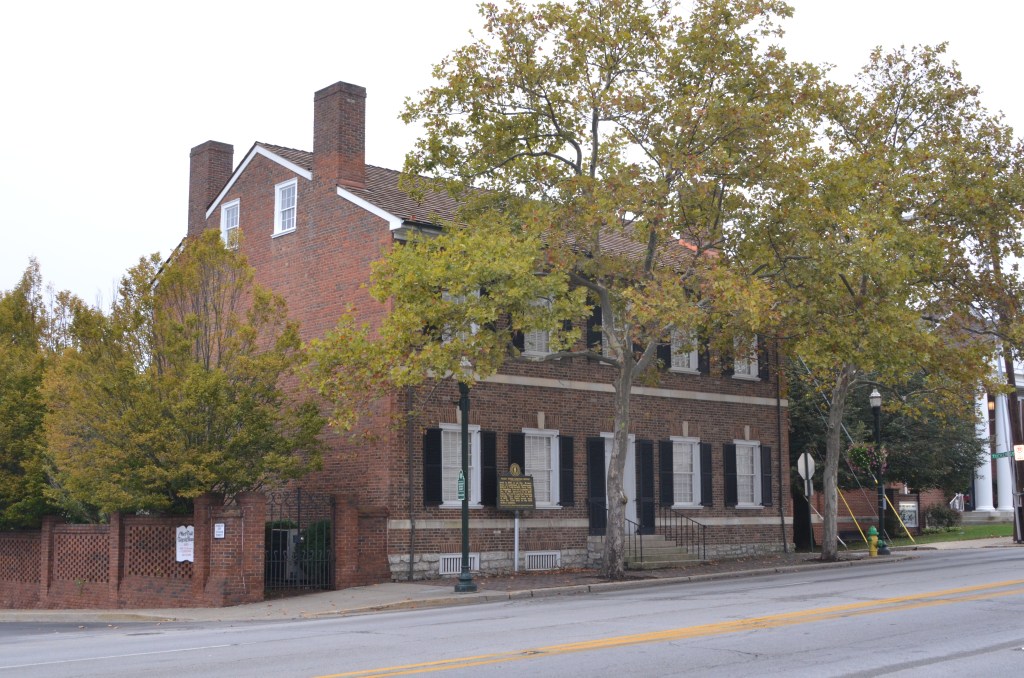
The building itself predates the Todds by decades. Constructed around 1803–1806, it started life as an inn called “The Sign of the Green Tree,” run by a man named William Monteer. Robert Todd bought it and converted it into a family home in 1832 — not for a small family, either. Mary’s mother, Eliza Parker Todd, had died in childbirth in 1825, when Mary was six. Robert remarried two years later, to Elizabeth “Betsy” Humphreys, and the blended household that eventually filled this fourteen-room house included six children from his first marriage and nine more from his second, though not everyone simultaneously. Mary’s relationship with her stepmother was, by most accounts, tense rather than warm, a detail biographers return to often when trying to understand the woman Mary became.
A Prominent, and Slaveholding, Family
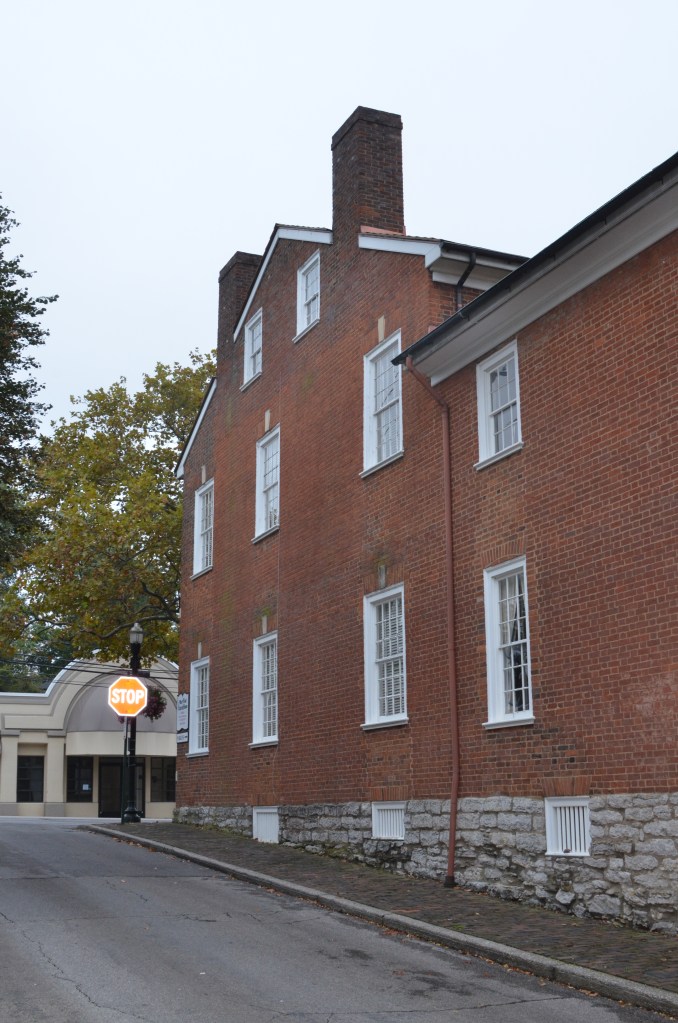
Robert S. Todd was, by the standards of antebellum Lexington, a significant man: president of the local branch of the Bank of Kentucky, a partner in a cotton-manufacturing firm, and a member of the Kentucky General Assembly for roughly two decades. He was also, like Henry Clay down the road at Ashland, a slaveholder. The Todd property included outbuildings — a kitchen, wash house, smoke house, stables — among them slave quarters, though none of the original outbuildings survive today. Mary Todd grew up in a household that depended on enslaved labor for its daily operation, a fact the museum today addresses directly rather than around, and one worth calling out plainly here too.
Nine Years of Schooling, Then Springfield
Whatever else was complicated about her upbringing, Mary Todd was unusually well educated for a woman of her era, nine years across two Lexington schools, giving her a command of French and a breadth of reading that later observers, often condescendingly, found surprising in a president’s wife. She left Lexington in 1839, at age twenty, to live in Springfield, Illinois, with her older sister Elizabeth Todd Edwards. This is where the marker’s timeline compresses hardest: she “met & married Abraham Lincoln” reads as a single clause, but the two didn’t marry until November 1842 — three years after she arrived in Springfield, following a courtship that was, by the accounts of people who knew them, genuinely rocky, including a broken engagement along the way. It was not the swift romance the marker’s phrasing implies.
The 1847 visit the marker does note was real: Abraham and Mary brought their young family back to Lexington that fall, staying with the Todds on Main Street. It would prove to be one of the last times Mary saw the house as a Todd family home. Her father died suddenly in 1849, during the same cholera epidemic that killed hundreds across Lexington that summer. His estate went to auction, the Main Street house was sold, and Betsy Todd moved the remaining family to a farm near Frankfort.
What the Marker Doesn’t Say
The plaque’s story stops at 1849, which is reasonable — it’s a marker about the house, not a biography. But the house’s real significance to American history rests almost entirely on what happened to the girl who left it, and that story is worth telling honestly rather than skipping to the White House years.
Mary and Abraham had four sons. Only one, Robert Todd Lincoln, outlived his mother. Edward died at not quite four, in 1850; William (“Willie”) died at eleven, in 1862, while his father was in office and the country was at war; Thomas (“Tad”) died at eighteen, six years after his father’s assassination. Mary was seated beside her husband at Ford’s Theatre the night he was shot. She lived another seventeen years after that, and they were not easy ones, with grief, chronic pain, financial anxiety, and a public that had never much liked her, turned steadily crueler in how they talked about her.
In 1875, her surviving son Robert Todd Lincoln petitioned a Chicago court to have her committed to a mental health facility, and a jury found in his favor after a trial that took less than an hour. She spent roughly four months at a private sanitarium before her release was secured, and she spent much of what remained of her life trying, with only partial success, to have that judgment publicly reversed. Historians still debate how much of her behavior in those years reflected genuine crisis, grief, and possibly undiagnosed illness, versus how much reflected a family and a country simply out of patience with a widow who didn’t grieve the way they expected her to.
There isn’t a settled verdict, but it’s a significant enough chapter in her life that leaving it out entirely would be its own kind of distortion.
Auction House to First-Lady Museum
The building itself had a rougher second act than its most famous resident. After the Todds sold it in 1852, it passed through a long string of uses that had nothing to do with its future as a historic site: a boarding house, a grocery store, at one point reportedly a brothel, and by the mid-twentieth century, plain storage space, deteriorating along with much of the neighborhood around it. It took until 1977, more than a century after Mary Todd Lincoln’s death, for the house to be restored and opened to the public, led by Beula C. Nunn, Kentucky’s First Lady under former Governor Louie B. Nunn. It has the distinction of being the first historic site in the United States dedicated specifically to a First Lady, predating even similar sites for far more universally celebrated women who held the role.
Today the Kentucky Mansions Preservation Foundation operates it as a house museum, furnished largely from an inventory taken at the 1849 estate auction, supplemented by pieces donated back to the house over the decades by descendants of both the Todd and Lincoln families. It’s a rare thing: a childhood home turned museum for a woman remembered less for what she did than for what was done to her, and for the sheer, sustained difficulty of the life she lived alongside one of the country’s most mythologized men.
A Note on Marker Numbers
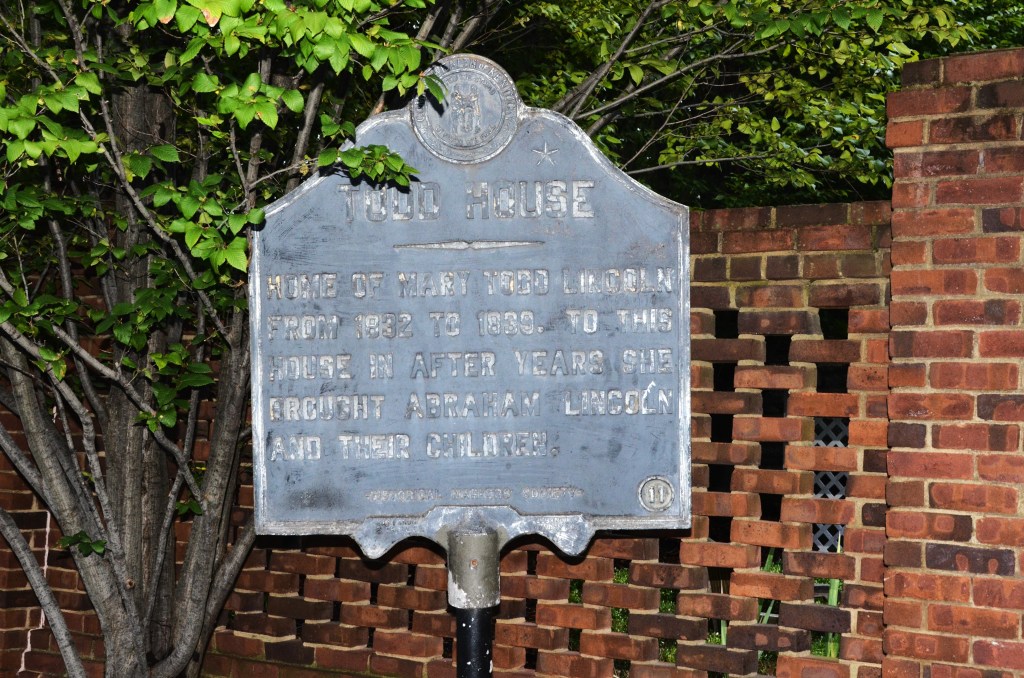
This isn’t the first Kentucky historical marker to stand at this address. An earlier marker, #11, titled simply “Todd House,” covered much of the same ground in a single, shorter sentence: that this was Mary Todd Lincoln’s home from 1832 to 1839, and that she later brought her husband and children back to visit. Marker #2261, dedicated in 2008 by the Kentucky Abraham Lincoln Bicentennial Commission, effectively replaced it with a fuller account, though the older number was never formally retired. If you come across “Marker #11” in an older guide or database, this is the house and article it refers to.
Sources consulted: Kentucky Historical Society / ExploreKYHistory; Mary Todd Lincoln House (mtlhouse.org); American Heritage; National Register of Historic Places documentation; Historical Marker Database (hmdb.org).



I’m eager to hear what you think