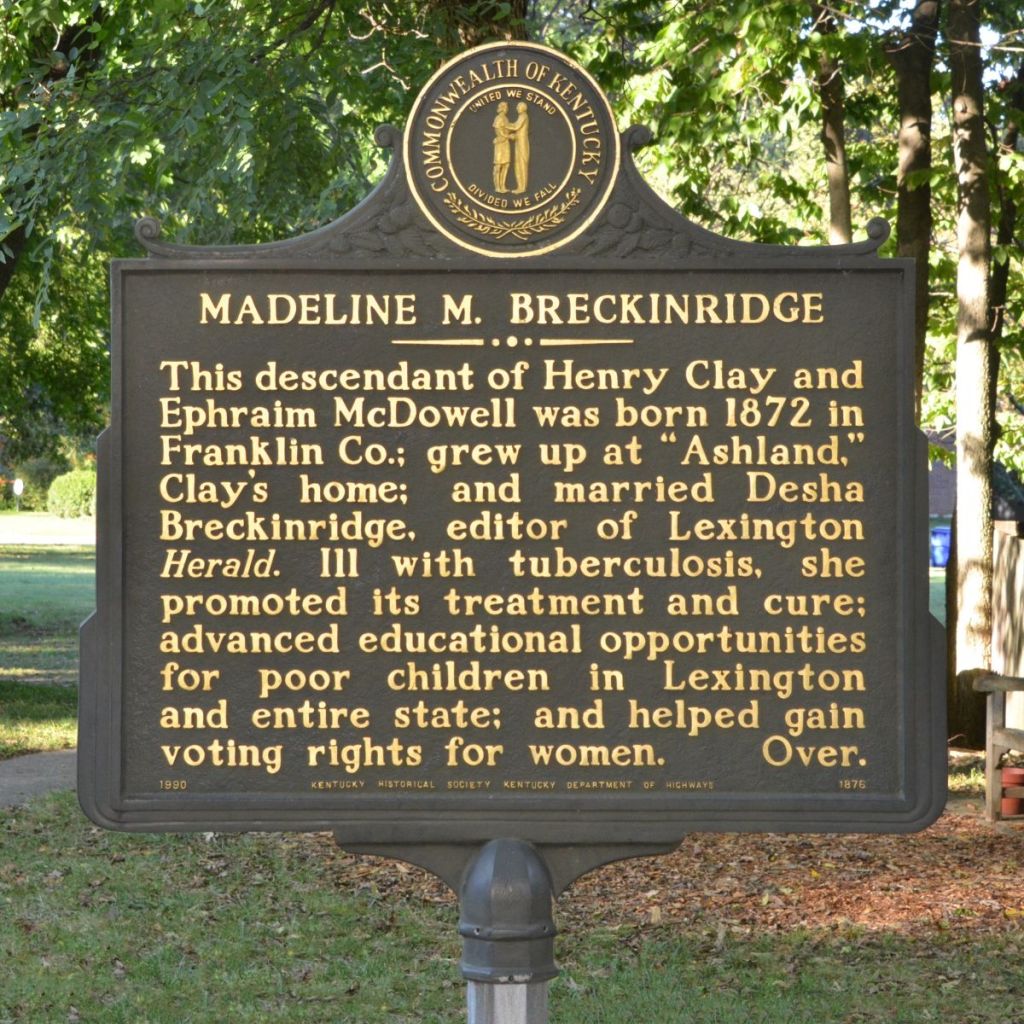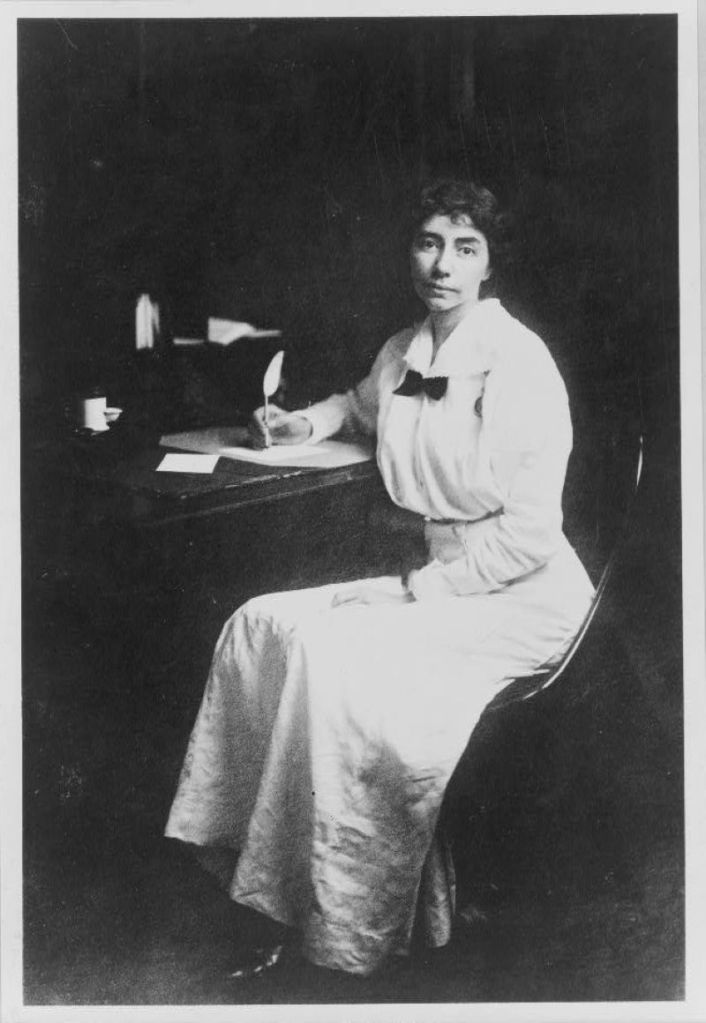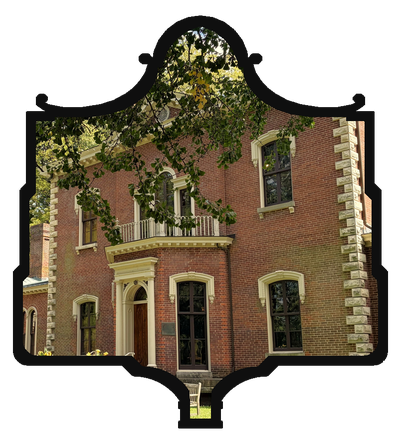
• “MADELINE M. BRECKINRIDGE” This descendant of Henry Clay and Ephraim McDowell was born 1872 in Franklin Co.; grew up at “Ashland,” Clay’s home; and married Desha Breckinridge, editor of Lexington Herald. Ill with tuberculosis, she promoted its treatment and cure; advanced educational opportunities for poor children in Lexington and entire state; and helped gain voting rights for women. Over.

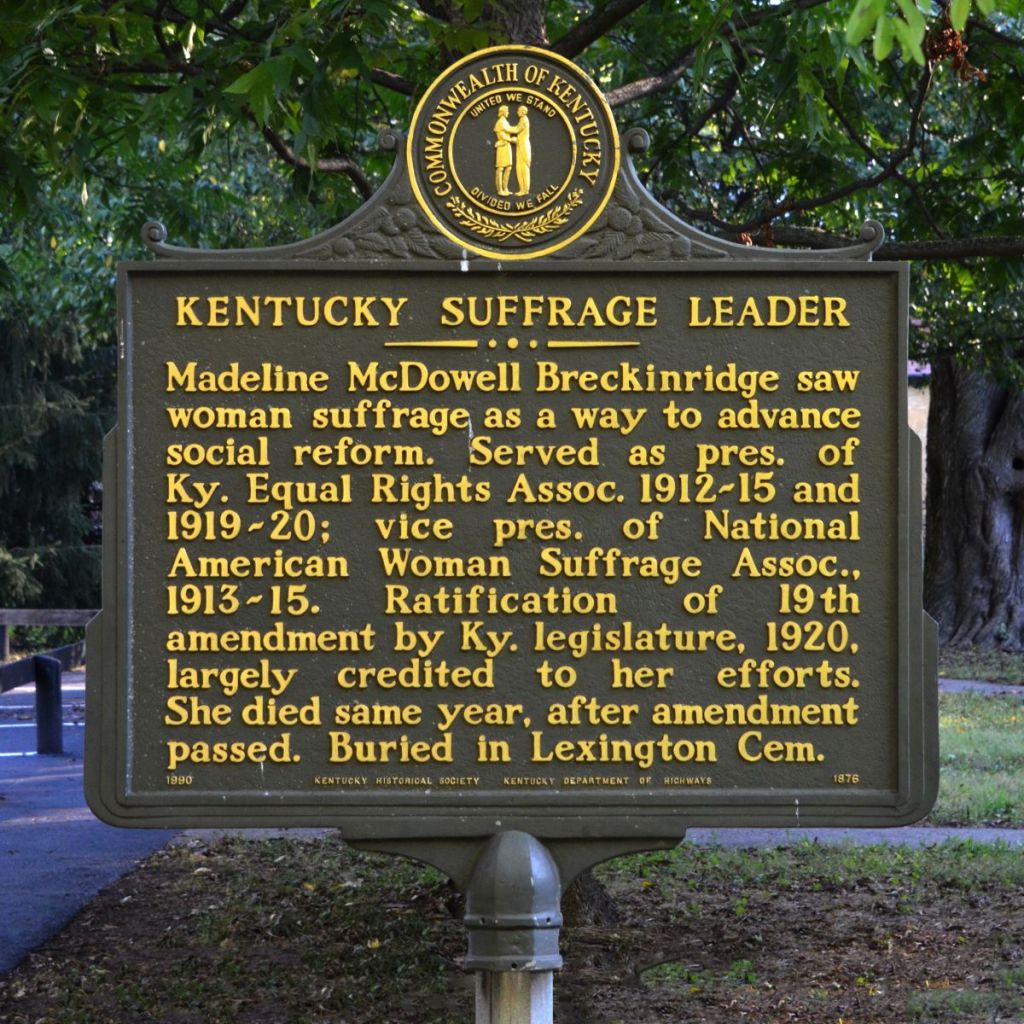
    “KENTUCKY SUFFRAGE LEADER,” reverse Madeline McDowell Breckinridge saw woman suffrage as a way to advance social reform. Served as pres. of Ky. Equal Rights Assoc. 1912-15 and 1919-20; vice pres. of National American Woman Suffrage Assoc., 1913-15. Ratification of 19th amendment by Ky. legislature, 1920, largely credited to her efforts. She died same year, after amendment passed. Buried in Lexington Cem.

    Kentucky Historical Society, Marker No. 1876 — erected 1990
    120 Sycamore Road, Lexington, Kentucky | 38° 1′ 43″ N, 84° 28′ 50″ W — Directions: MapQuest

    The marker’s last clause, “helped gain voting rights for women,” is technically true and quietly incomplete. Madeline McDowell Breckinridge did more than almost anyone to win Kentucky women the vote in 1920. But the movement she led was also, by design and by her own hand, a movement that did not mean to extend that promise equally to everyone. Both halves of that story belong here, not just the half that fits on cast iron (cast aluminum).

    The Girl Ashland Raised

    Madeline McDowell was born in Franklin County in 1872, the granddaughter of Henry Clay Jr. and, through him, the great-granddaughter of Henry Clay himself. In 1882, when she was ten, her parents bought Ashland, the estate her famous ancestor had built decades earlier, and Madge, as her family called her, spent the rest of her adolescence there. Her early schooling in Lexington was light on academics, a relative later joked that it amounted to an education in “King Arthur and rainbows,” but she got a more serious one afterward, first at Miss Porter’s School in Connecticut and then at State College in Lexington, the institution that would eventually become the University of Kentucky.

    State College is also where her health turned. Tuberculosis settled into the bone of one leg, and part of it was amputated, leaving her with a wooden leg for the rest of her life. The once-athletic young woman became, by necessity, a more sedentary and studious one, reviewing books for the Lexington Herald and reading German philosophy with a local women’s discussion club. It would not be the last time tuberculosis reshaped her life, or the last time she turned an illness into a cause.

    In 1898 she married Desha Breckinridge, who edited that same Lexington Herald and used its editorial page, alongside his wife, to campaign for the causes of the Progressive Era, child welfare, public health, and women’s rights among them. The marriage was not an easy one; Desha was persistently unfaithful, and biographers generally agree Madeline poured herself into civic work partly to outrun that disappointment. Whatever the mix of motives, the output over the next two decades was extraordinary.

    Reform Before the Ballot
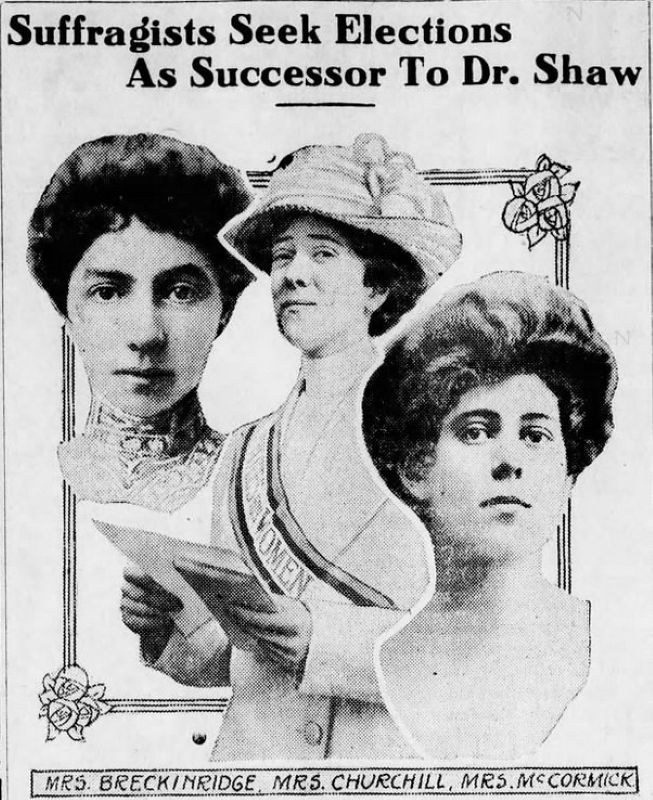
    Breckinridge’s reform career actually predates her suffrage work by more than a decade, and it’s worth understanding on its own terms rather than as a warm-up act. In 1900 she helped found the Lexington Civic League and the relief organization Associated Charities, both aimed at the city’s poor. Through the Civic League she pushed for public kindergartens, city parks, and organized recreation for children who had none of it, and lobbied successfully for Kentucky’s first child labor laws, compulsory school attendance, and, by 1906, the state’s first juvenile court system.

    Her most ambitious project was the Lincoln School, a settlement house modeled on Chicago’s Hull House, built with a $30,000 gift from Robert Todd Lincoln, Abraham and Mary Todd Lincoln’s only surviving child. (Mary Todd Lincoln’s own Lexington childhood is the subject of another marker in this project, #2261, an odd little thread connecting two very different women’s stories through one man’s checkbook.) The school opened in 1912 with day classes for children and night classes for adults, a swimming pool, a gymnasium, a laundry, a cannery, and a carpentry shop, serving Lexington’s poor and a wave of newly arrived Irish immigrants, many of whom couldn’t read. The school’s naming carried an irony its founders never seemed to reckon with — read more in the companion article: Built in Lincoln’s Name, Closed to Black Children.

    A Public Health Crusade, Rooted in Her Own Body

    Breckinridge’s fight against tuberculosis was never abstract to her. She began organizing free TB clinics in Lexington in 1905, working through the Civic League and Associated Charities, and in 1912 she founded the Kentucky Association for the Prevention and Treatment of Tuberculosis, helping establish the Blue Grass Sanitarium along the way. She served on the state’s TB commission until 1916. It’s not hard to see the throughline: a woman who had already lost part of a leg to the disease, and would eventually lose more to its lingering effects, spent a decade building the public health infrastructure Kentucky didn’t yet have for people who had far fewer resources than she did.

    A Movement Divided by the Color Line

    This is the part that the marker’s four sentences have no room for, and it’s the part that most changes how the story reads.

    By the mid-1910s Breckinridge led the Kentucky Equal Rights Association, with chapters in 119 of Kentucky’s 120 counties, and served a term as a national vice president of the National American Woman Suffrage Association. But NAWSA itself was fracturing along a fault line that ran straight through Kentucky: whether suffrage should come through a federal constitutional amendment, or state-by-state, one legislature at a time. Breckinridge’s own cousin, Laura Clay, founder of the Kentucky Equal Rights Association and, before Breckinridge, the state’s leading suffragist, was one of the loudest voices for the state-by-state approach, and the reasoning wasn’t subtle. Clay and a bloc of Southern suffrage leaders worried openly that a federal amendment enforced under the Fourteenth and Fifteenth Amendments would eventually open the ballot box to Black voters too, and they wanted no part of that outcome. Clay went on to oppose ratification of the Nineteenth Amendment outright, on those grounds, even after Kentucky’s legislature had already passed it.

    Breckinridge took the more pragmatic, nationally aligned position, she believed the states’-rights argument was a wedge meant to splinter and stall the entire movement, but “more pragmatic” is not the same as “more just.” Historian Melba Porter Hay’s biography of Breckinridge is direct about the tradeoff: Breckinridge belonged to the NAACP, yet the free playground and kindergarten she personally established in Lexington’s West End in 1901 excluded Black children. In her own suffrage arguments, she sometimes leaned on the same racial logic her rivals used more openly, arguing that giving white women the vote would help secure “Anglo-Saxon supremacy” simply by outnumbering Black voters at the polls. She was, by most accounts, more racially moderate than Laura Clay’s faction, willing to work within a national movement that Clay had walked away from, but she built her victories inside the boundaries of Jim Crow rather than against them.

    None of this erases what she accomplished. It does mean the marker’s tidy “voting rights for women” needs an asterisk that history hasn’t always bothered to add: voting rights for which women, won partly through arguments that assumed the answer wasn’t all of them.

    She could still be sharp in defense of the cause itself. Pressed by Governor James B. McCreary on whether Kentucky women were fit to vote, she is remembered for firing back that Kentucky women weren’t idiots, “even though they are closely related to Kentucky men.”

    Ratification, and a Sudden End

    Breckinridge’s tactical skill showed most clearly in January 1919, when she steered Kentucky’s ratification resolution through the General Assembly on the very first day it was introduced, making Kentucky the 24th state to ratify the Nineteenth Amendment, a genuinely fast, well-managed legislative win by any standard. She spent much of 1920 campaigning nationally for the Democratic Party and was able to cast a ballot herself that November, in the first presidential election open to American women. She then began converting the Kentucky Equal Rights Association into a chapter of the new League of Women Voters and took up a public campaign for the League of Nations.
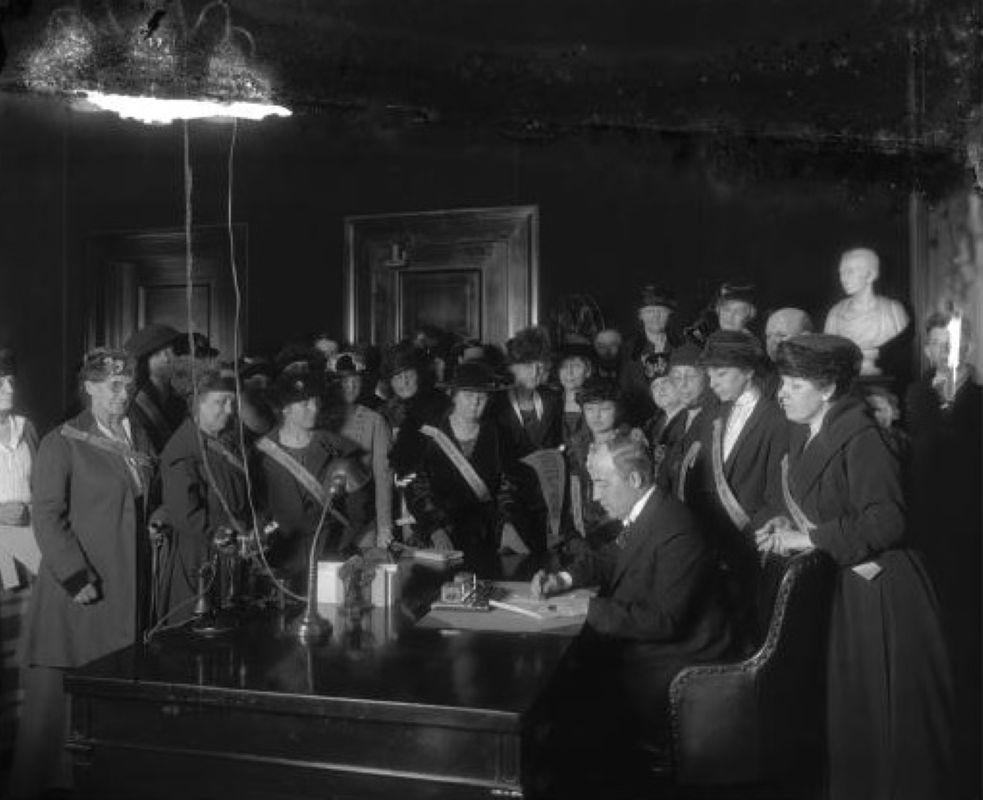
    Governor Edwin P. Morrow signs Kentucky's ratification of the Nineteenth Amendment, 1920

    She didn’t get to enjoy the win for long. Already worn down by decades of poor health, Breckinridge suffered a stroke and died on Thanksgiving Day, 1920, at 48, reportedly while in the middle of arranging holiday donations for Lexington’s poor. Newspapers at the time called her Kentucky’s “most distinguished woman citizen.” Her funeral was held at Ashland, the estate where she’d grown up, and she’s buried at Lexington Cemetery. Her portrait now hangs permanently in the state capitol as part of the Kentucky Women Remembered exhibit, to which she was added in 1996, and historians Lowell Harrison and James Klotter have gone as far as to call her the most influential woman in Kentucky’s history.
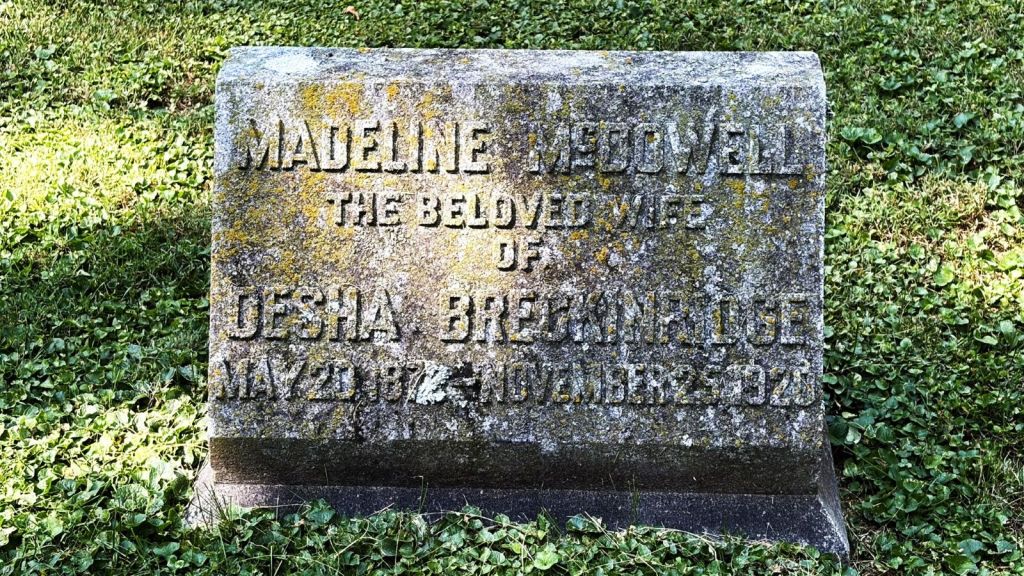
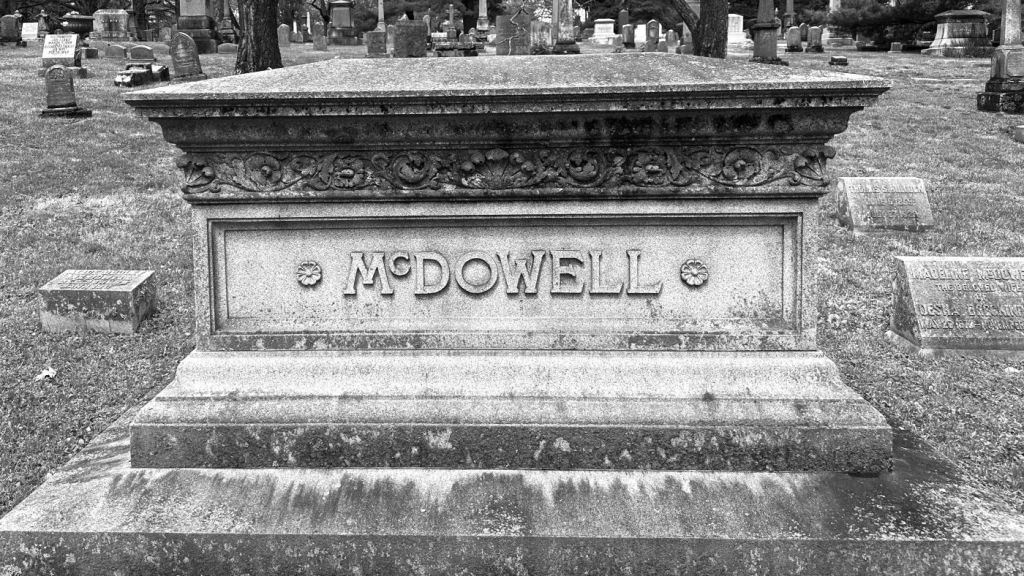
    McDowell family tomb at Lexington Cemetery, burial place of Madeline McDowell Breckinridge

    What’s There Today

    The marker stands on the Ashland grounds itself, just steps from Marker #1, the estate’s own historical marker, one of a small cluster of plaques scattered across the property, with a couple more (the Ashland Garden marker and the A&M College at Ashland marker). It’s a fitting spot: three generations after Henry Clay first bought this land, his great-granddaughter used the standing his name still carried in Lexington to build a reform career that, whatever its blind spots, genuinely changed who got to vote in Kentucky.

    Sources consulted: Kentucky Historical Society / ExploreKYHistory; Wikipedia (Madeline McDowell Breckinridge, Laura Clay); H-Net/H-Kentucky (Kentucky Woman Suffrage Project); Historical Marker Database (hmdb.org); Melba Porter Hay, “Madeline McDowell Breckinridge and the Battle for a New South” (University Press of Kentucky); Lowell H. Harrison and James C. Klotter, “A New History of Kentucky”; University of Kentucky College of Arts & Sciences (UKNow).

  • “EASTERN STATE HOSPITAL”
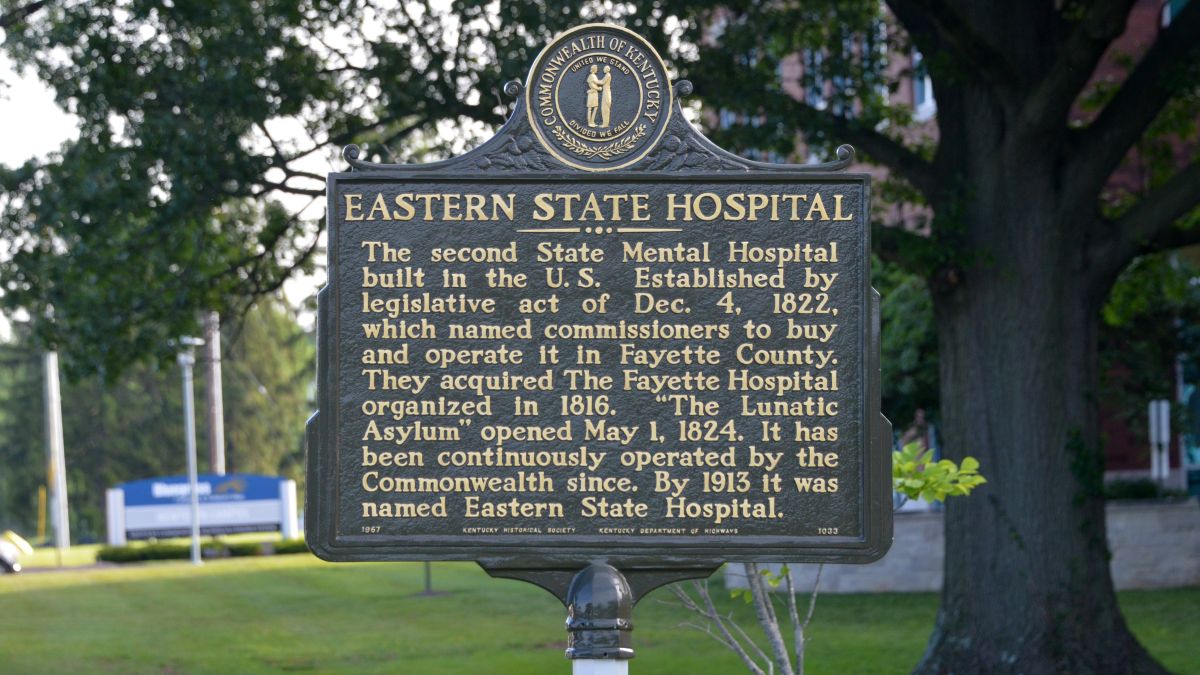
    The second State Mental Hospital built in the U.S. Established by legislative act of Dec. 4, 1822, which named commissioners to buy and operate it in Fayette County. They acquired The Fayette Hospital organized in 1816. “The Lunatic Asylum” opened May 1, 1824. It has been continuously operated by the Commonwealth since. By 1913, it was named Eastern State Hospital.

    Kentucky Historical Society, Marker No. 1033

    Eastern State Hospital historical marker

    500 Newtown Pike (KY 922), Lexington, Kentucky | 38° 3′ 39″ N, 84° 30′ 2″ W — Directions: MapQuest

    Most markers in this project point to something built and finished on schedule. This one points to a building that stood empty for five years before it ever housed anyone at all — and to an institution whose 200-year history includes moral-treatment reformers, a superintendent who resigned rather than compromise patient care, and, in its early records, a first patient identified only by a first name.

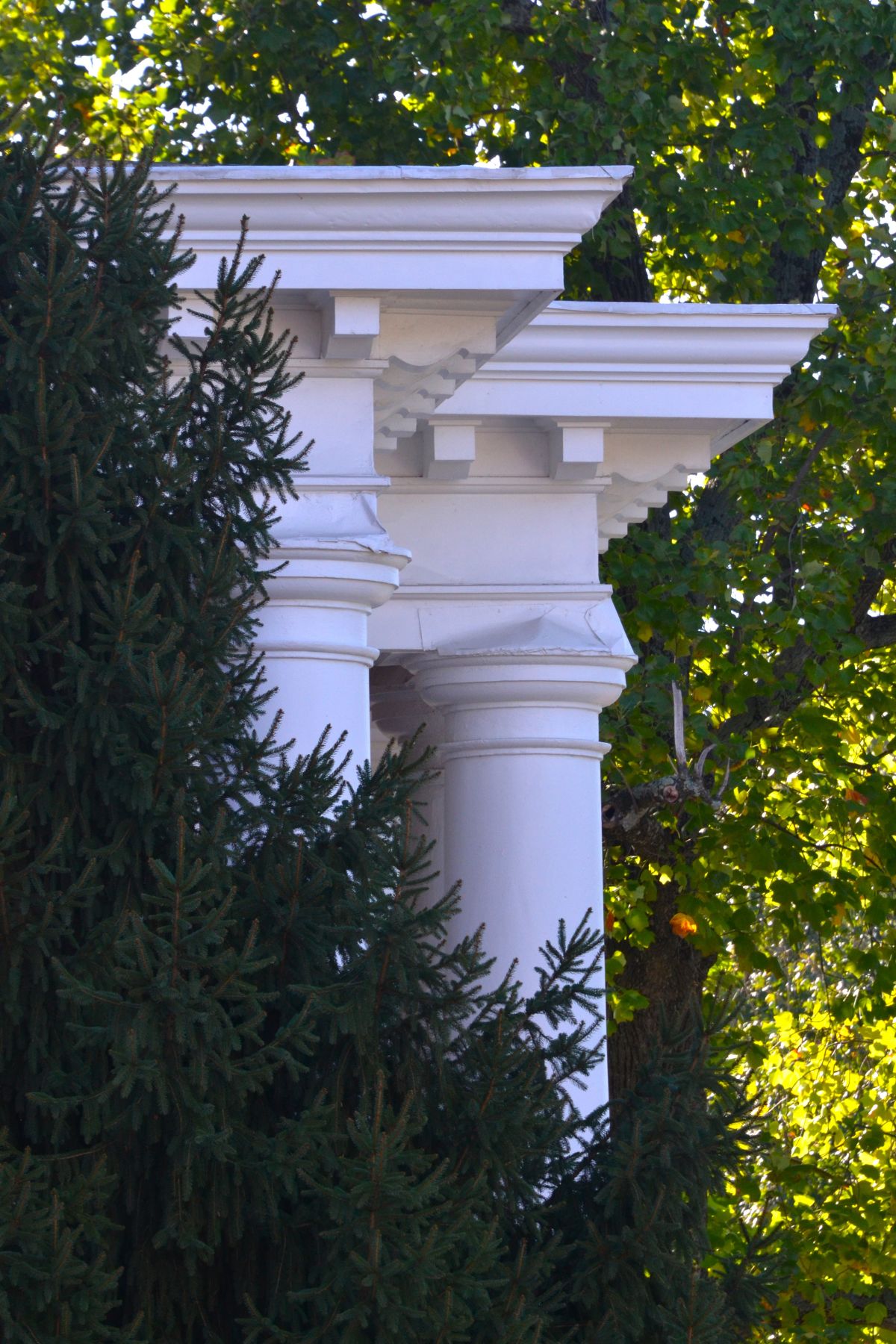
    Architectural column detail at the former Eastern State Hospital campus

    A Failed Start, and a Speech to an Empty Building

    The story actually begins in 1816, when a group of Lexington citizens set out to build a hospital for the city’s poor, disabled, and mentally ill. Construction started on what they called Fayette Hospital, and in 1817 the building was formally dedicated with an oration by Henry Clay delivering a speech about a building that, remarkably, would not open for another seven years. The project ran out of money before it was ever finished or occupied, and it sat vacant through the financial Panic of 1819, a half-built hospital with nothing but Clay’s dedication speech to its name.

    The Commonwealth finally stepped in. On December 4, 1822, the Kentucky General Assembly passed the Act to Establish a Lunatic Asylum, purchasing the unfinished Fayette Hospital building along with ten acres of land. It took until May 1, 1824, to actually open the doors, the second state-supported mental hospital built in the United States, following only Williamsburg, Virginia’s, which had opened nearly sixty years earlier, in 1766.

    The First Patient

    Hospital records identify the very first patient admitted, on opening day, as a Black woman named Charity, from Woodford County. Almost nothing else about her survives in the historical record, not her age, not the nature of her illness, not what became of her. It’s a small, striking detail to sit with: the founding moment of one of the country’s oldest continuously operating psychiatric hospitals is anchored to a woman about whom history kept almost no other information at all, a pattern uncomfortably common in records of this era for anyone who wasn’t wealthy, white, or both.

    The early institution’s approach to care, in truth, was closer to custodial holding than treatment. There was no dedicated medical staff at first; serious medical problems were handled by physicians from the community or by faculty and students from Transylvania University’s medical school a few miles away. A staff physician’s 1828 dissertation was candid about the mission as he saw it: custodial care and “the protection of society,” with most non-violent cases expected to be kept at home by their families, sent to the asylum only once they could no longer be managed there.

    Moral Treatment, and Its Limits

    That began to change in 1844, when the hospital hired its first full-time medical superintendent, Dr. John Rowan Allen, and entered what historians of psychiatry call the “moral treatment” era, a genuine, if imperfect, reform movement built on the idea that structure, routine, and humane conditions could help patients recover, rather than simply containing them indefinitely. Dorothea Dix, the era’s leading national advocate for the mentally ill, visited the asylum at least twice over about a decade, pushing for more humane conditions, and more buildings followed as a result.

    Reform was not evenly applied, though. After the Civil War, the hospital appropriated money to expand a building roughly 200 yards from the main hospital specifically to house Black patients, separate from, and consistently worse than, the main facility. By the close of the nineteenth century, the hospital’s own superintendent was on record warning that living conditions for Black patients were unfit, poorly ventilated, and structurally dilapidated. Despite that acknowledgment, a proper standalone building for Black patients wasn’t constructed until the middle of the twentieth century, meaning the substandard conditions a superintendent himself called out went unresolved for roughly fifty more years.

    A Superintendent’s Protest

    Overcrowding was a near-constant problem more broadly, too. By 1860 the hospital had stopped admitting patients from outside Kentucky just to keep pace with demand inside the state. A capacity expansion aimed for 520 beds, but by 1870 the hospital was full again, and that year, Superintendent Dr. John W. Whitney refused to admit an additional 150 patients the state wanted to send, arguing the hospital simply could not care for them properly. When the state pushed back, he resigned in 1872 rather than compromise. It’s a small act of professional integrity easy to miss in a two-century institutional history, but worth pulling out: a doctor who quit a position of real authority specifically because he wouldn’t preside over conditions he considered unsafe for his patients.

    Cholera, Fire, and a Name That Kept Changing

    Like much of Lexington, the hospital didn’t escape the cholera epidemics that swept the city repeatedly across the nineteenth century, the same 1833 outbreak that slowed construction at Old Morrison and, decades later, killed Mary Todd Lincoln’s father, also struck the asylum’s crowded wards with what period accounts call “fatal effect,” and cholera returned to the hospital more than once after that. The institution also suffered several serious fires over the decades, at least one of which killed patients who couldn’t be evacuated in time.

    Through all of this, the hospital kept changing its name almost as often as it changed superintendents: Lunatic Asylum of Kentucky, then Eastern Kentucky Lunatic Asylum in 1876, before finally settling on Eastern State Hospital by around 1912 or 1913, and the one that’s stuck ever since.

    What’s There Today

    Eastern State Hospital is still a functioning psychiatric hospital, just not at this address anymore. In September 2013, after nearly two centuries on this Newtown Pike campus, the hospital moved into a new, purpose-built facility on Bull Lea Road at the University of Kentucky’s Coldstream Research Campus, closing out one of the longest continuous institutional histories in American psychiatric care at this specific site.

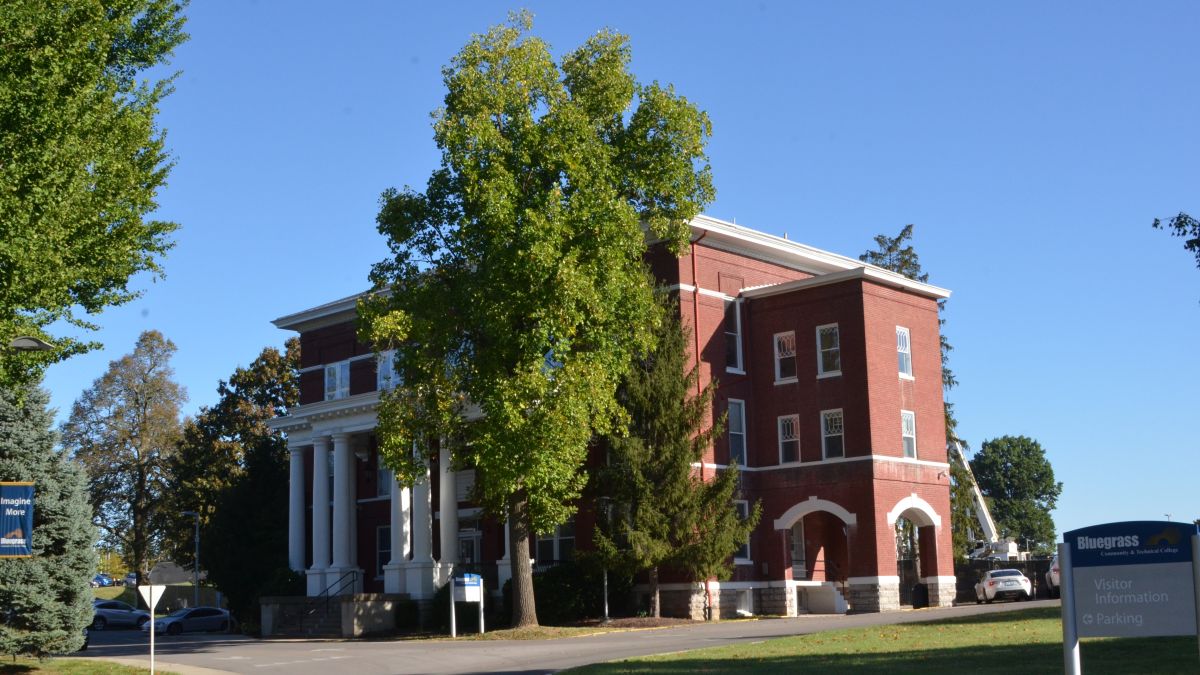
    What’s left behind tells two very different stories side by side. The grand 1906 administration building, with its white columned portico, has been given genuine new life as part of Bluegrass Community and Technical College.

    The 1906 administration building, now part of Bluegrass Community and Technical College

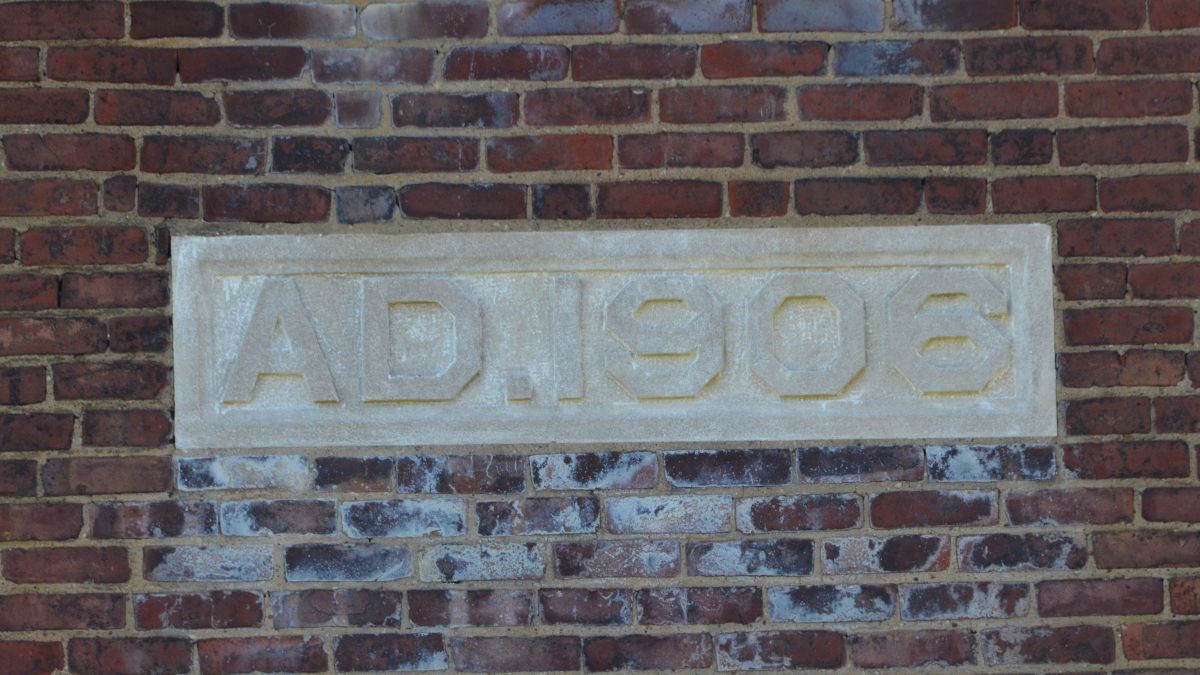
    Its cornerstone still reads “A.D. 1906” above brick that’s clearly been maintained with care.

    Cornerstone reading A.D. 1906 on the former administration building

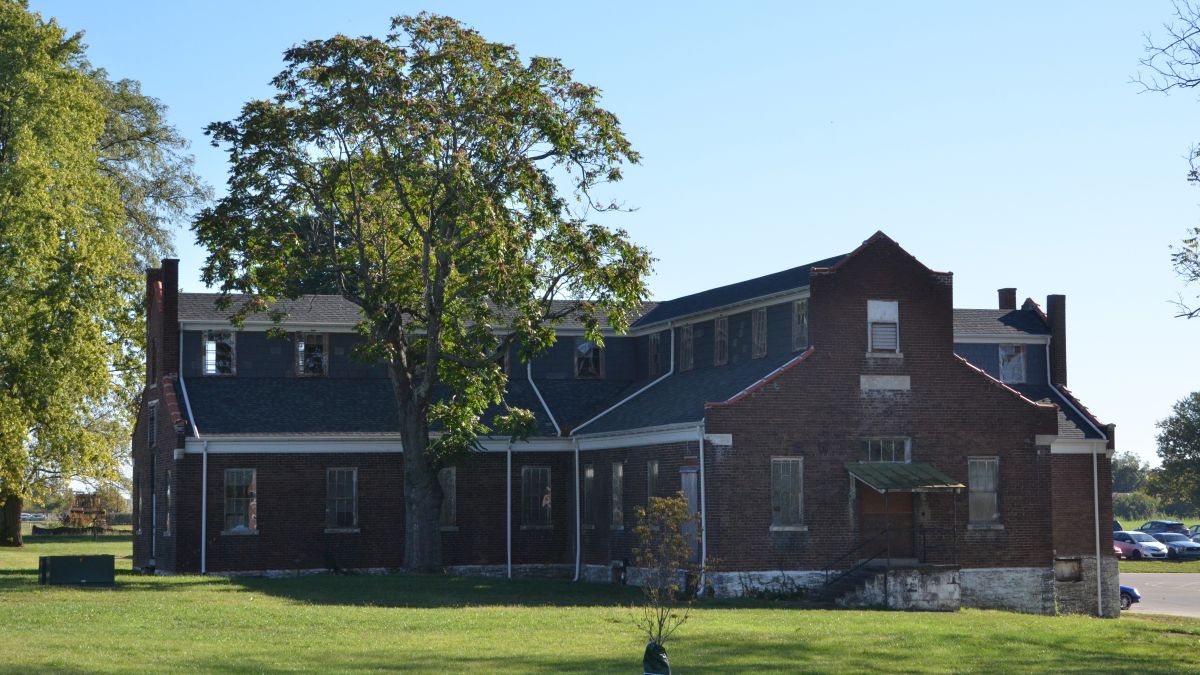
    Walk a bit further across the same grounds, though, and you’ll find other original hospital buildings standing empty, windows broken, roofs sagging, quietly deteriorating in a way the marker’s timeline doesn’t hint at.

    An abandoned original hospital building on the former Eastern State Hospital campus

    There’s a third layer to this site that neither the marker nor a walk past the standing buildings reveals: beneath parts of the grounds lie unmarked graves, buried here across nearly two centuries by a hospital that had neither the money nor, often, the family connections to do otherwise for the poor and indigent people in its care. The cemetery was folded into hospital grounds and its markers removed decades ago, and it faded from institutional memory until construction crews struck human remains in 2005, prompting a formal archaeological excavation that recovered roughly two-thirds of the burials before the property changed hands in 2011. Read the full story of the cemetery’s rediscovery, and what it reveals about who the hospital buried and how, in the companion article: The Eastern State Hospital Cemetery: What the Grounds Kept Quiet.

    It’s a strange split inheritance for a 200-year-old institution: part of it repurposed into a college hall full of students, part of it left to the weather, both still standing on the same ten acres the Commonwealth bought in 1823.

    Sources consulted: Kentucky Historical Society / ExploreKYHistory; American Journal of Psychiatry (“The Old and the New Eastern State Hospital in Lexington, Kentucky”); Wikipedia (Eastern State Hospital, Kentucky); Kentucky Historic Institutions (kyhi.org); Kentucky Archaeological Survey (archaeology.ky.gov); University of Louisville Kornhauser Health Sciences Library archives; kygenweb.net historical account.

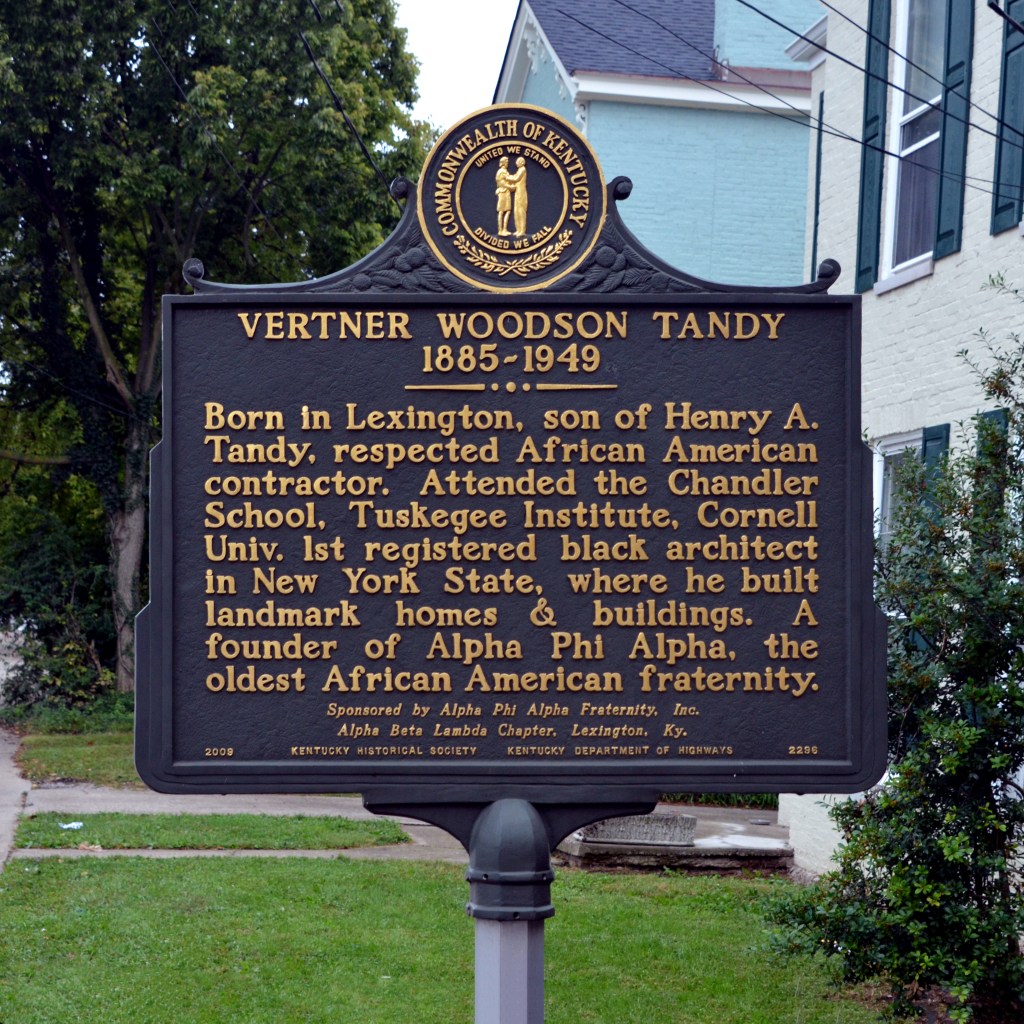
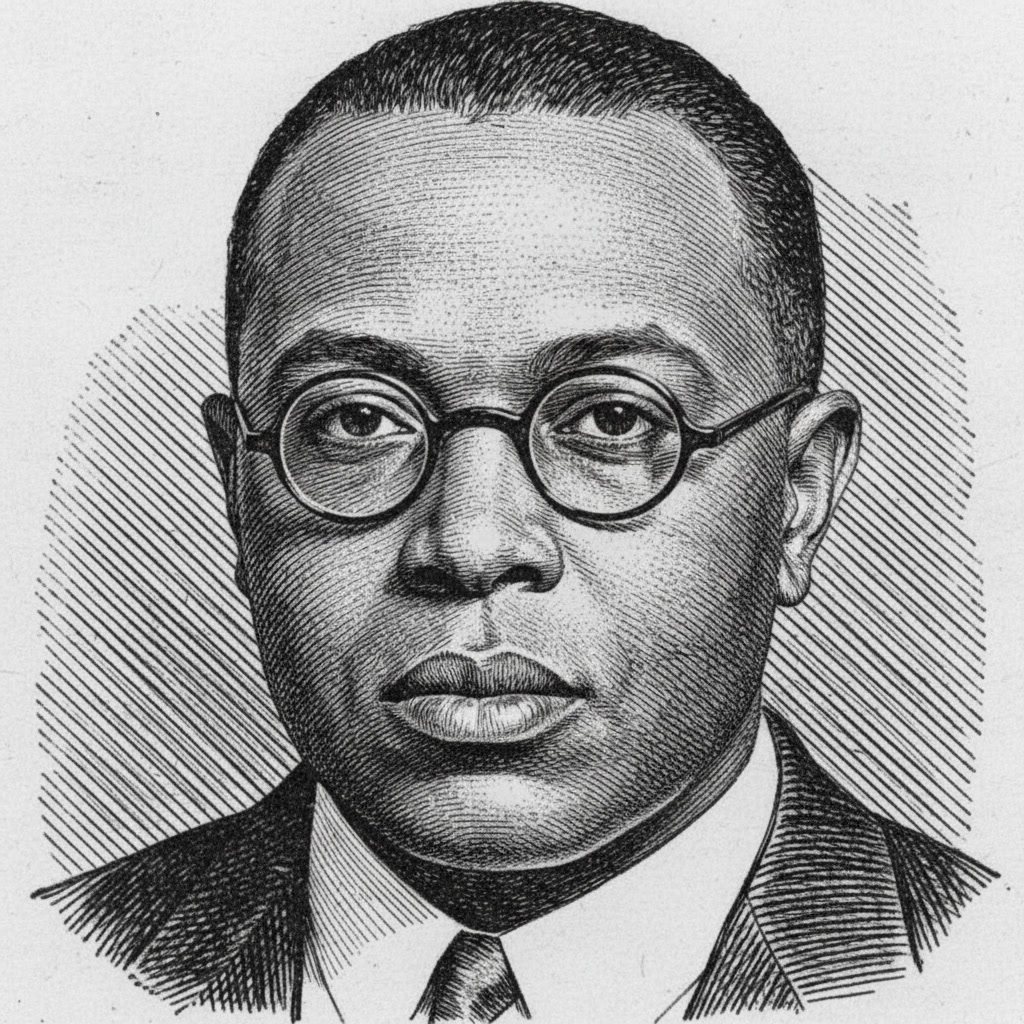
  • “VERTNER WOODSON TANDY, 1885-1949”
    Born in Lexington, son of Henry A. Tandy, respected African American contractor. Attended the Chandler School, Tuskegee Institute, Cornell Univ. 1st registered black architect in New York State, where he built landmark homes & buildings. A founder of Alpha Phi Alpha, the oldest African American fraternity.

    Sponsored by Alpha Phi Alpha Fraternity, Inc., Alpha Beta Lambda Chapter, Lexington, Ky. — Kentucky Historical Society, Marker No. 2296

    Kentucky historical marker No. 2296 for Vertner Woodson Tandy, Lexington, Kentucky

    642 West Main Street, Lexington, Kentucky | 38° 3′ 9″ N, 84° 30′ 14″ W — Directions: MapQuest

    Most markers in this site point back at Lexington, a house, a farm, a building still standing on the spot. This one points outward. Vertner Tandy left Kentucky as a young man and never really came back, and his most famous work stands 750 miles away on a hillside above the Hudson River. But the marker is right to claim him, because everything that made that career possible, the discipline, the trade knowledge, the sheer nerve it took to become the first at something, started on this street, watching his father run a construction crew.

    A Father Born Enslaved, Building Lexington’s Skyline

    Henry A. Tandy was born enslaved in Estill County around 1853 and came out of the Civil War with, effectively, nothing but a trade. He built it into one of the more remarkable business stories in nineteenth-century Kentucky. By 1893 he’d established his own firm, Tandy & Byrd, specializing in decorative stonework and brickmasonry, and within a couple of decades that firm’s work was all over downtown Lexington: the Lexington Opera House, the Fayette County Courthouse, and other buildings whose brick and stone still stand today, even if most passersby have no idea who laid it. By the time he died in 1918, Henry Tandy was among the wealthiest Black Kentuckians of his era, a fact made more remarkable, by how his own life had begun.

    Vertner, born in 1885, grew up watching his father’s business run. The marker’s mention of “the Chandler School” is a nod to his early education in Lexington’s segregated school system, but his real architectural education happened on his father’s job sites, absorbing the trade before he ever opened a textbook on it.

    Tuskegee, Then Cornell, Then “The Seven Jewels”

    Tandy enrolled at Tuskegee Institute in 1904 to study architectural drawing under Booker T. Washington’s direct influence, and by most accounts quickly became the program’s standout student. A year later, in 1905, he transferred to Cornell University to finish his architecture degree — a significant jump in itself, from a historically Black institution built explicitly around vocational and industrial training to an Ivy League research university where he’d have been one of vanishingly few Black students on campus.

    It was at Cornell, in December 1906, that Tandy and six other Black students founded Alpha Phi Alpha, the first intercollegiate Greek-letter fraternity established for Black men in America, and still the oldest one operating today. The seven founders are remembered within the fraternity as “the Seven Jewels.” Tandy served as the chapter’s first treasurer and personally designed the organization’s pin, and he was the one who guided the fraternity through incorporation as it began expanding to other campuses. Alpha Phi Alpha now counts roughly 800 chapters and a membership list that runs through W.E.B. Du Bois, Thurgood Marshall, and Martin Luther King Jr., an organization Tandy helped invent before he’d even finished his degree.

    First in New York

    Tandy graduated from Cornell and by the time he set up practice in Manhattan, with a partner named George Washington Foster in the firm Tandy & Foster, he had become the first Black architect registered in the state of New York. He would later add a second, quieter first: becoming the first Black member inducted into the American Institute of Architects, the profession’s main national body, at a time when plenty of the profession’s institutions weren’t especially eager to open that door.

    Villa Lewaro and the Buildings That Remain

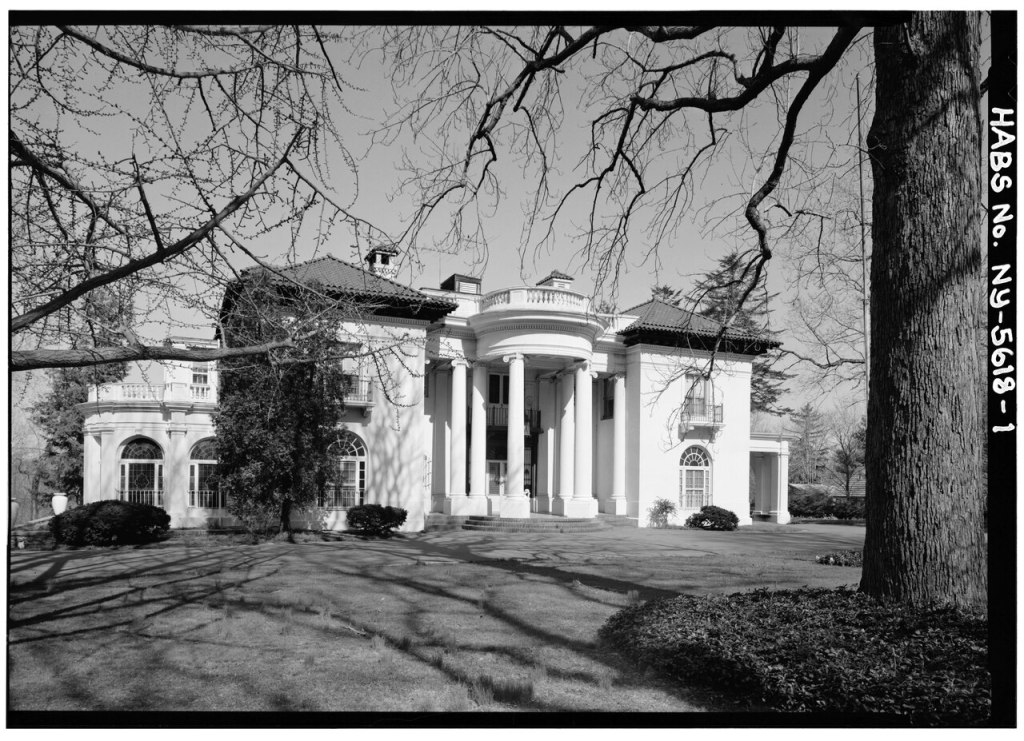
    Tandy’s most famous commission, by a wide margin, was Villa Lewaro, the 34-room, 20,000-square-foot Italianate mansion he designed for Madam C.J. Walker, the hair-care entrepreneur widely credited as America’s first self-made female millionaire. Built between 1916 and 1918 on a hillside above the Hudson in Irvington, New York, at a reported cost of $250,000, Villa Lewaro became one of the social and cultural landmarks of the Harlem Renaissance — a place where Walker hosted W.E.B. Du Bois and other leading Black intellectuals and activists of the era. It’s now a National Historic Landmark, and it’s not hard to see why: it was a direct, physical statement that Black wealth and Black achievement belonged on the same hillsides as anyone else’s.

    Villa Lewaro, the Irvington, New York mansion Vertner Tandy designed for Madam C.J. Walker

    Tandy’s other major surviving work includes St. Philip’s Episcopal Church in Harlem, completed in 1911 when Tandy was still in his twenties, and the Ivey Delph Apartments on Hamilton Terrace, one of his later projects, added to the National Register of Historic Places in 2005. Between them, his buildings trace a career that started designing houses of worship for Harlem’s growing Black congregations and ended designing housing for the neighborhood’s residents, a body of work still standing, still in use, nearly eighty years after his death.

    A Soldier, Too

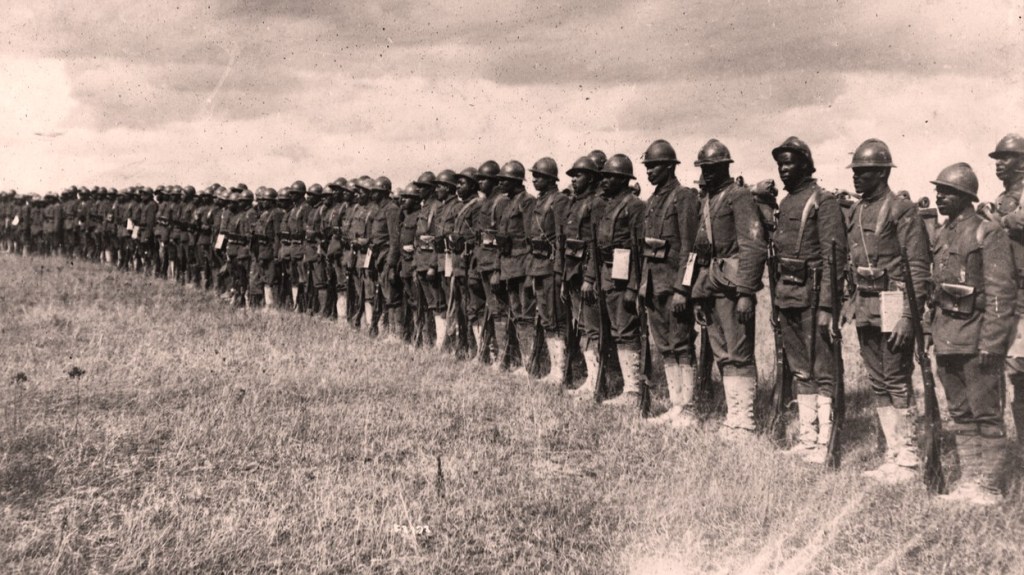
    The marker doesn’t mention it, but Tandy also broke a barrier in uniform: he’s credited as the first Black American to pass the military officer’s commissioning examination, and he was commissioned a first lieutenant in the 15th Infantry of the New York State National Guard — the same regiment that would later become famous in combat during World War I as the 369th Infantry, the “Harlem Hellfighters.” It’s a smaller footnote next to Villa Lewaro and Alpha Phi Alpha, but it fits the pattern of a life spent being first through doors that weren’t especially open.

    Soldiers of the 369th Infantry Regiment, the 'Harlem Hellfighters,' World War I
    369th Infantry, the “Harlem Hellfighters”

    A Park Renamed

    Vertner’s father Henry’s own Lexington legacy got a public update in 2020. The city park once known as Cheapside, the same square documented as the site of Lexington’s slave auction block, had stood for decades with statues of Confederate general John Hunt Morgan and Vice President John C. Breckinridge at its center. Following a grassroots campaign called Take Back Cheapside, the statues came down, and the park was renamed Henry A. Tandy Centennial Park, honoring the formerly enslaved man whose stonework built much of downtown Lexington, on the same ground where people like him had once been sold.

    Sources consulted: Kentucky Historical Society / ExploreKYHistory; BlackPast.org; Historical Marker Database (hmdb.org); Wikipedia (Vertner Woodson Tandy, Henry A. Tandy, Villa Lewaro); New York Amsterdam News; African American Registry.

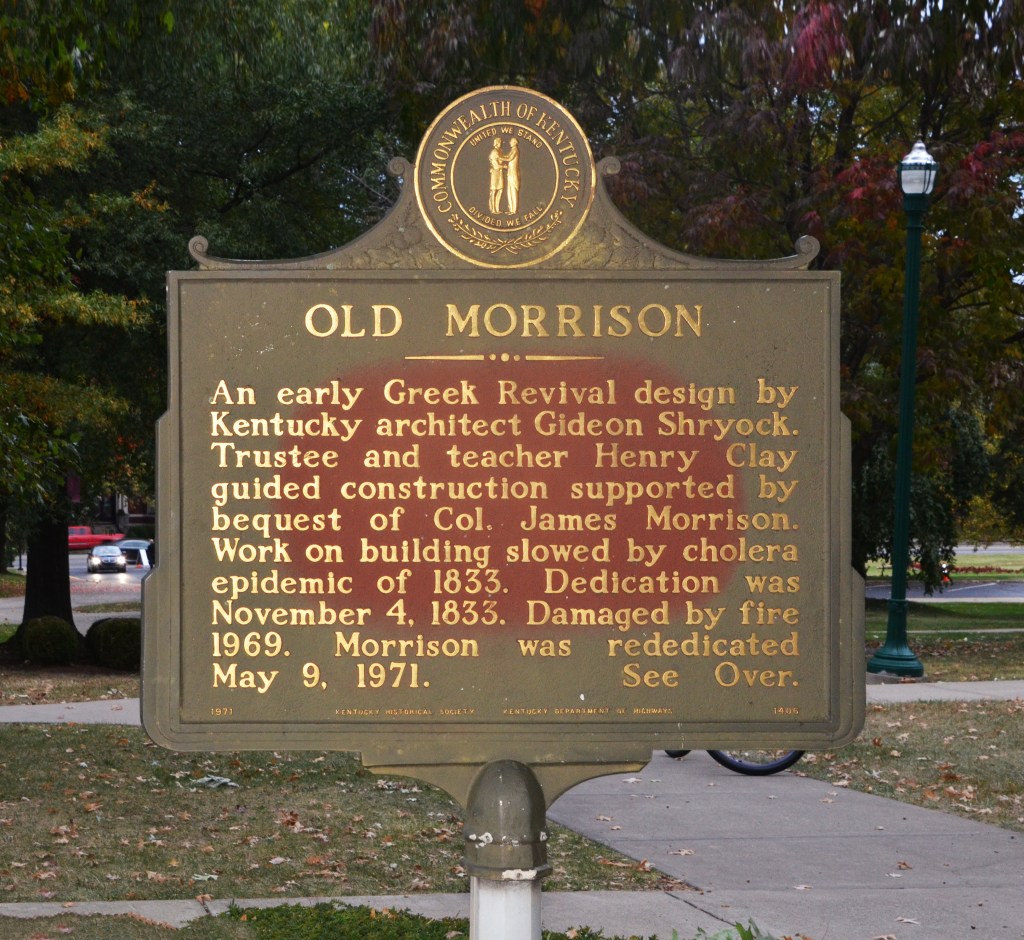
  • “OLD MORRISON”
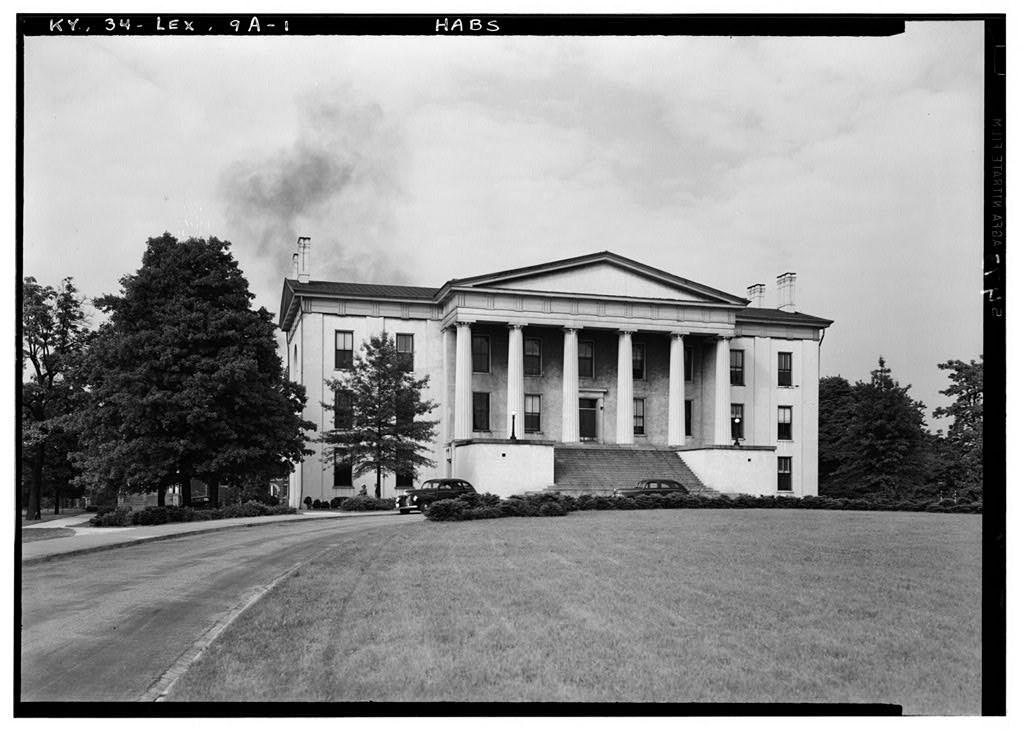
    An early Greek Revival design by Kentucky architect Gideon Shryock. Trustee and teacher Henry Clay guided construction supported by bequest of Col. James Morrison. Work on building slowed by cholera epidemic of 1833. Dedication was Nov. 4, 1833. Damaged by fire 1969. Morrison was rededicated May 9, 1971.

    Kentucky Historical Society, Marker No. 1406

    Old Morrison historical marker, front side

    Transylvania University campus, 3rd Street, Lexington, Kentucky | approx. 38° 3′ 4″ N, 84° 29′ 39″ W — Directions: MapQuest

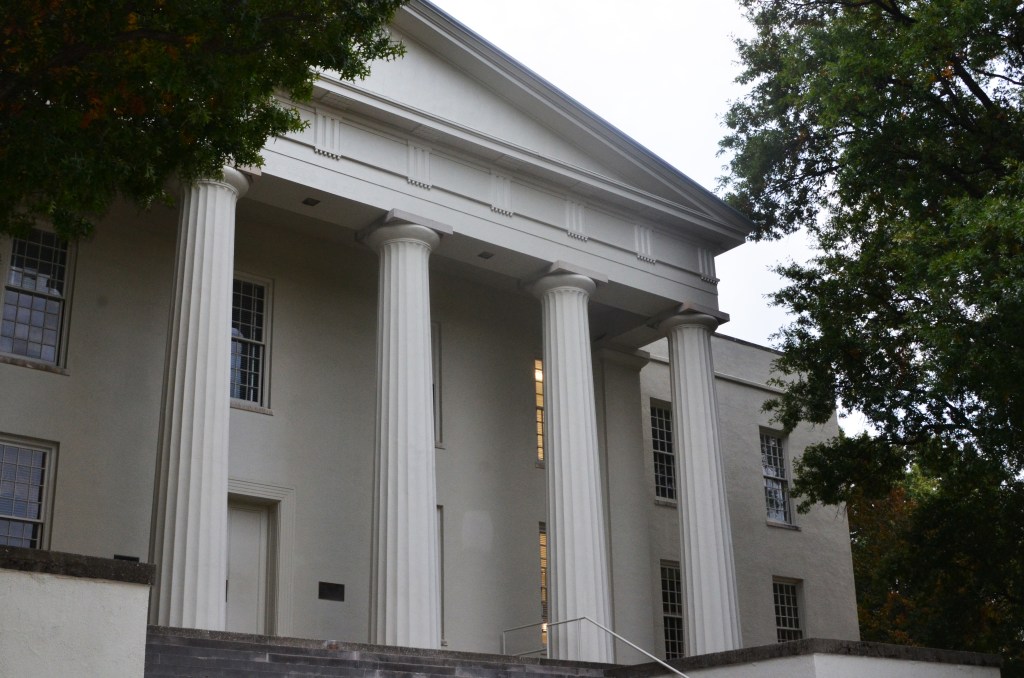
    Most of the markers in this book point to something that used to be somewhere — a house long gone, a farm turned into a research park, a marker for a marker. Old Morrison is different. Walk onto Transylvania University’s campus today and the building the plaque describes is still standing, still in daily use, its six Doric columns still visible from blocks away. It’s also a building that Henry Clay quite literally built, not with his own hands, but with his own judgment, at a moment when the university needed exactly that.

    A Second Building, After a Fire

    Old Morrison is technically Transylvania’s second main building, not its first. The university’s original 1818 classroom building burned in 1829, a loss serious enough that it briefly displaced the whole institution while trustees figured out what to do next. Henry Clay, who taught law at Transylvania and sat on its board, took the lead in guiding the replacement, not as an architect, but as the trustee steering the project, choosing the design, and keeping it moving. For the actual design, the board turned to Gideon Shryock, a young Kentucky architect who’d just finished the Old State Capitol in Frankfort and was quickly becoming the state’s leading name in Greek Revival work. Shryock would go on to design Arkansas’s state capitol as well; Old Morrison was, in a sense, his hometown masterpiece.

    Historic American Buildings Survey photo of Old Morrison, 1933, before the 1969 fire

    Old Morrison, photographed in 1933 by the Historic American Buildings Survey — 36 years before the fire that gutted its interior. Library of Congress, HABS KY-61.

    The funding came from Colonel James Morrison, a wealthy Lexington trustee and Revolutionary War veteran whose estate, handled by Clay as executor, provided roughly $30,000 toward the new building, enough to give it his name once it was finished. Construction ran from 1830 to 1834, and it wasn’t an easy stretch: the cholera epidemic that swept Lexington in the summer of 1833 slowed the work considerably, killing hundreds across the city and disrupting daily life in the middle of the project. The building was dedicated that November regardless, even though finishing touches continued into the following year.

    Both Sides of a Divided Country

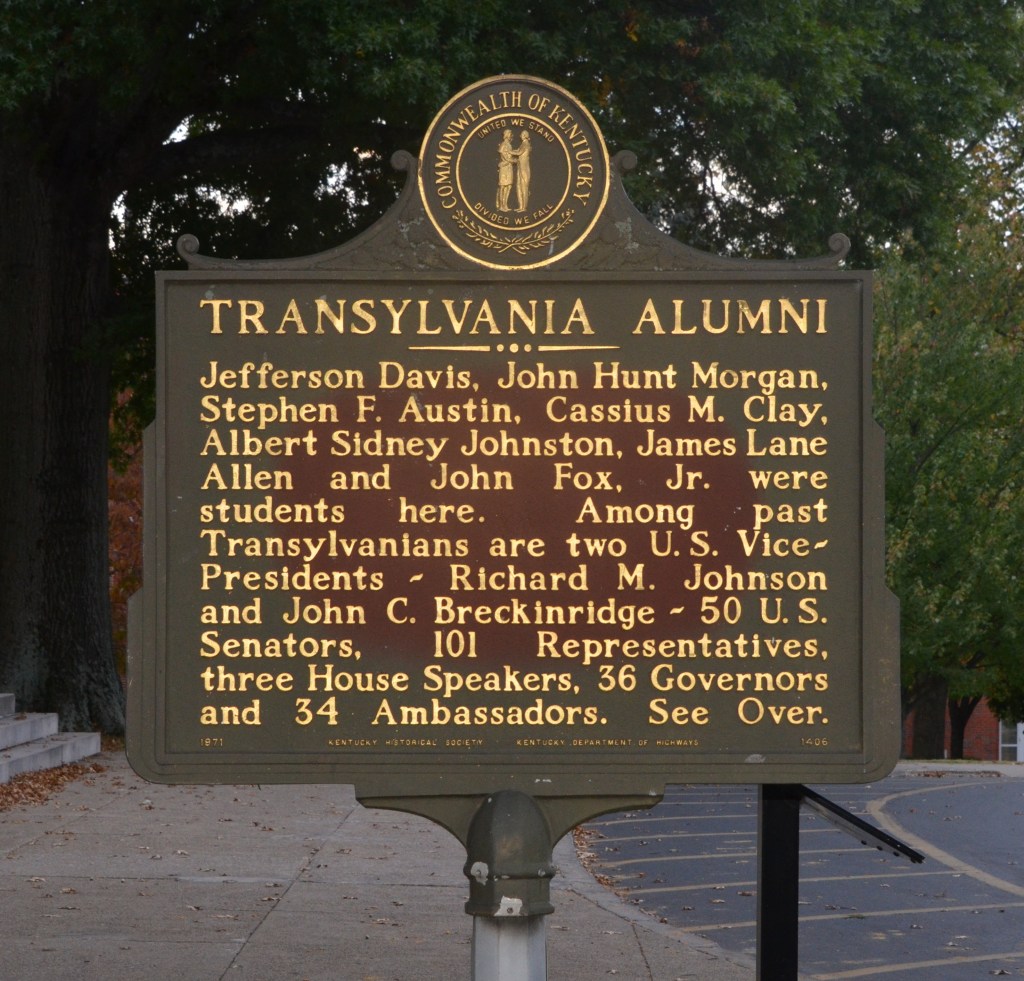
    “TRANSYLVANIA ALUMNI,” reverse
    Jefferson Davis, John Hunt Morgan, Stephen F. Austin, Cassius M. Clay, Albert Sidney Johnston, James Lane Allen and John Fox, Jr. were students here. Among past Transylvanians are two U.S. Vice-Presidents — Richard M. Johnson and John C. Breckinridge — 50 U.S. Senators, 101 Representatives, three House Speakers, 36 Governors, and 34 Ambassadors.

    Kentucky Historical Society, Marker No. 1406, reverse side

    Transylvania Alumni historical marker, reverse side

    The reverse side reads like a résumé the university is proud of, and by most measures it’s earned the bragging rights, two vice presidents, dozens of senators and governors, a genuinely remarkable output for a small liberal arts college. But read the alumni list slowly and it starts to look less like a list of achievements and more like a photograph of a country about to tear itself apart. Jefferson Davis, who would become president of the Confederacy, studied here. So did Albert Sidney Johnston, who became a Confederate general and died at Shiloh. So did John Hunt Morgan, the Confederate cavalry raider whose own house is another marker in this project. And so, in the very same building, on the very same list, did Cassius Marcellus Clay, a Kentucky emancipationist so committed to abolition that he armed his newspaper office against pro-slavery mobs and later served as Lincoln’s minister to Russia. Transylvania didn’t produce one side of the Civil War. It produced both, sitting in the same lecture halls a few years apart.

    The “first college west of the Alleghenies” claim on Transylvania’s own promotion literature is worth a small footnote too: it’s a point of real local pride, but it’s also the kind of superlative several early frontier institutions claimed for themselves, and historians of higher education generally treat “first” claims from this era as more a matter of self-branding than settled fact. What’s not in dispute is that Transylvania, chartered in 1780 and operating continuously since, is genuinely one of the oldest institutions of higher education in the country west of the original colonies, which is remarkable enough.

    A Curse, a Tomb, and a Fire

    No account of Old Morrison is complete without Constantine Rafinesque, and the marker doesn’t mention him at all. Rafinesque was a genuinely brilliant, genuinely difficult naturalist who taught botany at Transylvania in the 1820s, until university president Horace Holley fired him, officially for erratic conduct, though campus legend has long preferred a rumor involving Holley’s wife. As the story goes, Rafinesque cursed the university on his way out. Holley died of yellow fever not long after. The original building burned in 1829. And when the crumbling remains of Rafinesque’s own grave in Philadelphia were rediscovered in 1924, Transylvania brought what were believed to be his bones home and entombed them beneath Old Morrison’s front steps, partly as an honor, and partly, students have always suspected, as an attempt to stop the curse.

    It didn’t, or at least the story goes that it didn’t: in January 1969, a fire tore through Old Morrison and gutted most of its interior, leaving little but the exterior walls standing. The one part of the building the fire didn’t touch, according to accounts from that night, was Rafinesque’s tomb. Whether or not you put any stock in a curse with a taste for irony, the practical result was a two-year restoration that rebuilt the interior essentially from scratch while preserving Shryock’s original exterior design, and the building was rededicated in May 1971, the event this very marker was erected to commemorate. Modern testing has actually cast some doubt on whether the remains under the steps are Rafinesque’s at all, rather than those of a woman originally buried alongside him in Philadelphia. Transylvania has kept the tomb, and the tradition, regardless: every Halloween, students still enter a raffle for the chance to spend the night sleeping beside it.

    Still the Face of the Campus

    Old Morrison never really stopped being the center of Transylvania’s identity. It served as a Civil War hospital for both Union and Confederate forces at different points in the same conflict its own alumni had helped start. It’s been an administration building, an academic hall, and a chapel, sometimes all at once. Its silhouette is prominent enough that it has appeared as the central image on the official seal of the City of Lexington, a Greek Revival portico standing in for the whole city, not just the campus it sits on. Today it houses the university’s president, deans, and administrative offices, and every autumn its front steps disappear under hundreds of carved pumpkins for Transylvania’s Pumpkinmania, a tradition that turns Rafinesque’s supposedly cursed doorstep into one of the more cheerful sights in Lexington each October.

    Old Morrison today, view of the columned portico

    Sources consulted: Kentucky Historical Society / ExploreKYHistory; SAH Archipedia; Transylvania University; Gratz Park Neighborhood Association; Historical Marker Database (hmdb.org); Wikipedia.

  • “ARISTIDES”
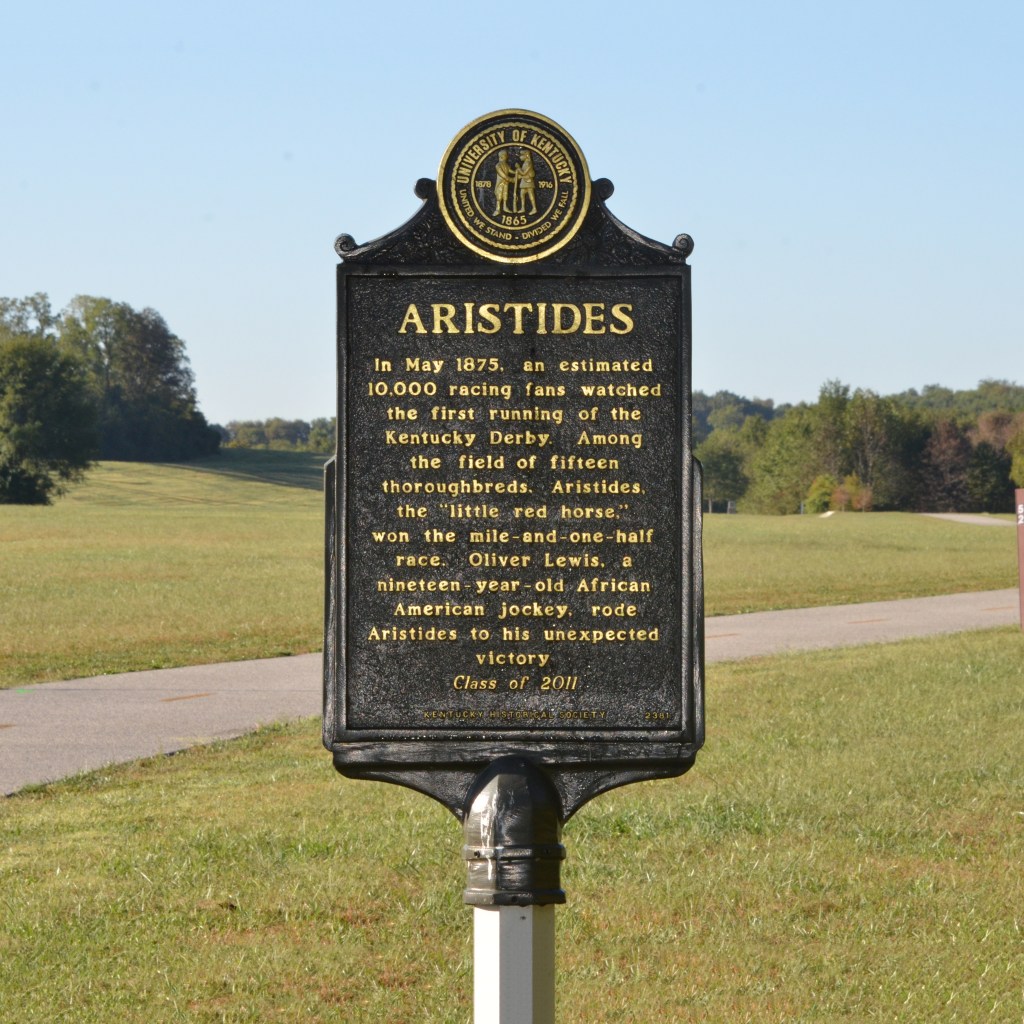
    In May 1875, an estimated 10,000 racing fans watched the first running of the Kentucky Derby. Among the field of fifteen thoroughbreds, Aristides, the “little red horse,” won the mile-and-one-half race. Oliver Lewis, a nineteen-year-old African American jockey, rode Aristides to his unexpected victory.

    Class of 2011, University of Kentucky, Kentucky Historical Society, Marker No. 2381

    McGrathiana Parkway, Coldstream Research Park, Lexington, Kentucky | 38° 5′ 52″ N, 84° 29′ 55″ W — Directions: MapQuest

    The marker calls the race “unexpected,” and that word is doing more work than it might look like. Aristides wasn’t supposed to win the first Kentucky Derby. He was supposed to lose it on purpose, tire out the field, and hand the victory to his own stablemate. What actually happened that day in Louisville is a better story than the plaque has room for, and depends entirely on two men most Derby retrospectives leave out: a jockey and a trainer, both Black, both largely forgotten by the sport they helped invent.

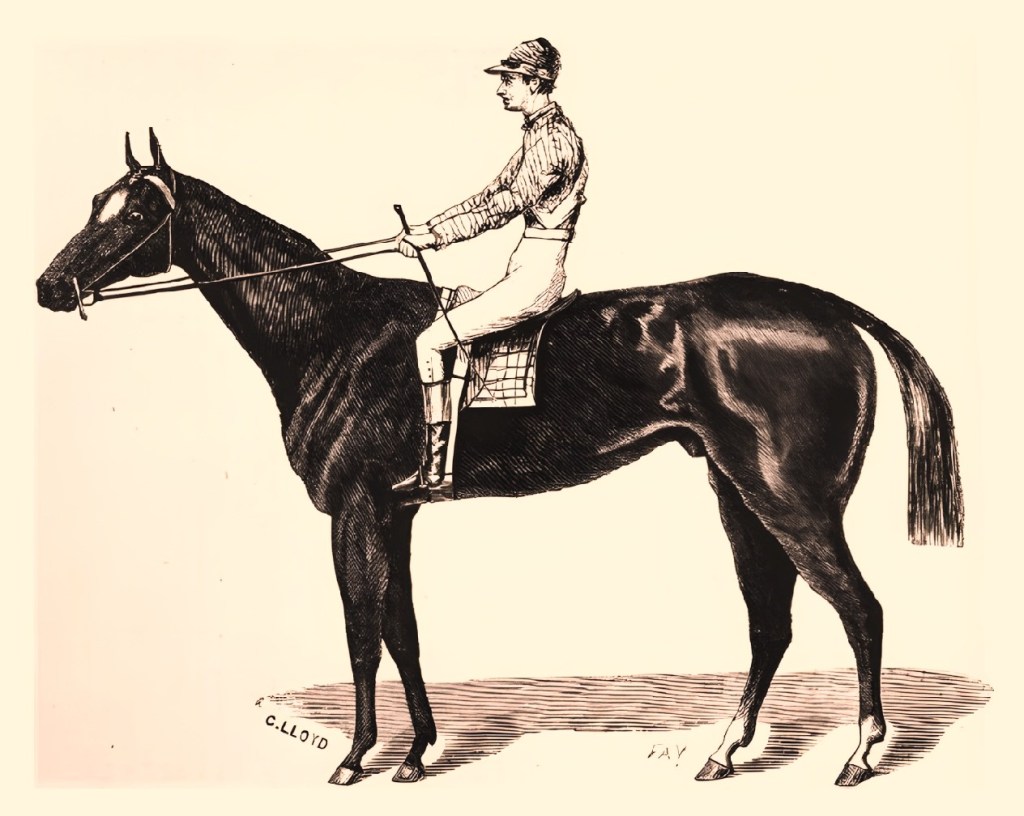
    Historical drawing of the racehorse Aristides

    The Little Red Horse

    Aristides was foaled in 1872 at McGrathiana, the 416-acre estate H. Price McGrath built a few miles north of Lexington after making a fortune running gambling houses in New Orleans and New York. McGrath came home to Kentucky in 1867 to reinvent himself as landed gentry, and breeding and racing top-flight Thoroughbreds became the rest of his life’s work. Aristides, named for a friend of McGrath’s, the horseman Aristides Welch — was a chestnut colt with a white star and white hind stockings, sired by the imported English stallion Leamington out of the mare Sarong.

    For most of his early career, he was the least of McGrath’s concerns. His stablemate Chesapeake was the acknowledged star of the operation, a Saratoga stakes winner already being talked about as the horse to watch in 1875. Aristides, by contrast, picked up the diminishing nickname “the little red horse,” small, unglamorous, obviously the undercard. A visiting reporter found something more promising in him than his stable ranking suggested, describing a “lengthy, wiry, even-balanced horse, deep through the heart,” but nobody at McGrathiana was planning Derby day around Aristides.

    The Rabbit That Wouldn’t Stop

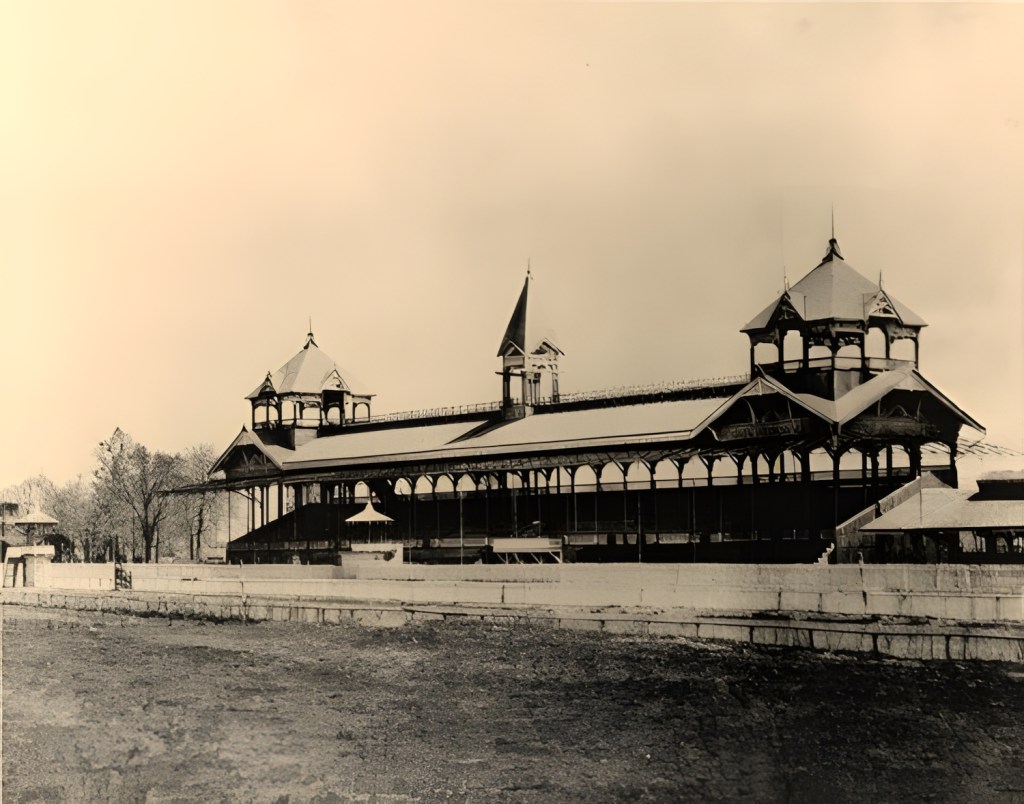
    The plan for May 17, 1875, was straightforward, and it did not involve Aristides winning anything. McGrath entered both colts in the inaugural running of the new Louisville Jockey Club’s showcase race, not yet called Churchill Downs, and run that first year at a mile and a half rather than the mile and a quarter it would later settle into. Aristides was assigned the job of “rabbit”: set a hard early pace, burn out the rest of the field, and let Chesapeake close from behind for the win. It’s a legitimate, commonly used racing tactic. It also meant Aristides was never supposed to be the story.

    Original Churchill Downs grandstands, 1875

    Chesapeake simply never showed up to collect on the plan. As the field turned into the stretch, he was fading toward the back of the pack, while Aristides, still running hard, still doing his assigned job of tiring everyone else out, found himself in a real fight for the lead with a horse named Volcano. There was no signal to pull up and wait for a stablemate who wasn’t coming. Aristides and his jockey kept going, and crossed the line two lengths clear of the field, setting an American record for the distance at 2:37¾ that stood for years. Chesapeake, the horse the whole plan had been built around, finished eighth.

    Ansel Williamson, Trainer

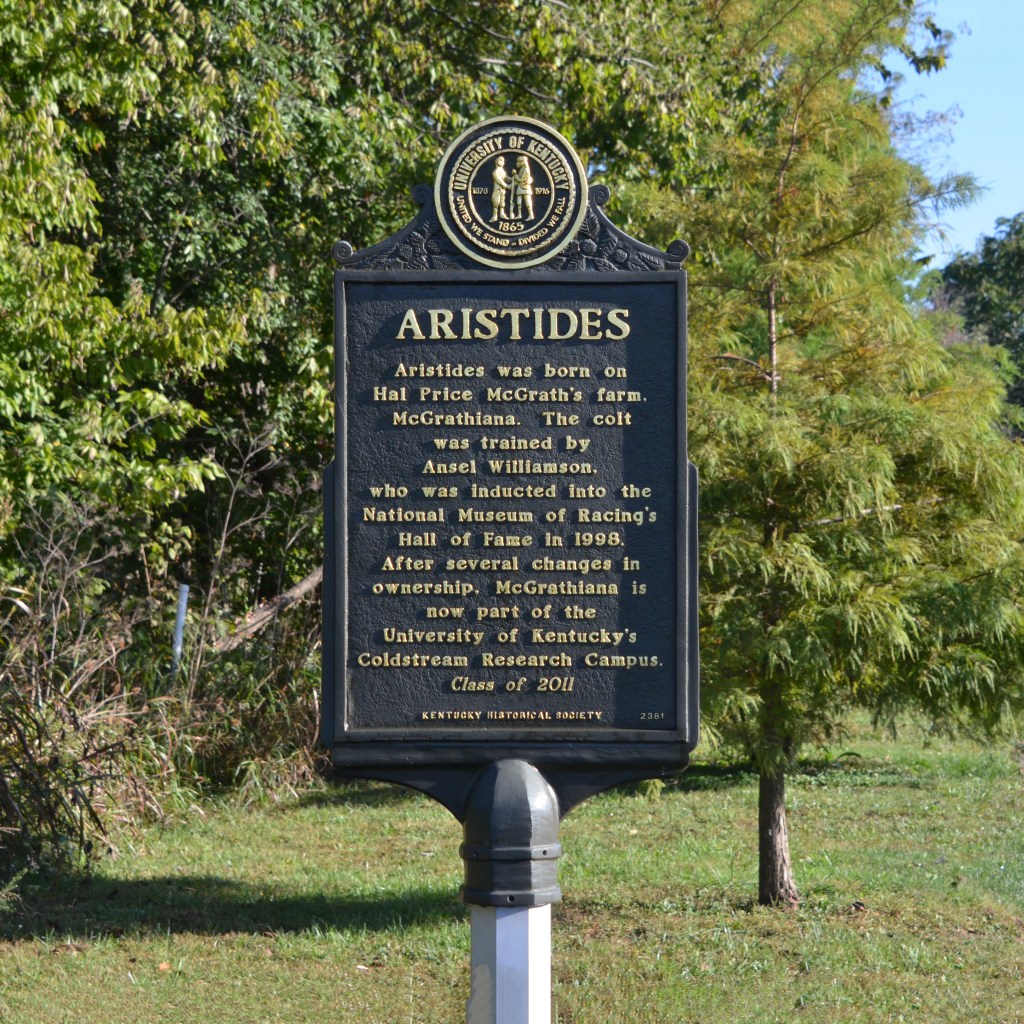
    “ARISTIDES,” reverse
    Aristides was born on Hal Price McGrath’s farm, McGrathiana. The colt was trained by Ansel Williamson, who was inducted into the National Museum of Racing’s Hall of Fame in 1998. After several changes in ownership, McGrathiana is now part of the University of Kentucky’s Coldstream Research Campus.

    Kentucky Historical Society, Marker No. 2381, reverse side

    The man who trained Aristides to run that hard, and who put the decision in the hands of a teenager rather than pull him up mid-race, was Ansel Williamson, born into slavery in Virginia around 1806, decades before he’d ever see a Kentucky racetrack. By the time he came to work for McGrath after the Civil War, Williamson was already one of the most respected trainers in the country, having conditioned champions going back to the 1850s. He would go on to train winners of the Belmont Stakes and Travers Stakes as well, and in 1998 became one of the first Black horsemen inducted into the National Museum of Racing and Hall of Fame, more than a century after his death.

    Thirteen of Fifteen

    Williamson picked Oliver Lewis, a nineteen-year-old jockey who also worked at McGrathiana, to ride Aristides, and in doing so, picked one of thirteen Black jockeys out of the fifteen riders in that first Derby field. That’s not a footnote to the story of the early Kentucky Derby; for its first several decades, it more or less was the story. Black jockeys and trainers won more than half of the first twenty-eight runnings of the race. Isaac Murphy, the era’s most celebrated rider, would go on to win it three times. The sport’s marquee event was, in its formative years, substantially built and won by Black horsemen only a decade or two removed from slavery.

    That didn’t last. By the early 1900s, as horse racing grew more commercialized and more profitable, Black jockeys and trainers were systematically squeezed out, denied licenses, refused mounts, edged out of a sport they had helped define, through the same kind of discriminatory exclusion reshaping American life more broadly in the Jim Crow era. It would be most of a century before Black jockeys returned to the sport in any real numbers. The gap between “thirteen of fifteen” in 1875 and the near-total absence that followed isn’t a detail the marker mentions, but it’s essential to understanding what this specific race actually represents.

    What Became of Oliver Lewis

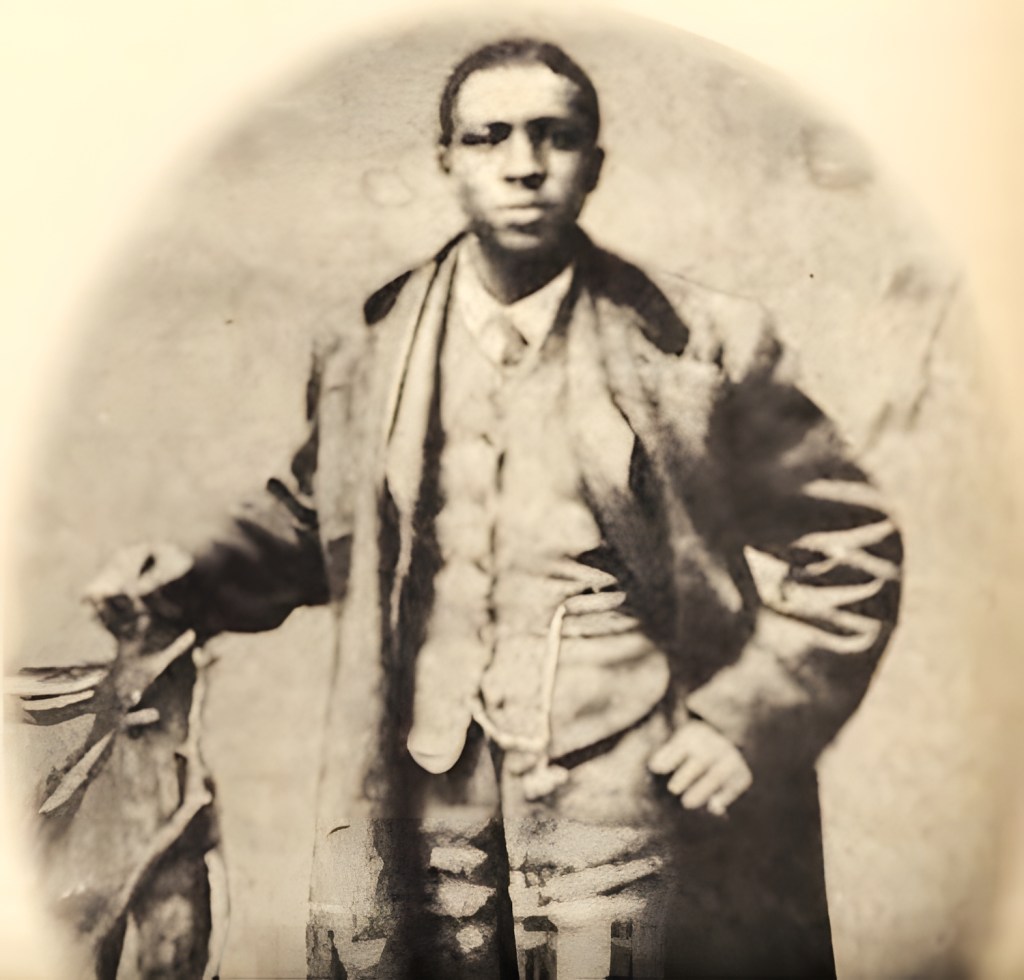
    Lewis never rode in another Kentucky Derby. He stayed on with Aristides through the rest of that season, a second-place finish in the Belmont Stakes, three more wins at Churchill Downs, and then, for reasons no surviving record explains, stepped away from riding for good. When McGrath died in 1881 and the McGrathiana stable was broken up and sold off a few years later, Lewis lost the employer who’d built his career around him. He worked for a time as a day laborer, then found steadier footing supplying handicapping tables and racing forms to bookmakers, and eventually became a bookmaker himself, legal work in Kentucky at the time. He married Lucy Wright in 1881 and raised six children with her. Sometime after 1900 the family moved to Cincinnati, where Lewis spent his later years laying city street asphalt, a very long way from a Derby-winning saddle.

    Oliver Lewis, jockey who won the first Kentucky Derby

    He died in January 1924 and was brought home to Lexington for burial at African Cemetery No. 2, itself with Kentucky Historical Marker 2110, resting place for several of the era’s other great Black jockeys, including Isaac Murphy. For most of the century that followed, Lewis’s own grave went largely unvisited and his name largely unremembered outside racing-history circles, even as the race he won became a fixture of American culture. That started to change only recently: this past June, 150 years after his ride, Lewis’s family unveiled a statue of him at Churchill Downs, the first winning jockey in Derby history to be honored there, and one of the last of that first great generation of Black horsemen to finally get one.

    McGrathiana, Then and Now

    The farm where Aristides was born doesn’t look much like a farm anymore. After passing through several owners in the decades following McGrath’s death, McGrathiana eventually became part of the University of Kentucky’s Coldstream Research Campus — agricultural research fields and university offices where a Derby-winning stable once stood. The marker itself sits along the Legacy Trail, Lexington’s paved multi-use trail, which cuts straight through the old farm grounds on its way between downtown and the Kentucky Horse Park. It’s not a dramatic spot to visit; there’s no house, no barn, nothing left standing from Aristides’s day. What’s there instead is exactly what you’d expect on a stretch of shared-use trail on a clear morning: runners, dog walkers, and cyclists moving through what used to be one of the most important horse farms in America, most of them probably unaware of what they’re riding over.

    Cyclists on the Legacy Trail through the former McGrathiana grounds

    The city has, in a smaller way, made sure Lewis’s name stays attached to this ground. In 2010, Lexington ran a public naming contest for the newly built Newtown Pike Extension, and “Oliver Lewis Way” won with 60 percent of the vote. The road has since been extended twice, most recently connecting Versailles Road to Broadway in 2017. It’s a quieter kind of recognition than a statue at Churchill Downs, but it means Lewis’s name is on a street sign a short drive from where he and Aristides actually trained together.

    Sources consulted: Kentucky Historical Society / ExploreKYHistory; National Museum of Racing and Hall of Fame (racingmuseum.org); Kentucky Derby official news (kentuckyderby.com); Kentucky Commission on Human Rights; Kentucky Horse Park; WDRB News; Encyclopedia.com. Historical images of Aristides and Oliver Lewis via Wikimedia Commons (public domain).
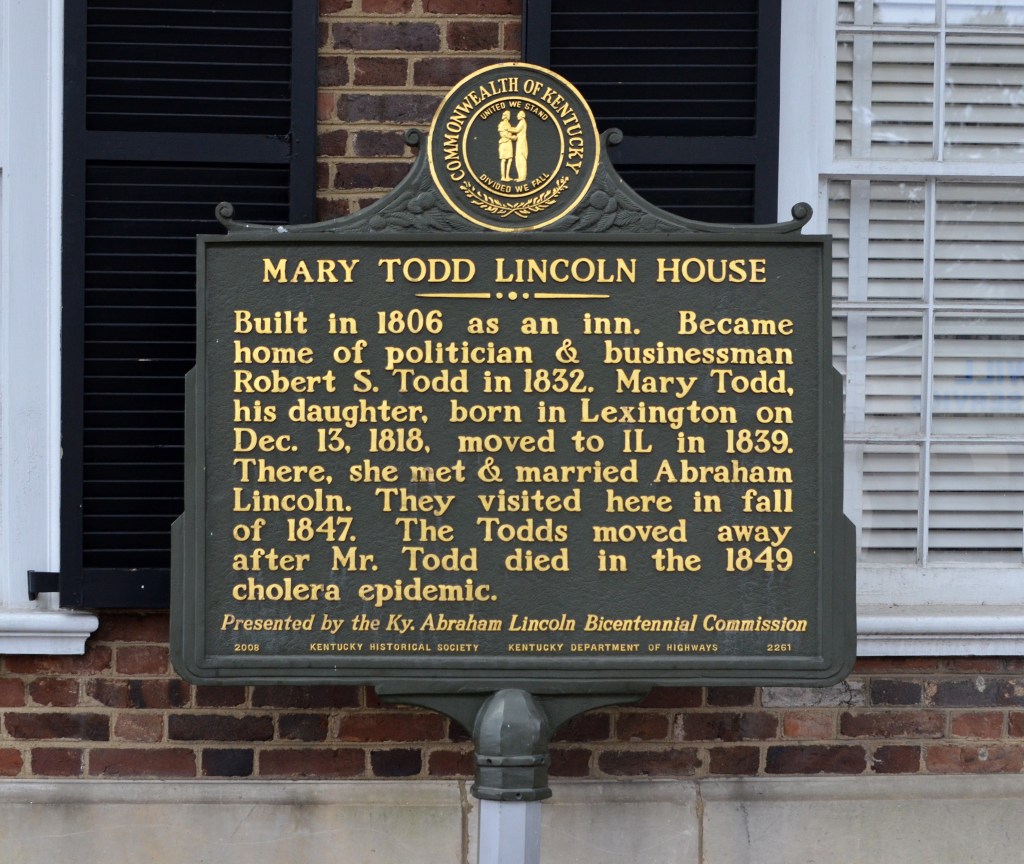
  • “MARY TODD LINCOLN HOUSE”
    Built in 1806 as an inn. Became home of politician & businessman Robert S. Todd in 1832. Mary Todd, his daughter, born in Lexington on Dec. 13, 1818, moved to IL in 1839. There, she met & married Abraham Lincoln. They visited here in fall of 1847. The Todds moved away after Mr. Todd died in the 1849 cholera epidemic.

    Presented by the Ky. Abraham Lincoln Bicentennial Commission, Kentucky Historical Society, Marker No. 2261

    Mary Todd Lincoln House historical marker, close up

    578 W. Main Street, Lexington, Kentucky | 38° 3′ 4″ N, 84° 30′ 9″ W — Directions: MapQuest

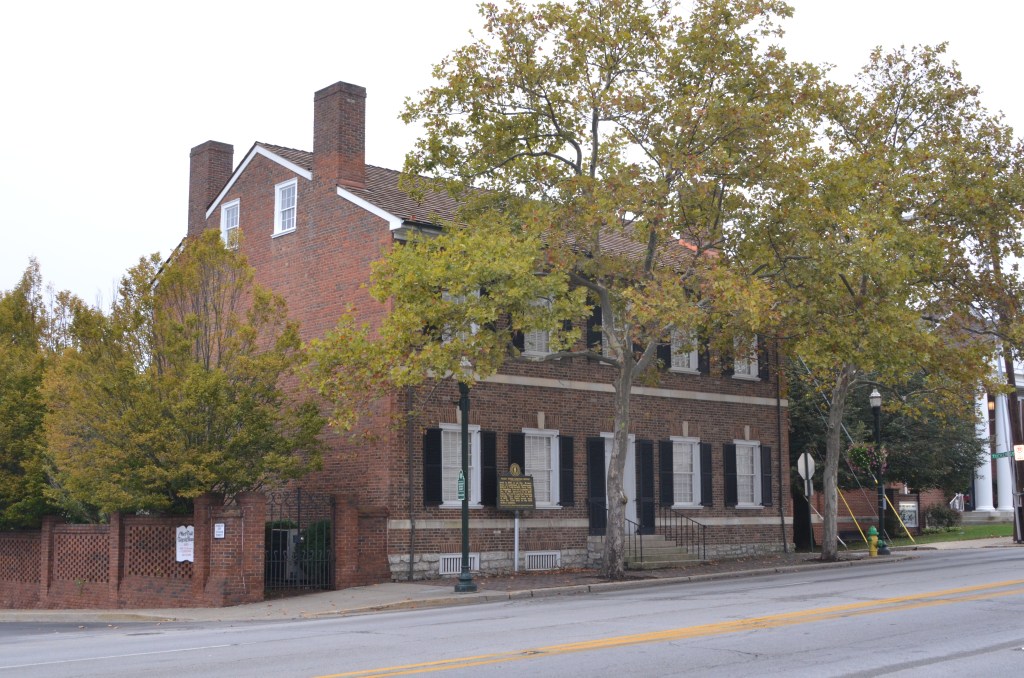
    Of all the markers in this book so far, this one might be the trickiest to read at face value. It’s not that anything on the plaque is false, exactly, it’s that its four sentences compress a complicated life into a shape that flattens most of the complication out. Mary Todd Lincoln grew up here, yes. She met and married Abraham Lincoln, yes. But “there, she met & married” makes it sound like one afternoon, when it was actually the better part of three years, and the woman who left this house at twenty was not quite the same woman the country would later know, love, and cruelly mock.

    Exterior view of the Mary Todd Lincoln House and marker along West Main Street

    Not Born Here, But Raised Here

    First, a small correction the marker itself doesn’t quite make but that visitors often assume: Mary Todd was not born in this house. She was born December 13, 1818, at a different Todd family home on West Short Street, itself marked separately as Marker #12. The Main Street house didn’t become the Todd residence until 1832, when Mary was thirteen. The distinction matters less for the facts than for the feeling of the place: this wasn’t the house of her infancy, but the house of her adolescence, the one she’d have pictured when she thought of home for the rest of her life.

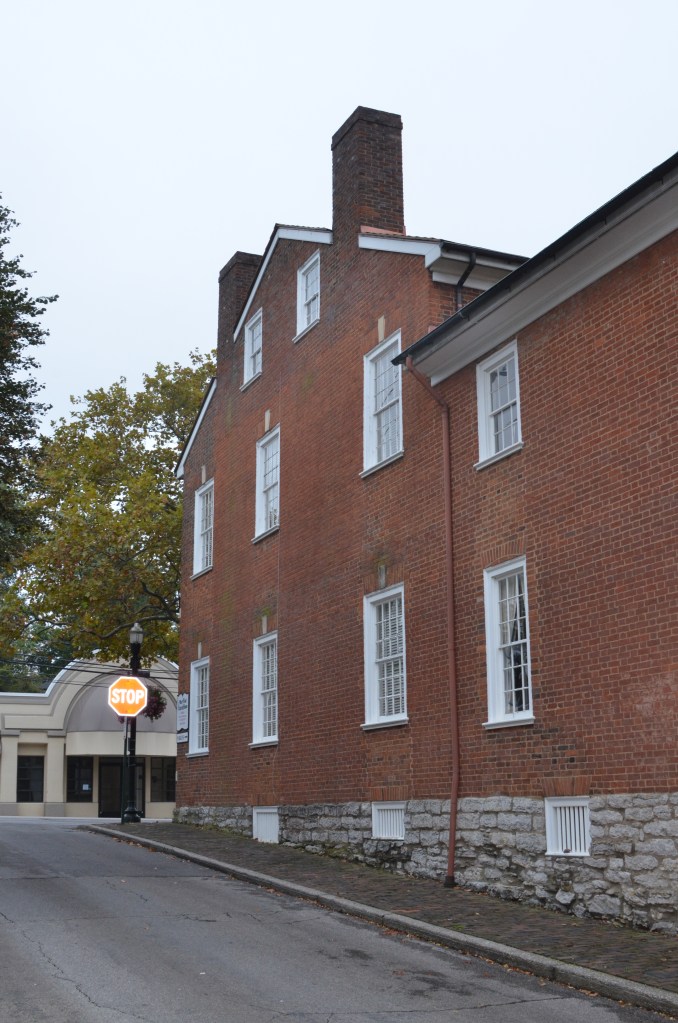
    The building itself predates the Todds by decades. Constructed around 1803–1806, it started life as an inn called “The Sign of the Green Tree,” run by a man named William Monteer. Robert Todd bought it and converted it into a family home in 1832 — not for a small family, either. Mary’s mother, Eliza Parker Todd, had died in childbirth in 1825, when Mary was six. Robert remarried two years later, to Elizabeth “Betsy” Humphreys, and the blended household that eventually filled this fourteen-room house included six children from his first marriage and nine more from his second, though not everyone simultaneously. Mary’s relationship with her stepmother was, by most accounts, tense rather than warm, a detail biographers return to often when trying to understand the woman Mary became.

    Architectural detail of the Mary Todd Lincoln House, chimneys and upper story

    A Prominent, and Slaveholding, Family

    Robert S. Todd was, by the standards of antebellum Lexington, a significant man: president of the local branch of the Bank of Kentucky, a partner in a cotton-manufacturing firm, and a member of the Kentucky General Assembly for roughly two decades. He was also, like Henry Clay down the road at Ashland, a slaveholder. The Todd property included outbuildings — a kitchen, wash house, smoke house, stables — among them slave quarters, though none of the original outbuildings survive today. Mary Todd grew up in a household that depended on enslaved labor for its daily operation, a fact the museum today addresses directly rather than around, and one worth calling out plainly here too.

    Nine Years of Schooling, Then Springfield

    Whatever else was complicated about her upbringing, Mary Todd was unusually well educated for a woman of her era, nine years across two Lexington schools, giving her a command of French and a breadth of reading that later observers, often condescendingly, found surprising in a president’s wife. She left Lexington in 1839, at age twenty, to live in Springfield, Illinois, with her older sister Elizabeth Todd Edwards. This is where the marker’s timeline compresses hardest: she “met & married Abraham Lincoln” reads as a single clause, but the two didn’t marry until November 1842 — three years after she arrived in Springfield, following a courtship that was, by the accounts of people who knew them, genuinely rocky, including a broken engagement along the way. It was not the swift romance the marker’s phrasing implies.

    The 1847 visit the marker does note was real: Abraham and Mary brought their young family back to Lexington that fall, staying with the Todds on Main Street. It would prove to be one of the last times Mary saw the house as a Todd family home. Her father died suddenly in 1849, during the same cholera epidemic that killed hundreds across Lexington that summer. His estate went to auction, the Main Street house was sold, and Betsy Todd moved the remaining family to a farm near Frankfort.

    What the Marker Doesn’t Say

    The plaque’s story stops at 1849, which is reasonable — it’s a marker about the house, not a biography. But the house’s real significance to American history rests almost entirely on what happened to the girl who left it, and that story is worth telling honestly rather than skipping to the White House years.

    Mary and Abraham had four sons. Only one, Robert Todd Lincoln, outlived his mother. Edward died at not quite four, in 1850; William (“Willie”) died at eleven, in 1862, while his father was in office and the country was at war; Thomas (“Tad”) died at eighteen, six years after his father’s assassination. Mary was seated beside her husband at Ford’s Theatre the night he was shot. She lived another seventeen years after that, and they were not easy ones, with grief, chronic pain, financial anxiety, and a public that had never much liked her, turned steadily crueler in how they talked about her.

    In 1875, her surviving son Robert Todd Lincoln petitioned a Chicago court to have her committed to a mental health facility, and a jury found in his favor after a trial that took less than an hour. She spent roughly four months at a private sanitarium before her release was secured, and she spent much of what remained of her life trying, with only partial success, to have that judgment publicly reversed. Historians still debate how much of her behavior in those years reflected genuine crisis, grief, and possibly undiagnosed illness, versus how much reflected a family and a country simply out of patience with a widow who didn’t grieve the way they expected her to.

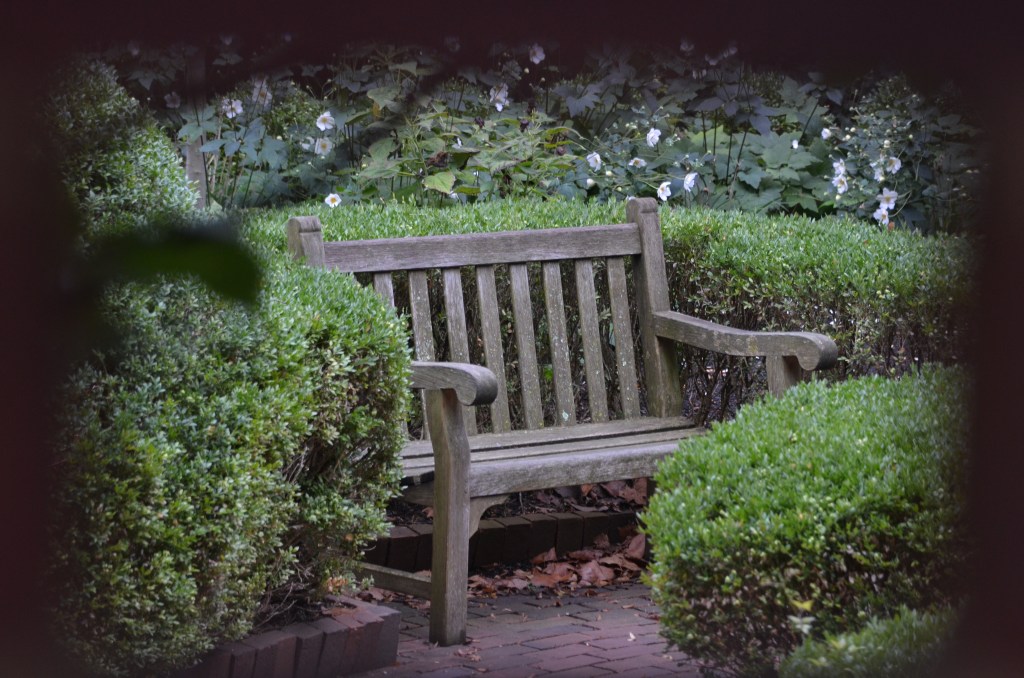
    A wooden bench in the garden at the Mary Todd Lincoln House

    There isn’t a settled verdict, but it’s a significant enough chapter in her life that leaving it out entirely would be its own kind of distortion.

    Auction House to First-Lady Museum

    The building itself had a rougher second act than its most famous resident. After the Todds sold it in 1852, it passed through a long string of uses that had nothing to do with its future as a historic site: a boarding house, a grocery store, at one point reportedly a brothel, and by the mid-twentieth century, plain storage space, deteriorating along with much of the neighborhood around it. It took until 1977, more than a century after Mary Todd Lincoln’s death, for the house to be restored and opened to the public, led by Beula C. Nunn, Kentucky’s First Lady under former Governor Louie B. Nunn. It has the distinction of being the first historic site in the United States dedicated specifically to a First Lady, predating even similar sites for far more universally celebrated women who held the role.

    Today the Kentucky Mansions Preservation Foundation operates it as a house museum, furnished largely from an inventory taken at the 1849 estate auction, supplemented by pieces donated back to the house over the decades by descendants of both the Todd and Lincoln families. It’s a rare thing: a childhood home turned museum for a woman remembered less for what she did than for what was done to her, and for the sheer, sustained difficulty of the life she lived alongside one of the country’s most mythologized men.

    A Note on Marker Numbers

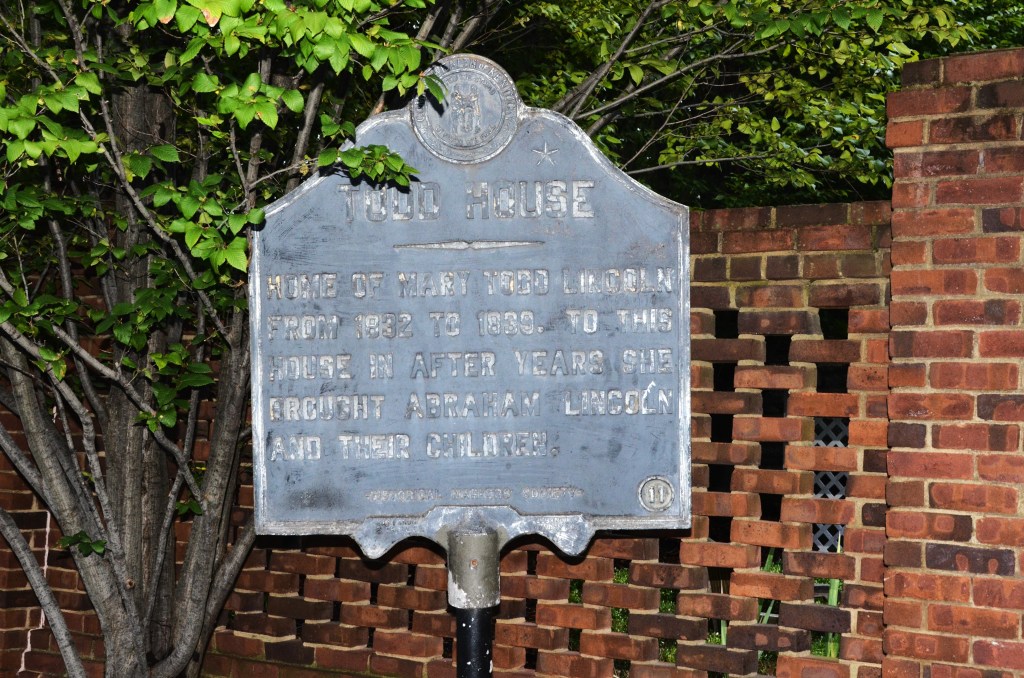
    This isn’t the first Kentucky historical marker to stand at this address. An earlier marker, #11, titled simply “Todd House,” covered much of the same ground in a single, shorter sentence: that this was Mary Todd Lincoln’s home from 1832 to 1839, and that she later brought her husband and children back to visit. Marker #2261, dedicated in 2008 by the Kentucky Abraham Lincoln Bicentennial Commission, effectively replaced it with a fuller account, though the older number was never formally retired. If you come across “Marker #11” in an older guide or database, this is the house and article it refers to.

    Marker #11, the earlier Todd House marker, at the Mary Todd Lincoln House

    Sources consulted: Kentucky Historical Society / ExploreKYHistory; Mary Todd Lincoln House (mtlhouse.org); American Heritage; National Register of Historic Places documentation; Historical Marker Database (hmdb.org).

  • “MAN O’ WAR”
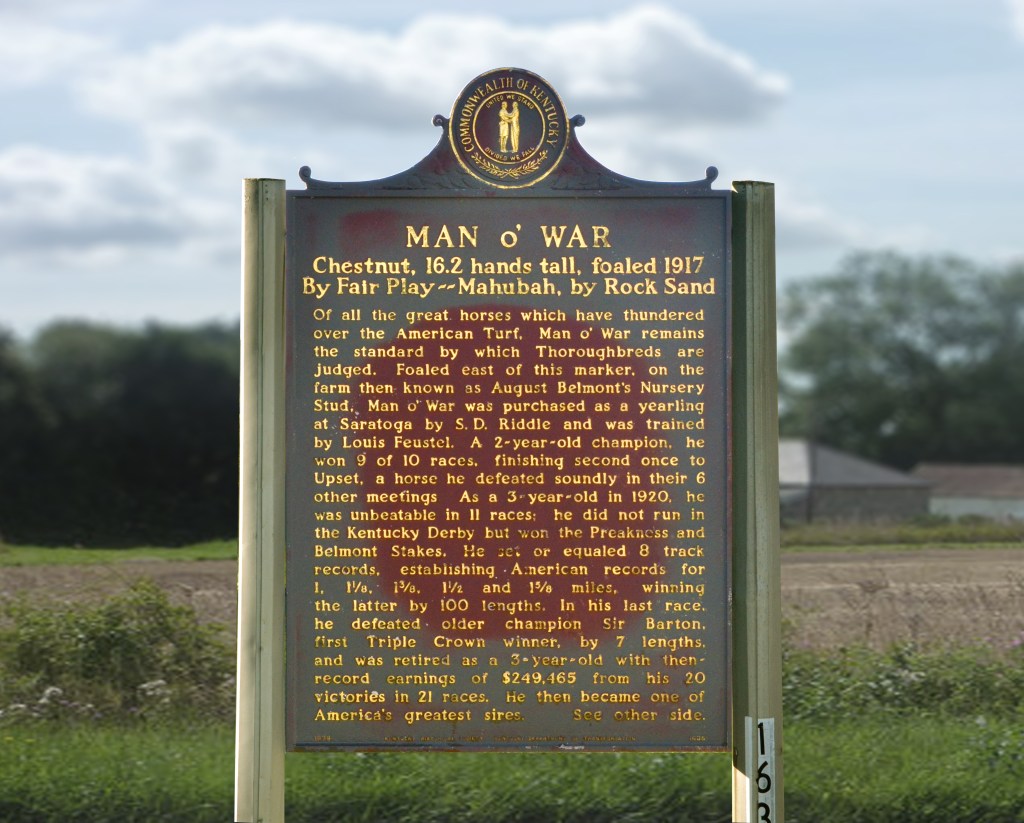
    Chestnut, 16.2 hands tall, foaled 1917
    By Fair Play — Mahubah, by Rock Sand
    Of all the great horses which have thundered over the American Turf, Man o’ War remains the standard by which Thoroughbreds are judged.

    Kentucky Historical Society, Marker No. 1635

    US 25 (Paris Pike), near the former site of August Belmont’s Nursery Stud, about 4 miles north of Lexington, Kentucky | 38° 5′ 58″ N, 84° 30′ 49″ W — Directions: MapQuest

    Kentucky historical marker No. 1635 for Man o' War, front side
    Kentucky historical marker No. 1635 for Man o' War, close-up view

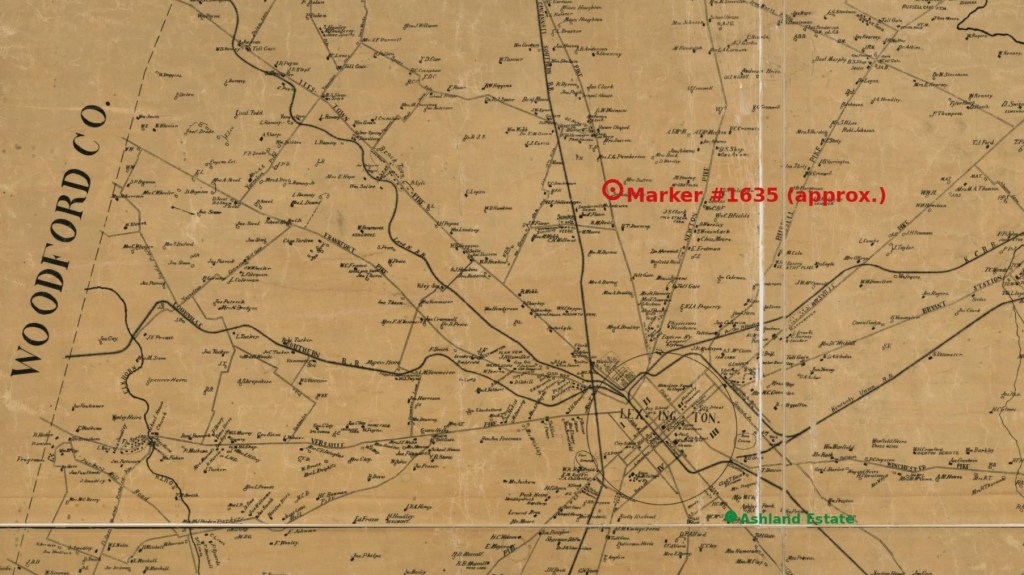
    Most of Kentucky’s roadside markers commemorate people — statesmen, soldiers, ministers, the occasional scandal. Marker #1635 commemorates a horse. That alone tells you something about how central the Thoroughbred industry is to this stretch of the Bluegrass, and how singular this particular horse was. A century after his last race, Man o’ War is still the name people reach for when they want to describe an athlete who wasn’t just good, but seemed to operate on different physics than everyone else on the track.

    A War Baby, Sold Almost by Accident

    Man o’ War was foaled on March 29, 1917, at Nursery Stud, a farm a few miles from where his marker now stands, one of 1,680 Thoroughbreds born in America that year. His breeder was August Belmont II, the financier and sportsman whose father’s name is on Belmont Park. His sire was Fair Play, a fast but famously ill-tempered stallion descended from the equally hot-headed Hastings; his dam was Mahubah, an even-keeled mare by the English Triple Crown winner Rock Sand, bred to Fair Play specifically to blunt the temper with some calm. It mostly worked.

    The name itself came from Belmont’s wife, Eleanor. With the United States newly at war and her husband, in his fifties, headed overseas with the Army, she named the colt in his honor: her Man o’ War. It was Belmont’s wartime service, not any lack of confidence in the colt, that put Man o’ War on the auction block in the first place: Belmont sold off his entire yearling crop at Saratoga in 1918 before shipping out. A Pennsylvania horseman named Samuel D. Riddle bought the gawky chestnut for $5,000. Riddle would later turn down offers reportedly north of $300,000 to sell him back.

    The One Loss

    As the marker notes, Man o’ War won nine of ten races as a two-year-old in 1919, “finishing second once to Upset, a horse he defeated soundly in their 6 other meetings.” That single loss, in the Sanford Memorial Stakes at Saratoga on August 13, 1919, has been picked over by racing historians for more than a century, and it’s worth understanding why, since the marker compresses a genuinely strange story into one line.

    There was no starting gate in 1919 — horses lined up behind a webbed barrier, and a substitute starter that day struggled badly to get the field square. Man o’ War, drawn wide, broke either sideways or nearly backward depending on which account you believe, and lost several lengths before the race had really begun. His jockey, Johnny Loftus, tried to angle him back to the rail and got boxed in at exactly the wrong moment. Man o’ War was also conceding 15 pounds to Upset under the era’s weight-for-performance rules. He lost by a neck.

    The stranger part came the following year, when The Jockey Club quietly declined to renew the riding licenses of both Loftus and Upset’s jockey, Willie Knapp — with no explanation given, then or ever. Neither man rode professionally again, though both went on to careers as trainers, and both denied to their graves that anything improper had happened in the race. Whether the license denials were connected to the Sanford Memorial has never been established one way or the other; it remains one of the small unresolved mysteries of the sport. What’s not in dispute is what happened next: Man o’ War beat Upset in all six of their subsequent meetings, and never lost again.

    An Unbeaten Season, and a Derby He Never Ran

    The marker’s claim that Man o’ War “was unbeatable in 11 races” as a three-year-old checks out cleanly — he won every start in 1920, including the Preakness and Belmont Stakes, and set or equaled eight track and American records along the way, from the mile up through the mile-and-five-eighths, the latter by 100 lengths. It’s worth pausing, though, on the one race he’s most often asked about: the Kentucky Derby, which he never ran.

    A popular version of the story — repeated on more than one roadside-history site — holds that Riddle simply refused to race his horse in Kentucky. That’s an overstatement of what actually happened. Riddle’s stated reasoning was about the distance and timing: he believed a mile and a quarter was too demanding a test for a three-year-old that early in May, and he preferred to campaign Man o’ War on the Northeastern racing circuit he knew best. The 1920 Derby went to Paul Jones, a colt Man o’ War had already beaten easily earlier that year, and most racing historians agree Man o’ War would very likely have won it too. But “declined to enter” and “refused to race in Kentucky” are different claims, and the marker text itself, to its credit, states only the plain fact: he didn’t run in it.

    His last race, that October, may be the single line of the marker’s text worth sitting with longest: “he defeated older champion Sir Barton, first Triple Crown winner, by 7 lengths.” Sir Barton had swept all three Triple Crown races the year before Man o’ War was even racing seriously. Beating him by seven lengths, in what amounted to a coronation match at Kenilworth Park in Ontario, was as close as the sport got to settling an argument about which horse was actually the best of his era. Man o’ War retired immediately afterward, a three-year-old, with record earnings of $249,465 from 20 wins in 21 starts — a career that lasted barely a year and a half and left almost nothing else for anyone to prove.

    Champion and Sire of Champions

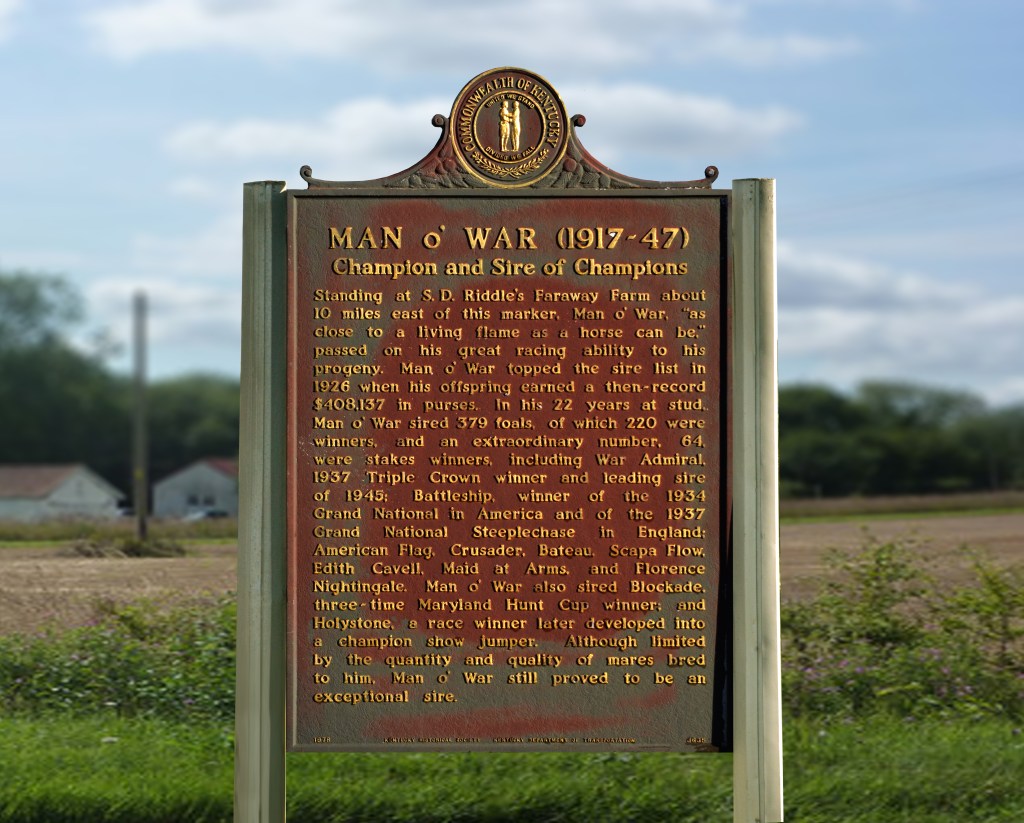
    “MAN O’ WAR (1917–47)”
    Champion and Sire of Champions
    Standing at S. D. Riddle’s Faraway Farm about 10 miles east of this marker, Man o’ War, “as close to a living flame as a horse can be,” passed on his great racing ability to his progeny.

    Kentucky Historical Society, Marker No. 1635, reverse side

    1891 Fayette County map overlay showing the location of Man o' War's birthplace near Nursery Stud

    The marker’s reverse side covers his second career, and it may be the more consequential of the two. Retired to Riddle’s Faraway Farm, Man o’ War stood at stud from 1921 until 1943, when a heart condition ended his breeding career and he lived out his remaining years as a pensioner. He topped the North American sire list in 1926, and over 22 years covered 379 foals, of which 220 won races and 64 — an unusually high proportion — won stakes races. The marker names War Admiral, the 1937 Triple Crown winner, as his most famous son, but the reach went further: War Admiral’s own rival, Seabiscuit, descended from Man o’ War through his sire Hard Tack, meaning the two most legendary rivals of Depression-era racing both trace back to the same chestnut stallion standing in a Kentucky paddock.

    The Most Visited Horse in America

    What the plaque text doesn’t capture, because it isn’t really about racing statistics, is just how famous Man o’ War became simply by standing in a field. Between his retirement in 1921 and his death in 1947, an estimated one to three million people made the trip to Faraway Farm to see him — more, by some estimates, than visited Mammoth Cave, then Kentucky’s other marquee attraction. For much of that stretch his groom, Will Harbut, narrated the horse’s life story to visitors so often and so well that Harbut became something of a celebrity in his own right, closing every telling with the same line: “the mostest hoss there ever was.”

    Harbut died in early October 1947. Man o’ War, then thirty years old, died less than a month later, on November 1, of a heart attack — not long enough after his groom’s death for people to resist calling it a broken heart, whatever the biology actually was. His body was embalmed, reportedly the first time that had been done for a horse, and laid in an open casket for more than two thousand mourners over two days. The funeral, on November 4, was broadcast on national radio and included nine eulogies; parked cars lined Huffman Mill Pike for nearly a mile. The U.S. Army’s First Cavalry Division, which had given him the honorary rank of colonel, sent a memorial scroll. He was buried at Faraway Farm beneath a bronze statue by sculptor Herbert Haseltine, inscribed with nothing but his name.

    Two Markers for One Horse

    If you go looking for Man o’ War today, you’ll actually find two separate Kentucky historical markers, and it’s worth knowing how they divide the story. This one, #1635, stands near his birthplace and tells the racing career. The other, #1215, stands at the Kentucky Horse Park, where his grave and Haseltine’s statue were relocated in 1977 — his remains and the three-thousand-pound bronze moved together, more than three decades after his original burial at Faraway Farm. That marker, dedicated in 1968 and presented by the Thoroughbred Club of America, covers the same ground from the other end: not where he was born, but where he’s laid to rest.

    Sources consulted: Kentucky Historical Society / ExploreKYHistory; National Museum of Racing and Hall of Fame; Kentucky Horse Park; Keeneland Library digital collections; Thoroughbred Daily News; Saratoga Living.

  • Note: This site also carries Marker No. 2235, “Ashland / Clay & Abraham Lincoln,” quoted in full later in this article.

    “ASHLAND”
    Historic Home of Henry Clay
    Orator — Statesman — Patriot
    Kentucky’s Favorite Son
    Born 1777 — Died 1852

    Historical Markers Society, Marker No. 1

    Kentucky historical marker No. 1, Ashland, Henry Clay's estate, Lexington, Kentucky

    120 Sycamore Road, Lexington, Kentucky | 38° 1′ 43″ N, 84° 28′ 51″ W — Directions: MapQuest

    There’s a certain irony in Kentucky’s first historical marker sitting quietly in a Lexington neighborhood, easy to drive past without noticing. But that’s exactly where marker #1 stands — not on a battlefield, not at the Capitol, but at the edge of a 17-acre estate called Ashland, the home Henry Clay built for himself over nearly five decades of American political life. If Kentucky was going to number its markers, it made sense to start here. Clay was, in his own lifetime, the closest thing the young Commonwealth had to a favorite son, and Ashland was where he came back to, again and again, between the fights that made him famous.

    Origin of an Orator

    Kentucky itself was barely out of its own infancy when Clay arrived. The territory had spent decades as Virginia’s westernmost county, and it took a string of ten conventions in Danville, KY before Congress finally consented to let it go: Kentucky broke away from Virginia and entered the Union as the fifteenth state on June 1, 1792 — the first state carved out west of the Appalachians. So, when Henry Clay showed up five years later, he wasn’t settling into some long-established place; he was arriving in a commonwealth that had only just learned to call itself one.

    Ashland historical marker post at the entrance to Henry Clay's estate, Lexington, Kentucky

    Clay was not a Kentuckian by birth. He arrived in Lexington in 1797, a twenty-year-old lawyer from Hanover County, Virginia, with more ambition than money. Two years later he married Lucretia Hart, daughter of a prominent Lexington family. The young couple settled into the kind of life that, for a man of Clay’s talents, was really just a launching pad. He was in the Kentucky legislature within a few years and in the United States Senate — filling an unexpired term, and improbably too young for the job under the Constitution — by 1806.

    Lucretia was the daughter of Thomas Hart, a Lexington hemp manufacturer and land speculator whose family was already well established in the town’s business and political circles — a match that did the young lawyer’s prospects no harm. Henry and Lucretia married on April 11, 1799; the marriage lasted fifty-three years, until Clay’s death in 1852. They had eleven children together, and theirs was, by the standard of the day, an unusually large family — though it was marked by the era’s grim facts of childhood mortality: six of the eleven died before Lucretia did, several as children or young adults, including four daughters lost to illness within a few years of one another. A son, Henry Clay Jr., was later killed at the Battle of Buena Vista during the Mexican-American War, a conflict his father publicly opposed.

    Lucretia is often described in passing as “plain” next to her famously charismatic husband, but that undersells her role. With Clay away in Washington for months or years at a stretch across four decades of public life, it was Lucretia who ran Ashland — the household, the farm accounts, the raising of the children — largely on her own. She outlived her husband by twelve years, dying in 1864, and is buried beside him in the Lexington Cemetery.

    A Farm Named for Its Trees

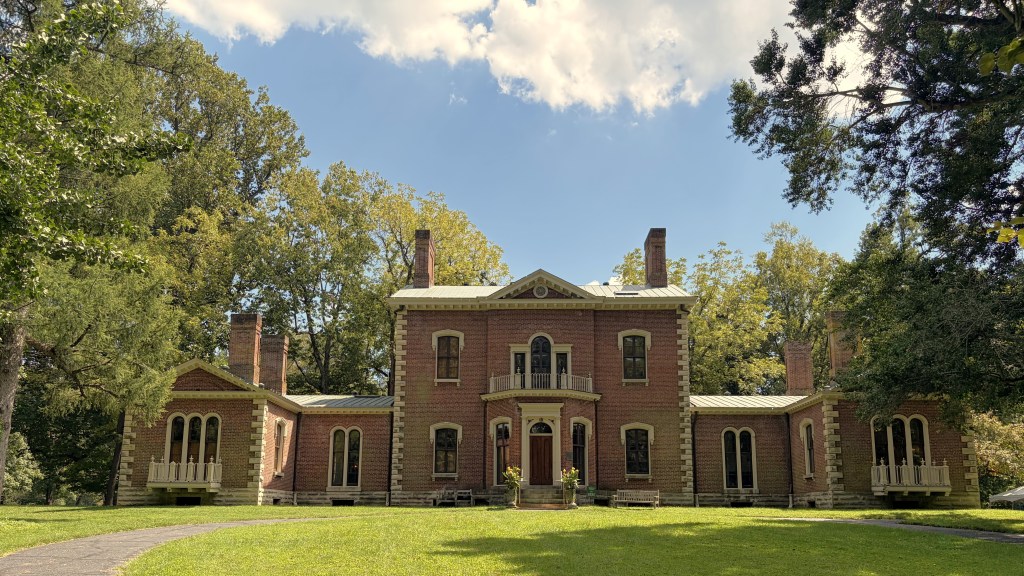
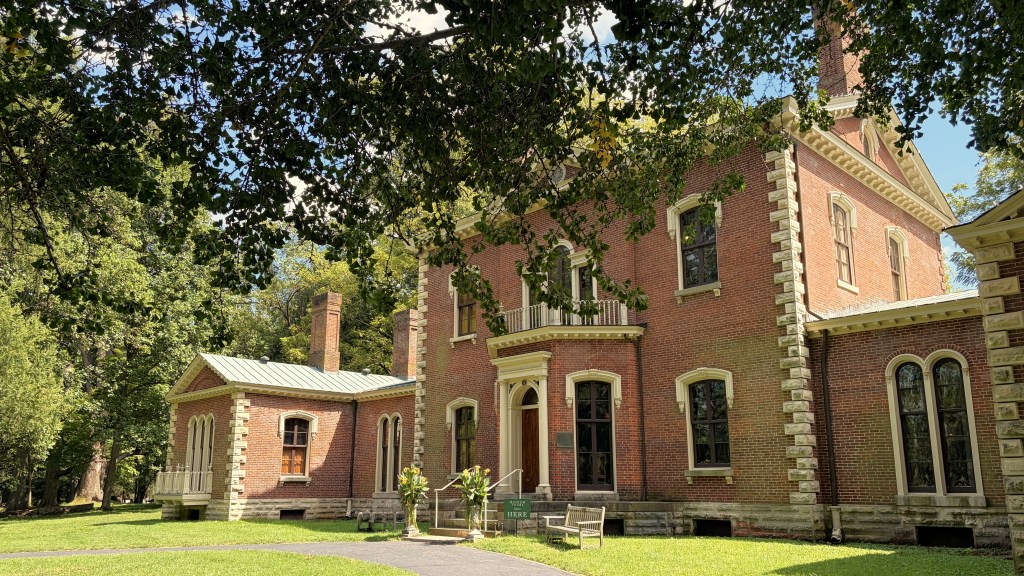
    In 1804, before any of that had fully unfolded, Clay began buying land just outside town: rolling pasture and woods, thick with ash trees, that he would eventually call Ashland. The name is unpretentious for a man who was anything but — he simply named it for what grew there. By 1809 the center block of the house was finished, and Clay kept building, bringing in the notable Benjamin Latrobe — the same architect who designed the U.S. Capitol — to draw up wings that turned Ashland into a full five-part Federal-style mansion by around 1811.

    Front facade of Ashland, Henry Clay's Federal-style mansion, Lexington, Kentucky

    For the next forty-plus years, Ashland was less a retreat than a second capital. Clay ran it as a working farm — hemp, grain, cattle, prize livestock he bred and showed with the same competitive instinct he brought to the Senate floor — and by most accounts it genuinely was where he found peace between sessions of Congress. It’s worth being honest, though, about what made that peace possible. The house, the gardens, the crops that made Ashland profitable were built and worked by enslaved people. Clay owned dozens of enslaved people over his lifetime. He is remembered, fairly, for occasionally freeing individuals and for calling slavery a “necessary evil” that degraded poor whites as much as it wronged the enslaved — but he never freed his own workforce outright, and he died a slaveholder. Any honest telling of Ashland has to include both halves of that story: the elegant Federal mansion and the labor that built and made it operate.

    The Man Behind the Marker

    The marker calls Clay “Orator — Statesman — Patriot,” and none of the three is an exaggeration. Clay’s career reads almost like a checklist of nineteenth-century American power: U.S. Representative for the better part of three decades, Speaker of the House multiple times, Senator across four separate occasions, Secretary of State under John Quincy Adams. He ran for president three times — 1824, 1832, 1844 — but never won, remarkable given how central he was to nearly every major political issue of his era.

    Clay’s likeness circulated well beyond Kentucky, too. In 1869, the U.S. Treasury issued a $50 United States Note — a “legal tender” note from the colorful post–Civil War series collectors now call the “rainbow notes” — with Clay’s portrait on the right side of the obverse, alongside an allegorical figure holding a laurel branch. He also appeared on U.S. postage stamps more than once: a 12-cent stamp issued in 1870 and reissued in 1873, and a 15-cent stamp issued in the 1890s. Not bad company for a man who never won the presidency he wanted most.

    Ashland mansion and grounds, Henry Clay's home in Lexington, Kentucky

    He earned the nickname “the Great Compromiser” honestly. Across four decades in Congress, Clay had a rare talent for building coalitions between the country’s most bitterly opposed factions on the defining crisis of the era: whether and how slavery would spread into the nation’s new territories. He was the guiding hand behind two of the three great sectional compromises of the pre–Civil War period, the Missouri Compromise of 1820 and the Compromise of 1850, each of which pushed off a reckoning over slavery that many historians believe would otherwise have come sooner, and violently. The second of these came at the very end of his life. In 1850, at seventy-two and suffering from tuberculosis, an aging Clay rose in the Senate one last time to broker a settlement over the territories won from Mexico. He died two years later, in 1852, and became the first person to lie in state in the Capitol Rotunda.

    For nearly fifty years, Henry Clay was one of a small handful of men Washington could not function without, and that he kept coming home, whenever he could, to the ash grove outside Lexington.

    What’s Standing at Ashland Now

    The house you can visit today isn’t, strictly speaking, the one Clay lived in. After his death, his son James found the original structure too deteriorated to save and rebuilt it in 1857 on the same footprint, in a similar style, using some of the original materials. After James Clay’s death in Canada in 1864, it was his widow, Susan Jacobs Clay, who sold Ashland in January 1866 to the Agricultural and Mechanical College of Kentucky University, the direct institutional ancestor of today’s University of Kentucky, before the estate eventually passed back into the Clay family in 1882, when Clay’s granddaughter, Anne Clay McDowell, and her husband bought it back. It was Anne’s granddaughter, Nannette McDowell Bullock, whose family were the last private residents, and it was through her efforts that the Henry Clay Memorial Foundation was formed to preserve the house and its remaining 17 acres for good.

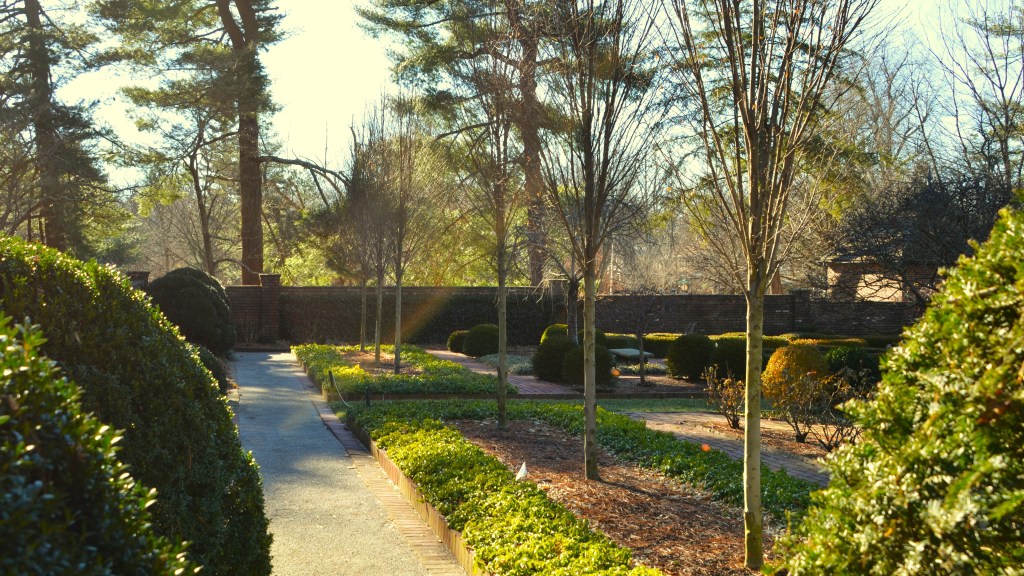
    Today Ashland is a National Historic Landmark, open for tours, with an arboretum of more than 400 trees, walking paths, sculptures, and outbuildings you can wander on a self-guided tour. The Foundation has, to its credit, stopped presenting a sanitized version of the place — there’s now a dedicated tour focused on the enslaved people who lived and worked there, alongside the more traditional Clay biography tour.

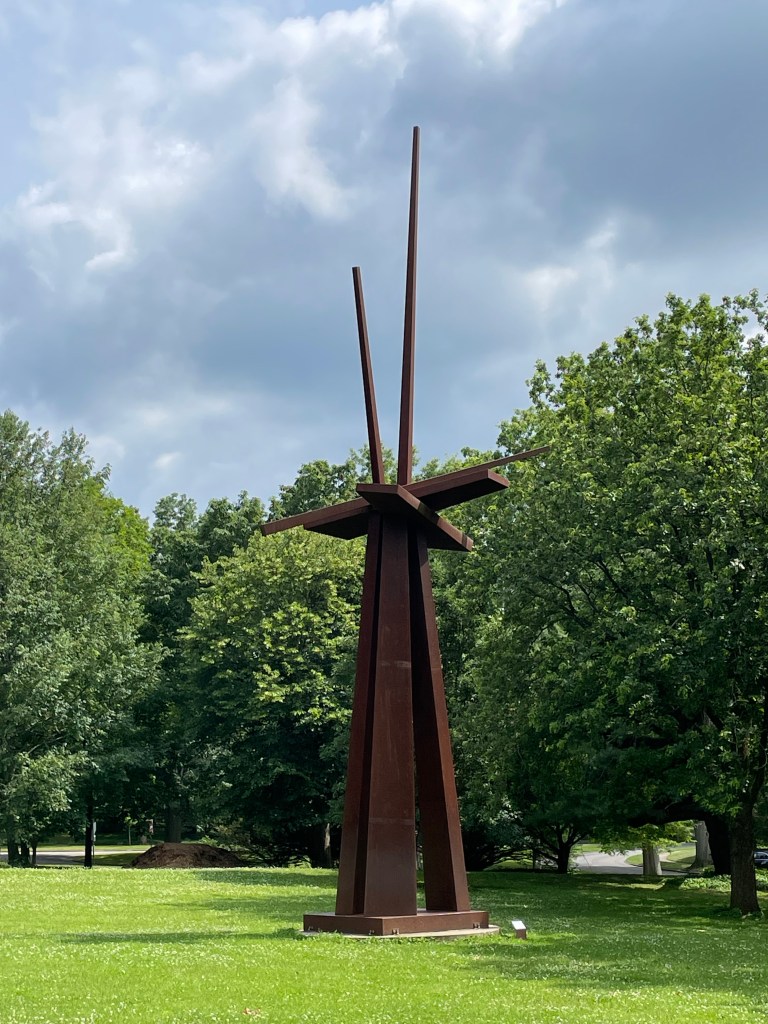
    Modern sculpture on the grounds of Ashland, Henry Clay's estate
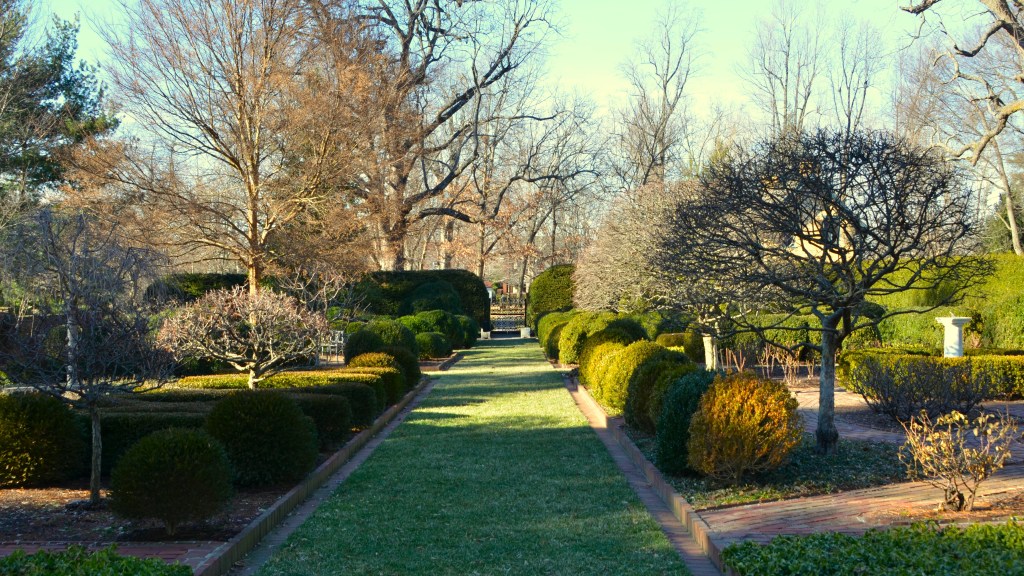
    Garden topiary at Ashland, Henry Clay's estate, Lexington, Kentucky
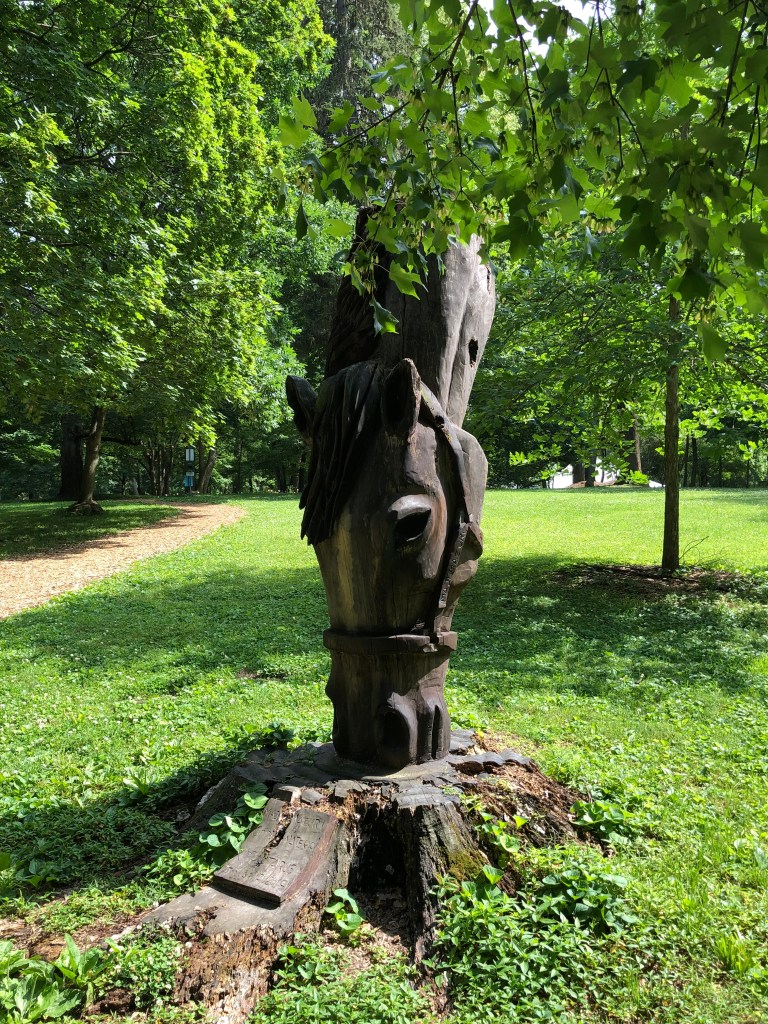
    Horse-head sculpture on the grounds of Ashland, Lexington, Kentucky
    Grounds and outbuildings at Ashland, Henry Clay's estate, Lexington, Kentucky

    Marker No. 2235: Ashland, Clay & Abraham Lincoln

    ASHLAND
    Home of Henry Clay, born April 12, 1777, died June 29, 1852. Served as a state legislator, US rep. and senator, house speaker, secretary of state. He ran for president in 1824, 1832, and 1844. Also an attorney, he practiced law for more than 50 years. He imported and bred fine livestock here, including champion thoroughbreds.

    Clay and Abraham Lincoln — Lincoln called Clay “my beau ideal of a statesman, for whom I fought all my humble life.” Lincoln voted for Clay in 1832 and 1844. The family of Lincoln’s wife, Mary Todd Lincoln, were friends with Clay. Lincoln based his political ideology on Clay’s ideals and quoted him in many important speeches.

    Kentucky Historical Society, Marker No. 2235 — erected 2007

    That second marker stands about 300 feet from Marker No. 1, and it’s worth pairing with what’s already been said here: Clay never held the presidency he sought three times, but his student, in a sense, did. Lincoln’s admiration wasn’t sentimental distance, either, it ran through the Todd family’s own friendship with Clay, and through Lincoln’s own words, borrowed from Clay’s, at some of the most consequential moments of his presidency.

    Footnote: A Third Marker on the Same Ground

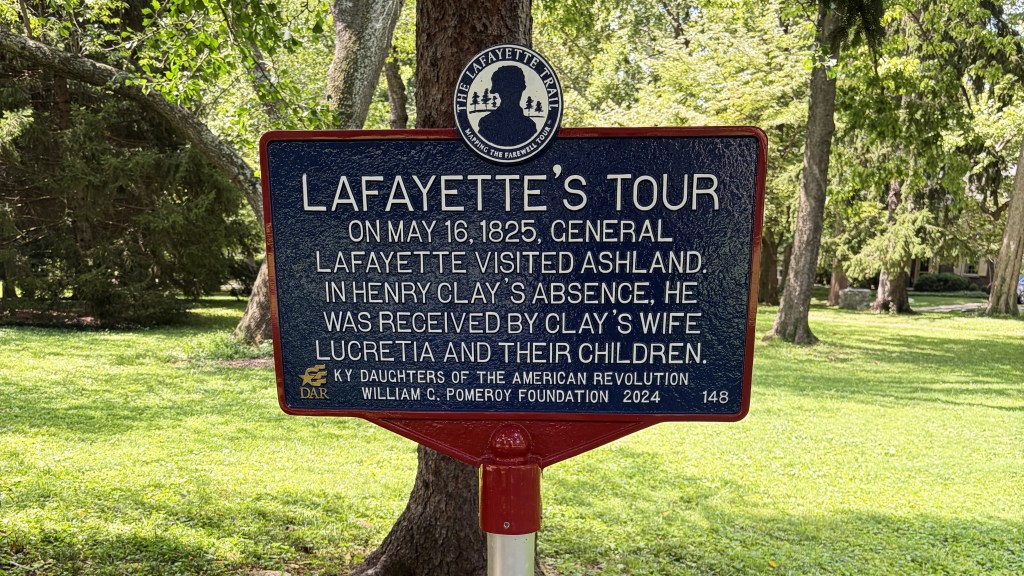
    In May 2025, Ashland picked up another historical marker, a separate one from the numbered Kentucky markers. This one, designated KY-148, belongs to the Lafayette Trail, a national program documenting the 1824–25 farewell tour of the Marquis de Lafayette, the French general who served under George Washington during the Revolutionary War, and who Fayette County is named after. Lafayette passed through Lexington in 1825 as part of that tour, and the marker commemorates his visit to Ashland specifically. It was one of three Lafayette Trail markers dedicated in Lexington, funded by the William G. Pomeroy Foundation in partnership with The Lafayette Trail, Inc., alongside markers at other Lexington sites tied to Lafayette’s visit.

    Lafayette Trail historical marker (KY-148) at Ashland, commemorating Lafayette's 1825 visit

    Unlike Kentucky’s own historical marker series, the Lafayette Trail runs its own independent national numbering system, so KY-148 exists alongside Marker No. 1 rather than as part of it, multiple markers, two separate programs, standing on the same 17 acres.

    Sources consulted: Kentucky Historical Society / ExploreKYHistory; Kentucky Historical Society Historical Marker Database (Marker No. 2235); National Register of Historic Places documentation; Henry Clay Memorial Foundation (henryclay.org); U.S. Senate Historical Office; Britannica; U.S. Department of State Office of the Historian.